The future of bioart blends innovative materials like living paints, biodegradable sculptures, and self-healing textiles with advanced techniques such as 3D bioprinting and synthetic biology. These tools allow you to create dynamic, interactive living artworks that respond to their environment. As digital integration and ethical considerations grow, new possibilities emerge for responsible, immersive biological art. Keep exploring to discover how interdisciplinary approaches shape this exciting, evolving field.
Key Takeaways
- Development of smart, stimuli-responsive biomaterials that adapt and change properties in real time for dynamic artistic expression.
- Advancements in high-resolution 3D bioprinting enable complex, multi-cellular structures with precise control for personalized bioartworks.
- Integration of living organisms like bacteria, fungi, and plants engineered to produce colors, patterns, and interactive behaviors.
- Creation of biodegradable and self-healing bio-based materials that merge sustainability with artistic innovation.
- Utilization of digital technologies such as virtual modeling, sensors, and AI to enhance control, interactivity, and environmental responsiveness in bioart.
Advancements in Synthetic Biology and Living Art
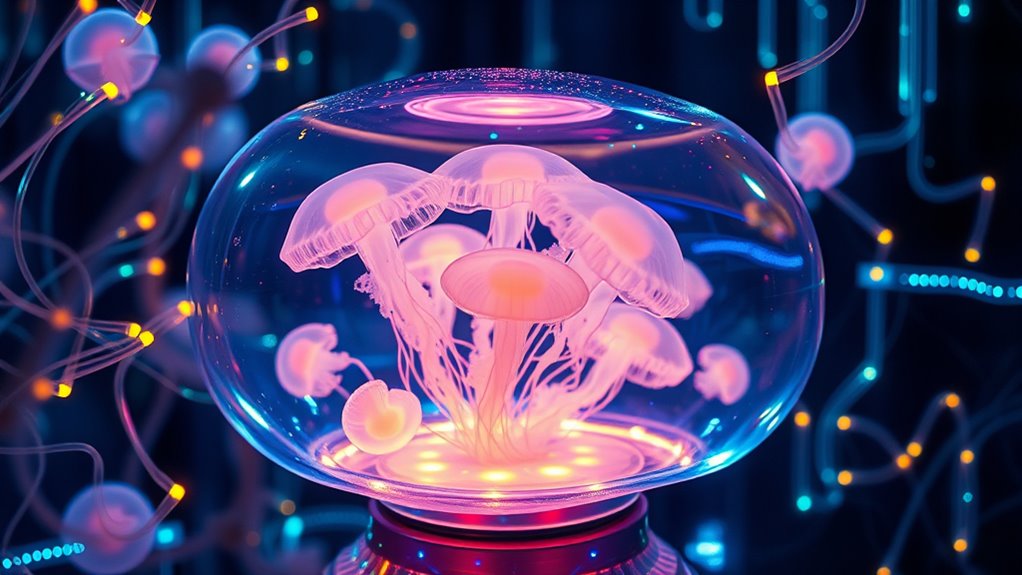
Advancements in synthetic biology are revolutionizing the way we create and experience art. You now have the power to design living organisms that serve as dynamic art pieces, blurring the line between biology and creativity. Scientists can engineer bacteria, fungi, and even plants to produce vibrant colors, intricate patterns, or responsive behaviors. This means your artwork can grow, change, and interact in real time, offering immersive experiences unlike traditional media. Synthetic biology also allows you to incorporate genetic circuits that enable living sculptures to respond to environmental stimuli, making art more interactive and personalized. As automation technologies continue to develop, artists and scientists alike are exploring new ways to integrate these innovations into living art forms. With these breakthroughs, you become a creator of living, breathing masterpieces that challenge perceptions and invite deeper engagement with the natural world.
Innovative Biomaterials Transforming Creative Expression

Building on the innovative potential of synthetic biology, researchers are now developing biomaterials that redefine how you can express creativity. These materials open new avenues for art, blending biology with design. You might encounter self-healing textiles that repair themselves, color-changing surfaces responsive to environmental cues, or biodegradable sculptures that evolve over time.
Some notable innovations include:
- Living paints infused with bacteria that alter color
- Bioengineered fabrics that grow or adapt
- Edible materials merging art and sustenance
- Smart biomaterials sensing and responding to stimuli
- Dynamic, biodegradable structures reducing environmental impact
These biomaterials allow you to push artistic boundaries, creating living, adaptable works that challenge traditional notions of permanence and form. They blend science with imagination, enabling truly transformative creative expression.
3D Biofabrication and Bioprinting Techniques

Advances in bioprinting technologies are revolutionizing how we create living tissues and structures. You’ll need to contemplate the variety of materials available and the challenges they present concerning compatibility and stability. Understanding these factors is key to unleashing the full potential of biofabrication techniques. As AI plays an increasingly vital role in AI security, ensuring the safety and reliability of bioprinting processes becomes even more crucial.
Advances in Bioprinting Technologies
Recent developments in bioprinting technologies are transforming the way you approach tissue engineering and regenerative medicine. You now have access to high-resolution printers capable of creating complex, multi-cellular structures with remarkable precision. Innovations include the integration of real-time imaging for accuracy, advanced bioinks that mimic native tissue properties, and automation that speeds up production. Additionally, new techniques such as stereolithography enable faster, more detailed fabrications, while multi-material printing allows for better tissue complexity. You can also leverage modular bioprinting to assemble larger constructs seamlessly. These advances reduce fabrication time, improve structural fidelity, and expand possibilities for personalized medicine, ultimately bringing you closer to creating fully functional, transplantable tissues and organs. Furthermore, the ongoing development of resources and tools in the field supports researchers and clinicians in overcoming technical challenges and accelerating clinical applications.
Material Choices and Challenges
As bioprinting technologies become more sophisticated, choosing the right materials becomes increasingly important to achieve functional, durable tissues. Material selection impacts cell viability, structural integrity, and biocompatibility. You must balance printability with biological performance, which often involves trade-offs. For example, some materials are easy to print but lack durability, while others are biocompatible but challenging to process. Considering material properties is crucial for optimizing biofabrication outcomes.
Integration of Digital Technologies and Bioart

You can see how virtual-physical fusion transforms bioart by blending digital and biological domains seamlessly. AI-driven creativity pushes artists to explore new forms and ideas beyond traditional limits. This integration opens exciting possibilities for innovative, interactive artworks.
Virtual-Physical Fusion
The integration of digital technologies into bioart is transforming how you create and experience living artworks. Virtual-physical fusion bridges digital simulations with tangible biological systems, allowing for dynamic interaction and real-time feedback. This synergy enhances your ability to manipulate biological processes through immersive environments, such as augmented reality or interactive displays. You can:
- Overlay digital data onto living tissues for precise control
- Use sensors to monitor biological responses instantly
- Employ virtual modeling to predict biological behavior
- Integrate haptic feedback for tactile engagement
- Create responsive installations that adapt to environmental changes
This convergence empowers you to craft bioartworks that are not only visually compelling but also interactively alive, blurring the boundaries between digital and organic worlds. It opens new pathways for experimentation, education, and immersive storytelling within the bioart landscape. Additionally, advancements in Eye Patch technology demonstrate how integrating beneficial ingredients and innovative delivery methods can enhance skin care, inspiring similar bio-integrative approaches in bioart materials.
AI-Driven Creativity
AI-driven creativity is revolutionizing bioart by enabling you to design and manipulate living artworks with unprecedented precision and innovation. You can use machine learning algorithms to analyze biological data and generate new forms that blend art and science seamlessly. This technology allows you to experiment with complex biological patterns, creating dynamic, evolving pieces that respond to environmental stimuli or viewer interaction. AI tools help you optimize biofabrication processes, reducing errors and accelerating development. With digital techniques, you can simulate biological processes in real-time, making your work more interactive and responsive. This integration not only expands your creative possibilities but also deepens your understanding of living systems, pushing bioart into new territories where technology and biology intertwine more closely than ever before. Online resources are available for real-time updates on emerging techniques and materials, further enhancing your creative toolkit.
Ethical Considerations and New Frontiers in Bioart

As bioart pushes the boundaries of science and creativity, ethical considerations become increasingly vital. You must confront questions about the moral implications of manipulating living tissues, preserving natural integrity, and the potential for unintended consequences. Responsible experimentation demands transparency, consent, and respect for life forms. You should consider:
- The boundaries of genetic modification and cloning
- The potential for harm to living organisms
- Intellectual property rights over bioengineered art
- The societal impact of bioart on perceptions of life
- The environmental consequences of deploying new materials
- The importance of color accuracy in maintaining the authenticity and integrity of bioart representations.
Navigating these issues requires a balanced approach, ensuring innovation doesn’t compromise ethical standards. As you explore new frontiers, maintaining a dialogue around morality helps foster responsible creativity in bioart.
The Future Landscape: Interdisciplinary Collaborations
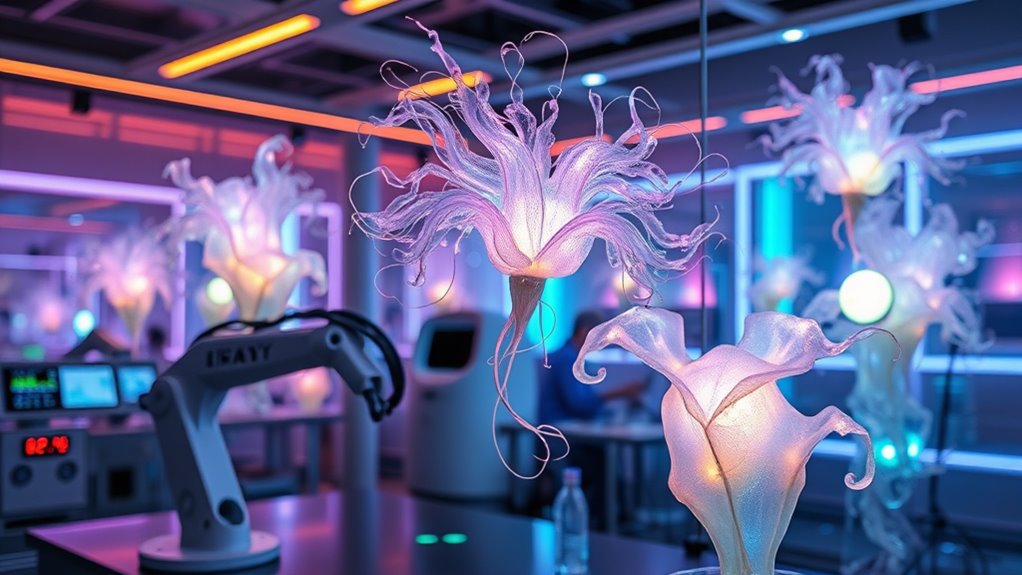
Interdisciplinary collaborations are shaping the future landscape of bioart by merging expertise from biology, art, technology, and ethics. As you work across these fields, you’ll discover innovative ways to create, interpret, and challenge biological concepts. You’ll find that combining scientific precision with artistic expression leads to more compelling and meaningful projects. These collaborations foster new techniques, like bioprinting and synthetic biology, pushing the boundaries of what’s possible. By engaging with diverse perspectives, you help address ethical questions and societal impacts more thoughtfully. This interconnected approach accelerates discovery and encourages open dialogue, making bioart a truly multifaceted discipline. Your role becomes crucial in shaping a future where art and science collaboratively explore the potential of living systems. Additionally, understanding the subconscious power during sleep can inspire new methods for integrating subconscious insights into artistic processes.
Frequently Asked Questions
How Will Bioart Impact Traditional Fine Arts and Cultural Institutions?
Bioart will challenge traditional fine arts and cultural institutions by pushing boundaries and introducing living, biological elements into their collections. You might see museums adopting new preservation methods for bioart pieces, while galleries embrace interactive, living artworks. This shift encourages audiences to rethink concepts of life and art, fostering innovative dialogues. As a result, you’ll experience a more interdisciplinary, dynamic art scene that blurs lines between science, nature, and creative expression.
What Role Will AI Play in Future Bioart Creation and Interpretation?
AI will play a transformative role in future bioart by enabling you to create complex, responsive, and dynamic artworks that blend biology and technology seamlessly. It helps you interpret living materials in innovative ways, offering new insights and interactions. With AI, you can push boundaries, generate novel bioart concepts, and foster deeper engagement with audiences, making your work more interactive, personalized, and reflective of cutting-edge scientific and artistic integration.
Can Bioart Contribute to Environmental Sustainability and Ecological Awareness?
You can see bioart’s potential to boost environmental sustainability and ecological awareness. By creating living installations and biodegradable materials, you help reduce waste and pollution. Your artwork can inspire viewers to rethink their relationship with nature and promote conservation efforts. While some worry about ethical concerns, your innovative approach fosters a deeper emotional connection to ecosystems, motivating positive change and encouraging society to embrace more sustainable practices.
How Will Intellectual Property Rights Evolve With Bioart Innovations?
You’ll likely see intellectual property rights in bioart evolve to better balance innovation and openness. As artists experiment with living materials, laws may adapt to protect their creations while encouraging collaboration. You might find new licensing models that address biological modifications or genetic art, ensuring creators retain rights without stifling community sharing. Expect an ongoing dialogue between legal frameworks and creative practices to shape how bioart’s innovations are safeguarded and disseminated.
What Educational Approaches Are Needed to Train Future Bioartists and Researchers?
You need to embrace interdisciplinary education, blending art, biology, and ethics to prepare future bioartists and researchers. Hands-on workshops with emerging materials, collaborative projects, and critical discussions about societal impacts will foster innovation and responsibility. By staying curious and adaptable, you’ll develop the skills to push boundaries creatively while understanding bioethics. This approach guarantees you’re equipped to navigate the evolving landscape of bioart with confidence and integrity.
Conclusion
As bioart blooms with bold breakthroughs, embracing the blend of biology, technology, and creativity, you’re invited to explore endless horizons. With innovative insights and inspiring interdisciplinary interactions, you’ll witness a world where art and science seamlessly synchronize. Stay curious, challenge conventions, and champion change, because the future of bioart beckons bold pioneers like you to break boundaries and build a brighter, biologically beautiful tomorrow.