Artists play a key role in bringing extinct species back to life by creating visual reconstructions that blend scientific evidence with creative interpretation. They rely on fossils, skeletal structures, and environmental clues to produce accurate images, while filling in soft tissues, colors, and behaviors with educated guesses. Their work makes ancient creatures feel real and accessible, sparking curiosity. If you keep exploring, you’ll discover how these artistic efforts blend science and imagination to shape our understanding of the past.
Key Takeaways
- Artistic reconstructions bring extinct species to life, bridging scientific evidence with public imagination.
- They rely on fossil accuracy to create realistic depictions aligned with current scientific knowledge.
- Creators fill in missing details like soft tissues and colors through educated interpretation.
- Visual features such as color, pose, and transparency highlight scientific evidence and speculative elements.
- These representations serve educational, cultural, and engagement purposes, illustrating the science-art relationship.
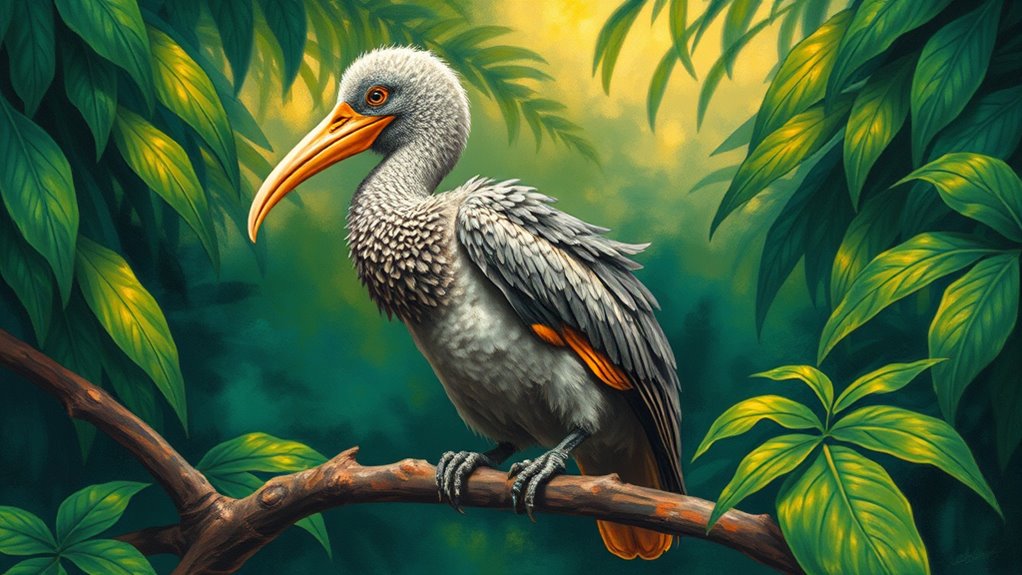
Throughout history, artists have played a pivotal role in bringing extinct species back to life through their creative representations. Their work often bridges scientific discovery and public imagination, making ancient creatures accessible and engaging. When artists interpret fossils, they rely heavily on fossil accuracy to guarantee their depictions align with the best available evidence. This means closely examining skeletal remains, understanding muscle attachments, and considering the environment where these creatures once thrived. By prioritizing fossil accuracy, artists help convey a realistic picture of extinct species, allowing viewers to connect with them as if they were alive.
Artists use fossil accuracy to faithfully reconstruct extinct species, bridging science and imagination for compelling visual stories.
However, fossil accuracy isn’t always straightforward. Since fossils rarely capture every detail of soft tissues, skin, or coloration, artists must often fill in the gaps through artistic interpretation. This creative process involves making educated guesses about features that aren’t preserved, such as skin textures, feather colors, or even posture. Artistic interpretation becomes essential here, as it allows artists to breathe life into the fossilized remains, giving viewers a more complete understanding of what these creatures might have looked like. It’s a delicate balance—staying faithful to scientific evidence while using imagination to visualize the unknown. When done well, this synthesis of accuracy and interpretation produces compelling, believable reconstructions that inspire curiosity and awe.
You might notice that some depictions emphasize vibrant colors or dynamic poses, reflecting not only scientific data but also the artist’s vision of the creature’s behavior or environment. This is where artistic interpretation shines, transforming static bones into lively beings that once roamed the Earth. Still, it’s essential to recognize the importance of transparency; many artists clearly differentiate between what is supported by fossil evidence and what is speculative. This honesty helps viewers appreciate the scientific foundation behind the artwork and understand where interpretation fills in gaps.
In the end, these artistic representations serve as powerful educational tools and cultural artifacts. They spark interest in paleontology, inspire scientific inquiry, and foster a deeper connection to Earth’s ancient past. Whether based on meticulous fossil accuracy or guided by creative interpretation, these images help us visualize extinct species in ways that words or fossils alone cannot. They remind us that science and art are intertwined, each enriching the other to illuminate the mysteries of life long gone. As you explore these reconstructions, remember that behind every vibrant depiction lies a careful effort to blend factual evidence with imaginative insight, bringing extinct species back to life in your mind’s eye.
Frequently Asked Questions
How Do Artists Choose Which Extinct Species to Depict?
You choose which extinct species to depict based on species selection that sparks your artistic inspiration. You might focus on animals with striking features, historical significance, or emotional stories that resonate with viewers. Your decision often reflects your interests and the message you want to convey. By exploring unique or iconic species, you create compelling art that sparks curiosity and raises awareness about extinction and conservation.
What Materials Are Used for Reconstructing Extinct Animals?
Imagine bringing the past to life—you use fossil-based materials like bones and teeth for physical reconstructions and digital modeling for detailed, accurate renderings. These tools act as bridges to extinct worlds, blending science and art. You might combine real fossils with 3D scans, creating lifelike sculptures or digital animations that capture the essence of creatures long gone. This process makes history tangible, inspiring awe and curiosity in all who see it.
Are There Ethical Concerns in Illustrating Extinct Species?
Yes, there are ethical concerns in illustrating extinct species. You should consider cultural sensitivity, especially if the species holds cultural or spiritual significance. Respect intellectual property rights when using fossil data or artistic methods. By being mindful of these issues, you guarantee your representations honor both scientific accuracy and cultural values, avoiding misappropriation or misrepresentation that could offend communities or infringe on rights.
How Accurate Are Artistic Depictions Compared to Scientific Evidence?
Your artistic depictions often dance on the thin line between fact and imagination, making accuracy a challenge. While some artists base their work on solid scientific evidence, others lean more on artistic interpretation, which can sometimes distort facts. Overall, the accuracy varies, but understanding this balance helps you appreciate these images as both scientific storytelling and creative expression, capturing the essence of creatures long gone.
Can Art Influence Conservation Efforts for Endangered Species?
Yes, art can influence conservation efforts for endangered species by enhancing museum displays and boosting public engagement. When you see powerful artistic representations, you’re more likely to connect emotionally, which can inspire action. Creative visuals in exhibits draw attention, raise awareness, and motivate people to support conservation efforts. By fostering a deeper understanding and emotional connection, art helps rally community support and encourages positive change for endangered species.
Conclusion
You might think these artistic reconstructions are just pretty pictures, but they’re actually the keys to revealing entire worlds lost to time. Your imagination, sparked by these images, can breathe life into creatures long gone, making them feel as real as your own reflection. Art doesn’t just depict extinct species; it transports you to ancient landscapes where giants roamed and mysteries await. So, next time you see one, remember—you’re holding history’s greatest secrets in your hands.