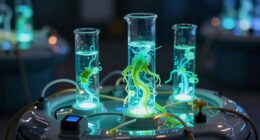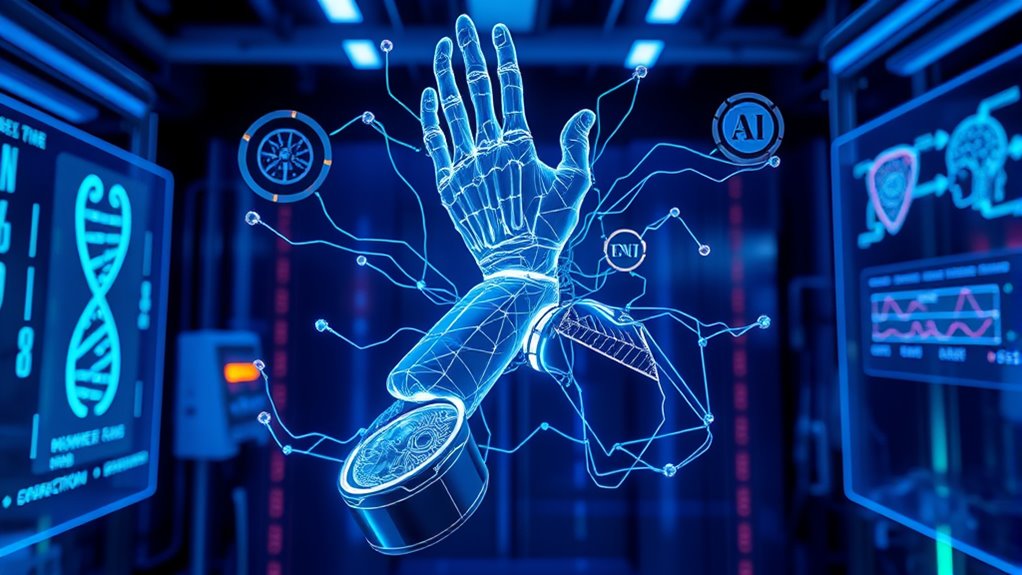

Future trends in bioart focus on integrating AI and robotics to create dynamic, living artworks that respond and evolve over time. AI-driven designs generate unique biological forms and behaviors beyond manual capabilities, while robotics enable kinetic and interactive installations. These innovations challenge traditional notions of art, blending biotech, AI, and robotics to push creative boundaries. As this field advances, you’ll discover new ways to experience art that’s alive, adaptable, and infused with cutting-edge technology.
Key Takeaways
- AI algorithms will generate evolving bioart forms that adapt dynamically to environmental and viewer interactions.
- Robotics will enable kinetic bioart installations that grow, move, or respond in real-time.
- Biotech innovations will facilitate the creation of living artworks using genetically engineered organisms.
- Ethical frameworks will guide responsible integration of AI and biotech in bioart practices.
- Multidisciplinary collaborations will drive advanced bioart projects blending biology, AI, and robotics seamlessly.
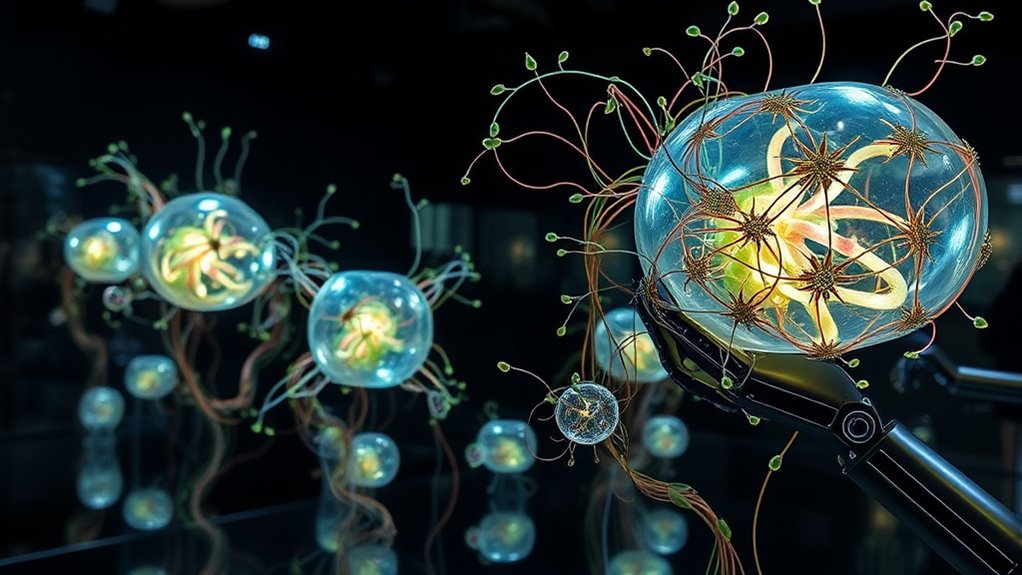
Have you ever wondered how the boundaries between art and biology are evolving? Today, the line between these two fields is becoming increasingly blurred, thanks to the rise of biotech aesthetics and bioethical innovation. As artists push the limits of what’s possible with living materials, you’re witnessing a new era where biotech aesthetics serve as a canvas for experimentation and expression. These innovations aren’t just about creating visually striking works; they challenge traditional notions of beauty, life, and morality. You might find yourself marveling at bioengineered sculptures that change color in response to environmental stimuli or living portraits crafted from genetically modified organisms. This fusion of art and biology allows you to explore complex themes like identity, mortality, and coexistence through the lens of living art forms.
In the domain of future trends, AI and robotics are set to play transformative roles. You’ll see artists leveraging artificial intelligence to design bioart pieces that evolve over time, responding dynamically to their surroundings or to viewer interactions. AI algorithms help generate unique biological forms that wouldn’t be possible manually, pushing biotechnological aesthetics into uncharted territories. Robotics, on the other hand, enables the creation of kinetic bioart installations—living sculptures that move or grow in real-time, blurring the line between animate and inanimate. These advancements empower you to experience art that’s not static but alive, constantly shifting and adapting.
Furthermore, the integration of raw materials like living organisms and their manipulation using biotech techniques is shaping the future of bioart, raising both exciting opportunities and important ethical considerations. However, as you engage with this rapidly advancing landscape, bioethical innovation becomes essential. The integration of living organisms and advanced technology raises profound questions about consent, environmental impact, and the moral responsibilities of creators. You might find yourself contemplating the ethical implications of editing genomes for aesthetic purposes or deploying bioengineered organisms in public spaces. Responsible innovation calls for a careful balance—pushing creative boundaries without compromising ecological or moral integrity. Artists and scientists are increasingly collaborating to establish guidelines that respect both artistic freedom and bioethical standards, ensuring that future bioart remains a force for positive reflection rather than controversy.
Ultimately, as biotech aesthetics and bioethical innovation converge with AI and robotics, you’re witnessing a revolution in how art interacts with life itself. This evolving landscape invites you to rethink what it means to create, to be alive, and to appreciate beauty. It’s an exciting frontier where technology and biology come together to challenge your perceptions and inspire new ways of understanding the world around you.
As an affiliate, we earn on qualifying purchases.
Frequently Asked Questions
How Will Bioart Influence Environmental Sustainability Initiatives?
Bioart can notably influence environmental sustainability by showcasing genetic modification techniques that promote eco-friendly solutions. You’ll see artists creating living installations that highlight ecosystem restoration, inspiring action. By blending biology and art, you can raise awareness about preserving habitats and reducing pollution. This fusion encourages innovative ideas, motivating communities to adopt sustainable practices and support initiatives focused on restoring and maintaining healthy ecosystems.
What Ethical Considerations Arise With Ai-Driven Bioart Creations?
You’re walking a fine line when dealing with AI-driven bioart, where ethical concerns like genetic modification and intellectual property come into play. You must consider the moral implications of altering living organisms and who owns these creations. It’s a tightrope walk, balancing innovation with responsibility. Ensuring transparency and respecting boundaries helps prevent exploitation or misuse, keeping your work both groundbreaking and ethically sound.
Can Bioart With Robotics Improve Medical Therapies?
Robotic bioart can markedly enhance medical therapies by advancing regenerative aesthetics and tissue engineering. You can use robotics to create precise, dynamic bioart that promotes tissue regeneration and improves aesthetic outcomes. This integration allows for innovative treatments, personalized solutions, and more effective healing processes, ultimately transforming patient care. As you explore this frontier, you open new possibilities for combining art, technology, and medicine to achieve better health and aesthetic results.
How Accessible Will Future Bioart Technologies Become Globally?
You’ll likely find future bioart technologies becoming more globally accessible, but technological barriers may slow that progress. While innovation spreads, disparities in infrastructure and resources could limit access in some regions. However, as costs decrease and open-source platforms emerge, more people worldwide will gain opportunities to explore and benefit from bioart. So, expect a gradual increase in accessibility, but remember, overcoming barriers remains vital for true global reach.
What Role Will Virtual Reality Play in Future Bioart Experiences?
Virtual reality will play a central role in future bioart experiences by providing immersive visualization and sensory immersion. You’ll be able to explore living artworks in a fully interactive environment, experiencing biological processes firsthand. VR creates a sense of presence, allowing you to engage deeply with bioart pieces, blurring the line between observer and participant. This technology enhances emotional impact and understanding, making bioart more accessible and engaging worldwide.
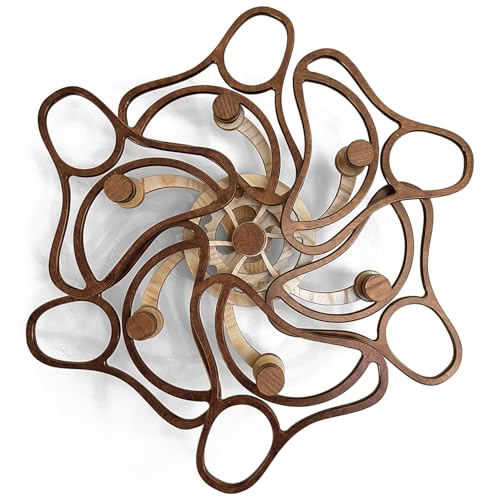
Mindsight Moving Kinetic Wall Art – Wind up to power peaceful motion (no battery) – Calming Wall Décor for Living Room, Office, Bedroom, Kitchen – Hand Crafted Wood – Wander, Walnut Brown
- Hand Wind Power: No batteries needed, winds up manually
- Long Runtime: Up to 10 hours of peaceful motion
- Calming Home Decor: Enhances living, office, or bedroom spaces
As an affiliate, we earn on qualifying purchases.
As an affiliate, we earn on qualifying purchases.
Conclusion
As you delve into the future of bioart, you’ll find yourself on the brink of a revolutionary universe where biology, AI, and robotics collide in ways that could reshape reality itself. Imagine creating art so alive, so intelligent, it blurs the line between creator and creation, sparking a new era of infinite possibilities. This fusion isn’t just a trend—it’s the dawn of a cosmic shift, where art evolves into a living, breathing force beyond your wildest dreams.
As an affiliate, we earn on qualifying purchases.

Genetically Modified Organisms, Grade 7: STEM Road Map for Middle School (STEM Road Map Curriculum Series)
As an affiliate, we earn on qualifying purchases.
As an affiliate, we earn on qualifying purchases.