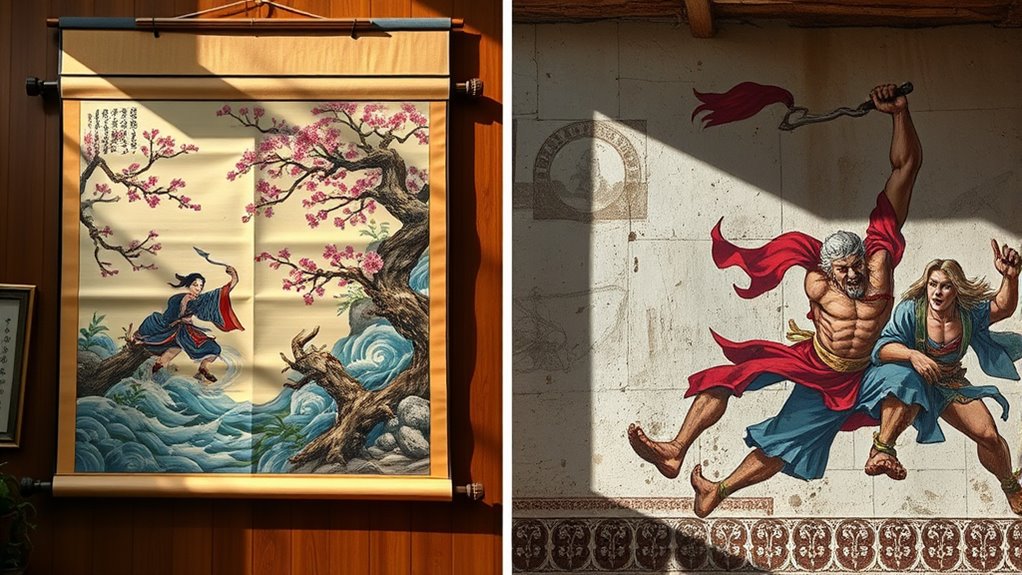

In Eastern art, storytelling emphasizes symbolism, poetic metaphors, and layered meanings that invite contemplation and moral reflection, often using intricate brushwork and spiritual themes. Western art favors clear, realistic scenes with detailed narratives, emphasizing drama and emotional impact to communicate stories effectively. Both styles reflect their cultural values—Eastern focusing on harmony and spirituality, Western on clarity and realism. Exploring further reveals how these traditions shape visual storytelling across different cultures.

Get the latest gadgets delivered free — and shop member deals
- Fast, free delivery on millions of items
- Access to Prime Big Deal Days deals on October 6–7
- Prime Video, Amazon Music and more included
Key Takeaways
- Eastern art uses symbolic imagery and poetic metaphors to convey layered spiritual and moral meanings, emphasizing harmony and cyclical concepts.
- Western art prefers explicit, detailed scenes and realistic depictions to tell stories clearly and evoke emotional reactions.
- Eastern storytelling relies on indirect, contemplative methods, while Western storytelling emphasizes clarity, drama, and immediacy.
- Both traditions incorporate symbolism, but Eastern symbols often hold layered spiritual significance, whereas Western symbols enhance narrative depth.
- Cultural values influence storytelling styles: Eastern art emphasizes moral reflection and spiritual harmony, Western art highlights realism and emotional engagement.
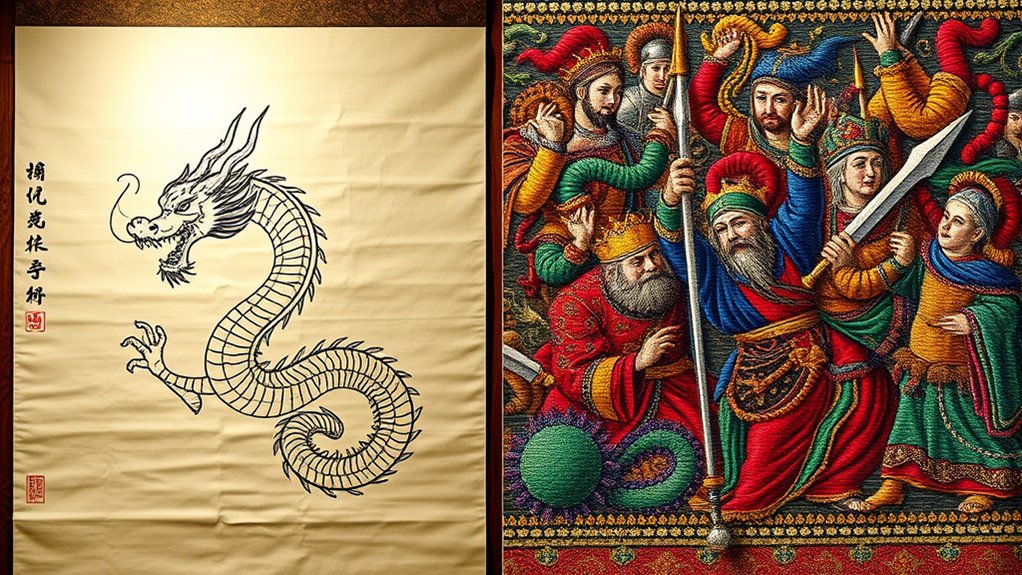
Storytelling in art reflects deep cultural values and historical narratives, shaping how stories are conveyed across different regions. When exploring Eastern and Western art, you notice that each tradition employs unique methods to communicate their stories, often rooted in their distinct mythologies and worldviews. In Eastern art, mythical symbolism plays a vital role. You might see dragons symbolizing power and protection or phoenixes representing rebirth and renewal, woven into paintings, sculptures, and textiles. These symbols aren’t just decorative; they carry layered meanings, connecting viewers to centuries-old stories and spiritual beliefs. The narrative techniques used in Eastern art tend to emphasize harmony, balance, and the cyclical nature of life. Instead of linear storytelling, you find imagery that invites contemplation, encouraging you to interpret the connections between symbols and the broader cultural context. This approach often employs visual metaphors, where a single image encapsulates an entire myth or moral lesson, making storytelling more poetic and indirect. Additionally, the use of intricate brushwork enhances the subtlety and depth of these symbolic representations, allowing for multiple interpretations.
In contrast, Western art typically favors more explicit narrative techniques. You’ll notice that Western storytelling often involves clear, sequential scenes that guide you through a story from beginning to end. Artists like those of the Renaissance use detailed storytelling to depict biblical stories, historical events, or mythological tales with precise realism and dramatic intensity. The narrative flow is more linear, helping you follow the story’s progression without much ambiguity. Mythical symbolism also appears, but it’s often integrated into the scene’s details to enhance the story’s meaning rather than serve as the central motif. Western art’s narrative style aims to evoke emotional responses directly and clearly, relying on familiar symbols and storytelling conventions to communicate complex ideas quickly and effectively. Techniques like foreshortening, chiaroscuro, and perspective help create a sense of immediacy and realism, immersing you in the story.
Both traditions use their unique narrative techniques and symbolism to reflect their cultural identities. Eastern art’s subtlety and layered symbolism invite you to explore stories on multiple levels, emphasizing spiritual harmony and moral lessons. Western art’s straightforward storytelling captures your attention through realism and dramatic tension, making the narrative accessible and emotionally impactful. Understanding these differences enriches your appreciation for how diverse cultures express their stories visually, revealing not just what they value but also how they perceive the world and communicate their collective histories.
Eastern traditional brush painting set
As an affiliate, we earn on qualifying purchases.
As an affiliate, we earn on qualifying purchases.
Frequently Asked Questions
How Do Cultural Values Influence Storytelling Techniques Differently?
You see that cultural values shape storytelling techniques through narrative symbolism and visual metaphors. In Western art, you notice a focus on individualism, which leads to detailed, literal storytelling. Conversely, Eastern art emphasizes harmony and spiritual themes, using subtle visual metaphors and layered symbolism. These cultural influences guide how stories are visually conveyed, making the storytelling deeply rooted in each society’s core beliefs and values.
What Role Does Mythology Play in Eastern Versus Western Art Storytelling?
Mythology plays a crucial role in both Eastern and Western art storytelling. You see, Eastern art often uses mythical symbolism to embody cultural archetypes like harmony and spiritual growth, guiding viewers through layered meanings. Western art, meanwhile, tends to focus on mythic symbolism related to heroism and morality, representing cultural archetypes like bravery and justice. These mythologies deepen storytelling, connecting viewers with universal themes rooted in their cultural identities.
How Have Modern Media Transformed Traditional Storytelling in Both Regions?
You might think traditional storytelling remains untouched, but modern media, especially digital adaptations and social media, are reshaping it rapidly. In both regions, you see stories evolving in real-time, reaching global audiences instantly. This shift creates new opportunities for cultural exchange but also risks diluting ancient narratives. As you follow these changes, you realize how dynamic storytelling has become, blending old myths with today’s digital age, keeping traditions alive in unexpected ways.
Are There Notable Differences in Audience Engagement Strategies?
You notice that Eastern audiences often engage through subtle visual cues and emotional resonance, creating a contemplative experience. Western strategies tend to be more direct, using bold visuals and clear narratives to captivate viewers quickly. Both regions adapt these methods, but Eastern approaches emphasize harmony and introspection, while Western ones focus on immediate impact. Your engagement varies depending on how these visual cues and emotional connections are crafted.
How Do Religious Themes Shape Narratives in Eastern and Western Art?
Religious themes deeply influence narratives in both Eastern and Western art through iconography and symbolism. In Western art, you see detailed iconography like halos and crucifixes that emphasize divine presence. In Eastern art, you notice subtle symbolism, such as lotus flowers representing purity. These symbols shape how you interpret stories, guiding your understanding of spiritual teachings and religious ideals, making religious themes central to the narrative’s emotional and spiritual impact.
Western realistic art drawing supplies
As an affiliate, we earn on qualifying purchases.
As an affiliate, we earn on qualifying purchases.
Conclusion
Think of Eastern and Western art as two rivers flowing side by side, each carving its own unique path through history. While Eastern art gently weaves stories with subtlety and symbolism, Western art boldly paints with vivid detail and drama. Both streams nourish the landscape of human expression, creating a vibrant tapestry of storytelling. Embrace these differences, and you’ll see how they come together to form a richer, more colorful river of cultural history.
As an affiliate, we earn on qualifying purchases.
Renaissance style art history book
As an affiliate, we earn on qualifying purchases.
As an affiliate, we earn on qualifying purchases.
Halloween Picks
halloween
As an affiliate, we earn on qualifying purchases.