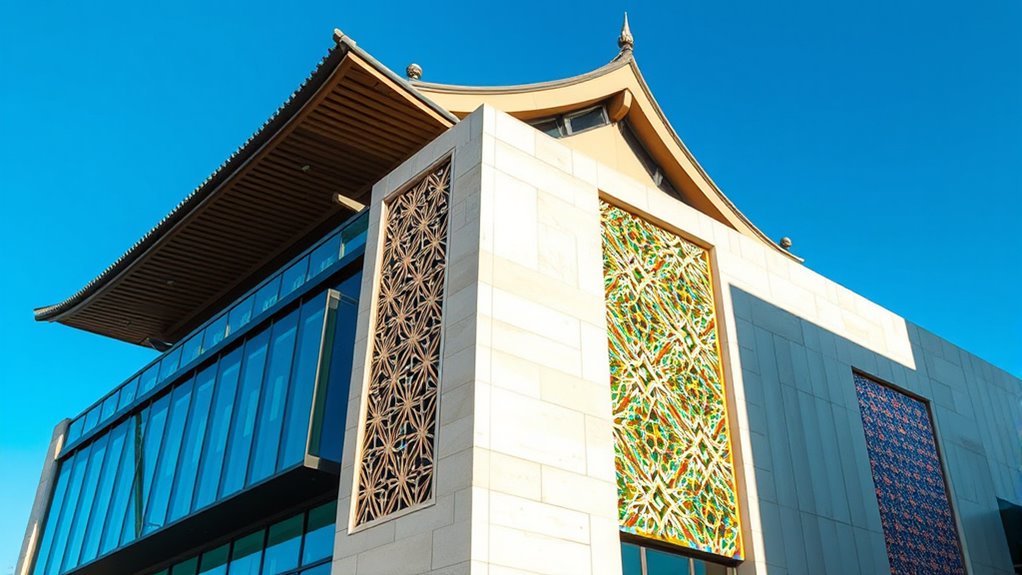

Cross-cultural influences in modern architecture blend traditional motifs with innovative design, creating structures that reflect diverse cultural identities. You’ll find elements like Islamic geometric patterns, Asian pagoda rooftops, and African tribal carvings integrated into contemporary buildings. These designs not only honor heritage but also embrace sustainable technologies and new materials. By combining different cultural inspirations, architects foster global dialogue and push boundaries. Keep exploring to discover how these influences continue to reshape the way we build and experience our environments.
Key Takeaways
- Modern architecture integrates traditional motifs from diverse cultures, creating a visual tapestry reflecting global influences.
- Cross-border collaboration fosters innovation by blending architectural styles and techniques from different cultural backgrounds.
- Traditional design elements are reimagined through a contemporary lens to promote cultural identity and storytelling in urban spaces.
- Structural innovations draw inspiration from indigenous methods, emphasizing harmony with nature and community-centered design.
- Architectural projects serve as platforms for cultural dialogue, combining traditional motifs with sustainable, forward-looking solutions.

Modern architecture increasingly reflects a blend of diverse cultural influences, shaping innovative designs that transcend traditional boundaries. As you observe the evolving skyline, you’ll notice how traditional motifs from different regions are seamlessly integrated into contemporary structures, creating a rich tapestry of visual language. This fusion isn’t accidental; it’s a direct result of design globalization, where ideas and styles flow freely across borders. Architects draw inspiration from centuries-old patterns, decorative elements, and construction techniques, reimagining them through a modern lens. The result is buildings that honor cultural heritage while embracing cutting-edge technology and sustainable practices.
You might find yourself admiring a skyscraper that incorporates motifs inspired by Islamic geometric art or Asian pagoda roofs, blending them with sleek glass and steel. This approach allows architects to pay homage to specific cultures while offering something entirely new. It’s not about copying traditional styles but transforming them into contemporary symbols that speak to a global audience. This trend also encourages collaboration among designers from different backgrounds, fostering a cross-pollination of ideas that pushes architectural boundaries further. When you see a building that features intricate carvings reminiscent of African tribal art, you’re witnessing design globalization in action — a deliberate effort to celebrate diversity through architecture.
By embracing traditional motifs, modern architects are able to create spaces that resonate on a deeper level, connecting people to their cultural roots even in urban environments. This integration enriches the visual experience and fosters a sense of identity and pride. It also challenges the notion that modern architecture must be purely minimalistic or utilitarian, opening doors for more expressive, culturally infused designs. As you explore cities around the world, you’ll notice how these influences aren’t limited to aesthetic elements but also inform structural solutions and spatial organization, drawing from traditional building methods that emphasize harmony with nature or community. Additionally, the use of sustainable and adaptable materials in these designs reflects a mindful approach that aligns with environmental sustainability principles.
Ultimately, this cross-cultural exchange fosters innovation and broadens your understanding of architecture’s potential. It encourages you to see buildings as more than just functional structures — they become storytellers, embodying the diverse histories and identities of the communities they serve. Through the lens of design globalization, traditional motifs are no longer confined to the past but are reborn in dynamic, forward-looking ways. As a result, modern architecture becomes a powerful platform for cultural dialogue, uniting the old and new in ways that inspire, challenge, and celebrate human creativity across the globe.

Persian mosque art wall decorations Islamic architectural geometric pattern posters Middle Eastern style home decor paintings Arabic style decorative prints for living rooms and studies
- Vibrant, durable canvas print: Rich colors, fine details, fade-resistant
- Premium materials and craftsmanship: Thick canvas, archival giclee printing, textured finish
- Instant decorative enhancement: Suitable for living rooms, bedrooms, offices, cafes
As an affiliate, we earn on qualifying purchases.
As an affiliate, we earn on qualifying purchases.
Frequently Asked Questions
How Do Local Traditions Impact Architectural Design Choices?
You see local traditions shaping your architectural design choices by incorporating traditional motifs that reflect cultural identity. You also use material symbolism to honor regional resources and craftsmanship, creating a sense of authenticity. These elements influence your style, blending modern techniques with cultural heritage. By respecting local customs and symbols, your buildings resonate with the community, fostering pride and preserving cultural significance in contemporary architecture.
What Role Does Globalization Play in Architectural Fusion?
Globalization acts like a vibrant tapestry, weaving diverse threads of architectural hybridity and cultural symbolism into one striking fabric. It encourages you to blend styles, creating buildings that tell stories from multiple traditions. As borders fade, you become a curator of cultural dialogues, transforming local elements into global icons. This fusion sparks innovation, making architecture a universal language that celebrates shared heritage while honoring unique identities.
How Are Sustainable Practices Integrated Across Cultures?
You can see sustainable practices integrated across cultures through the use of sustainable materials and eco-friendly construction techniques. Different regions adopt local resources like bamboo, reclaimed wood, or recycled metal to reduce environmental impact. You might notice traditional methods blending with modern designs, emphasizing energy efficiency and waste reduction. This global shift toward sustainable architecture reflects a shared commitment to protecting the environment while honoring cultural building practices.
What Challenges Arise From Blending Different Cultural Aesthetics?
Blending different cultural aesthetics can feel like walking a tightrope, where maintaining cultural identity and aesthetic harmony becomes a challenge. You might struggle to honor unique traditions while creating a cohesive design. Conflicting styles can clash, diluting cultural significance or causing visual discord. To succeed, you must skillfully balance authenticity and innovation, ensuring each culture’s essence shines through without overpowering the others, creating a harmonious, respectful fusion.
How Do Architects Navigate Cultural Sensitivity in Design?
You navigate cultural sensitivity by prioritizing cultural authenticity and respecting local traditions. You research deeply to understand the community’s values and aesthetic preferences, ensuring your design reflects their identity. You adapt your aesthetic to blend contemporary elements with cultural symbols, avoiding stereotypes. Open communication with local stakeholders helps you refine your approach, creating a space that honors cultural diversity while maintaining functional and aesthetic integrity.

Rowood 3D Puzzles for Adults, Wooden Model Kits for Adults to Build, Gift on Birthday Christmas – Five-storied Pagoda (275 PCS)
- Inspired by Japanese Horyuji Temple: Vintage temple model with detailed architecture
- Includes 275 Pieces: Requires 2-3 hours to assemble
- Suitable for Ages 14+: Challenging puzzle for enthusiasts
As an affiliate, we earn on qualifying purchases.
As an affiliate, we earn on qualifying purchases.
Conclusion
As you explore modern architecture, remember it’s like a tapestry woven from diverse cultural threads, each adding depth and vibrancy. These influences act as bridges, uniting different worlds through design. Embrace this mosaic, where every structure symbolizes a shared story of innovation and connection. Just as a tree’s roots anchor it while branches reach outward, cross-cultural inspiration grounds and elevates your understanding of architecture’s limitless potential.

OTARTU African Mask Wall Sculpture Hand Carved African Tribal Wall Mask Art
- Handcrafted African Wall Mask: Hand carved and painted by African artists
- Compact Wall Decor: Small tribal mask for wall decoration
- Unique Tribal Art: Handmade figurines enhance home or office decor
As an affiliate, we earn on qualifying purchases.
As an affiliate, we earn on qualifying purchases.

Building with Earth: Design and Technology of a Sustainable Architecture Fifth and revised edition
As an affiliate, we earn on qualifying purchases.
As an affiliate, we earn on qualifying purchases.