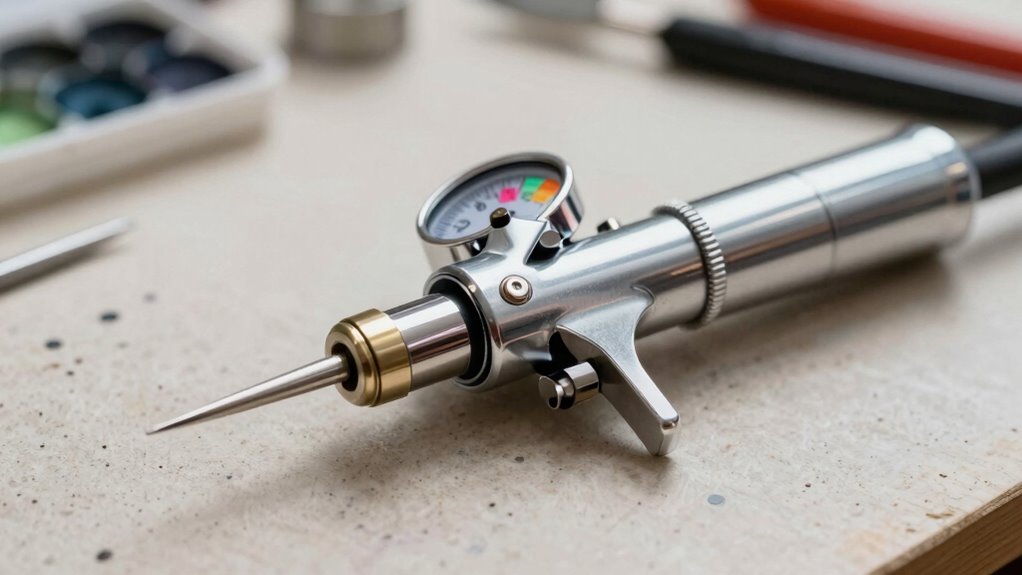
To stop splattering, start by adjusting your airbrush pressure—too high can cause overspray, while too low may clog or unevenly atomize paint. Choosing the right needle size also makes a difference: smaller needles give fine detail, while larger ones cover more area smoothly. Keep your needle properly calibrated and test different settings on scrap material. Mastering these basics will make your spray smoother and more controlled—keep exploring to learn even more tips.
Key Takeaways
- Use the correct nozzle size for your detail level to prevent uneven spray and splatter.
- Adjust airbrush pressure gradually; too high can cause overspray, too low may cause uneven paint flow.
- Balance pressure with nozzle size: higher pressure with small nozzles for fine details, moderate for broader coverage.
- Maintain consistent technique and distance from the surface to reduce splatter and achieve smooth results.
- Regularly calibrate and test your airbrush settings on scrap material before working on your project.
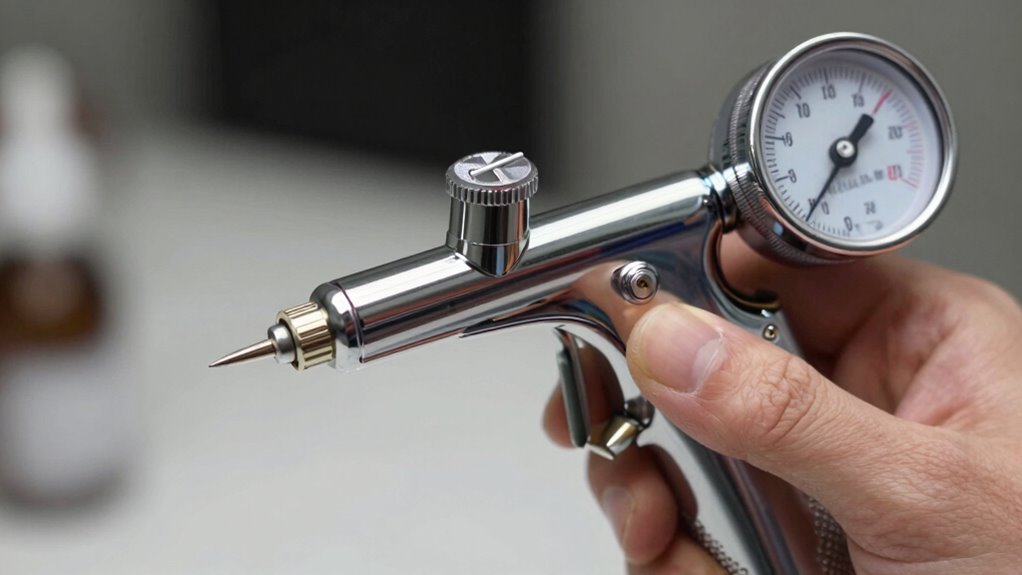
Understanding how airbrush pressure and needle size work together is vital for achieving the desired spray quality. When you control these two factors, you can fine-tune your paint flow, ensuring smooth, even coverage without splatter. The nozzle size determines how much paint passes through the airbrush, directly affecting the paint flow rate. A smaller nozzle produces a finer spray, ideal for detailed work, while a larger nozzle allows for thicker coats and broader strokes. Adjusting the nozzle size according to your project’s needs helps you get the right balance between detail and coverage.
Airbrush pressure plays a fundamental role in controlling how paint is atomized and how it lands on your surface. Higher pressure pushes paint out faster, increasing paint flow, which can be useful for covering larger areas quickly. However, too much pressure can cause overspray and splatter, especially if combined with a large nozzle. On the other hand, lower pressure provides a gentler spray, giving you more control for delicate details or smooth gradients. Finding the ideal pressure setting depends on your nozzle size and the type of paint you’re using. For example, a small nozzle with high pressure might produce a fine, controlled spray suitable for detailed work, while a larger nozzle with moderate pressure can help you cover larger surfaces efficiently.
The key to mastering your airbrush is understanding how these variables interact. When you increase the paint flow, you might need to reduce the pressure to prevent splatter. Conversely, if your spray is too feathery or inconsistent, turning up the pressure slightly can help atomize the paint better, especially with a nozzle designed for higher flow rates. It’s a balancing act, and the best results come from experimenting with small adjustments until you find the sweet spot for your specific project. Remember, your goal is to produce a smooth, even spray that deposits paint uniformly without creating drips or splatters.
In addition to pressure and nozzle size, your painting technique and distance from the surface also influence the final outcome. Closer distances increase paint density and detail, while further distances promote a softer, more diffuse spray. Adjusting your airbrush settings in conjunction with your technique allows you to control paint flow precisely, giving you professional-looking results. Keep in mind that different paints and mediums might require different settings, so don’t hesitate to test your setup on scrap material first. With practice, you’ll learn how to tweak pressure and nozzle size for ideal paint flow, achieving flawless finishes without the frustration of splatter or uneven coverage. Understanding airbrush calibration and how it impacts your results is essential for mastering the technique.
Top picks for "stop gett splatter"
As an affiliate, we earn on qualifying purchases.
Frequently Asked Questions
How Do I Clean My Airbrush Properly After Use?
To clean your airbrush properly, start by disconnecting it and emptying any remaining paint. Use cleaning techniques like running a suitable cleaner or water through the brush to flush out residue. Carefully disassemble the needle and nozzle for thorough airbrush maintenance. Always clean after each use to prevent clogging and guarantee ideal performance. Regular cleaning not only prolongs your airbrush’s life but also guarantees smooth, splatter-free painting sessions.
What Types of Paint Are Best for Airbrushing?
Did you know that over 70% of hobbyists prefer water-based paints for their ease of cleanup and safety? For your airbrushing projects, water-based paints are ideal because they spray smoothly and clean up with water. Solvent-based paints offer durability and a glossy finish but require proper ventilation. Choose water-based for beginners or quick projects, and solvent-based when you need long-lasting, professional results.
How Can I Fix Clogging Issues Quickly?
To fix clogging issues quickly, you should perform regular airbrush maintenance and follow troubleshooting tips like cleaning the needle and nozzle thoroughly after each use. Flush the airbrush with water or appropriate cleaner to clear any dried paint. If clogs persist, disassemble carefully and inspect for blockages. Keeping your equipment clean and practicing routine maintenance helps prevent clogs and guarantees smooth, consistent spraying every time.
What Safety Precautions Should I Take While Airbrushing?
Imagine you’re a painter in a risky studio—safety gear is your shield. Always wear protective gear like masks, gloves, and goggles to prevent inhaling fumes and paint. Make certain good ventilation setup to clear airborne particles, keeping your workspace safe. I once forgot my mask, and my cough lasted days. Prioritize safety, and your airbrush sessions stay fun and injury-free.
How Do I Choose the Right Nozzle Size for Detailed Work?
To choose the right nozzle size for detailed work, opt for a smaller nozzle diameter, typically between 0.2 to 0.3mm. This size allows you to achieve fine detail accuracy and control, making your work sharper and more precise. If you need intricate lines and delicate shading, a smaller nozzle is ideal. Remember, a smaller nozzle requires lower pressure, so adjust your airbrush settings accordingly for best results.
Conclusion
Think of your airbrush as a finely tuned garden hose and your needle as the nozzle that controls the flow. When you adjust the pressure and needle properly, you’re gently watering your masterpiece without a splash. Keep these basics in harmony, and you’ll create smooth, even art instead of splatter. Mastering this balance is like tending a delicate garden—patience and precision help your creativity flourish without chaos.