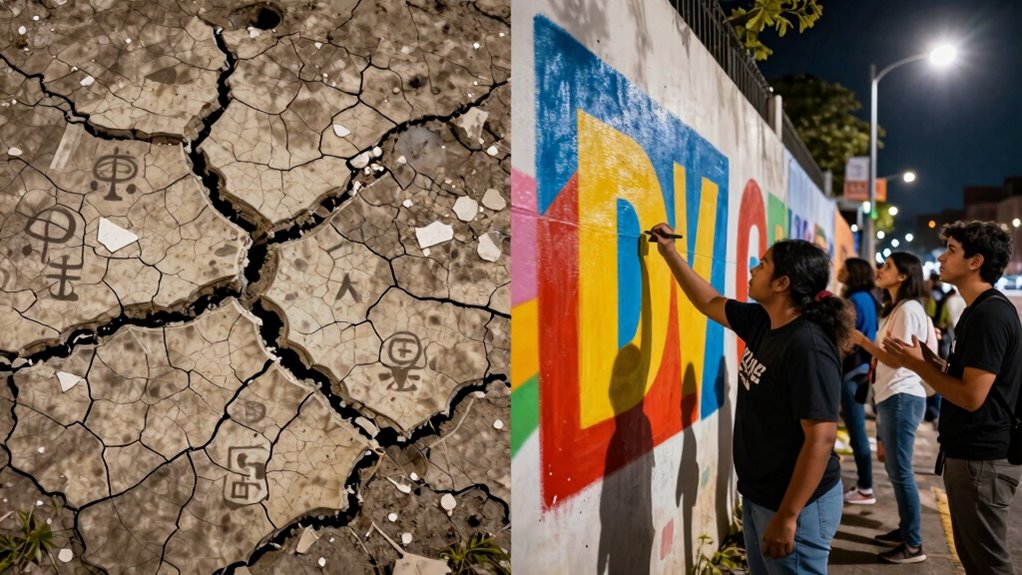

Awareness art aims to highlight social issues, provoke thought, and evoke emotional responses to foster understanding and empathy. It captures attention using powerful imagery and symbols, encouraging reflection on injustices. Action-oriented art, on the other hand, seeks to inspire real change by actively involving viewers through community projects, protests, or participatory acts. While awareness art sets emotional groundwork, action-oriented art channels those feelings into tangible steps toward societal transformation—exploring these differences more can help you see how both forms work together.
Key Takeaways
- Awareness art highlights social issues and provokes thought, focusing on emotional engagement and understanding.
- Action-oriented art aims to motivate tangible societal change through community involvement and participatory projects.
- Awareness art creates emotional responses, fostering empathy and reflection, while action art encourages direct activism.
- Awareness art serves as a foundation that inspires action, often transitioning viewers from emotional response to participation.
- Both forms of art function as catalysts for societal transformation but differ in their immediate goals—reflection versus action.
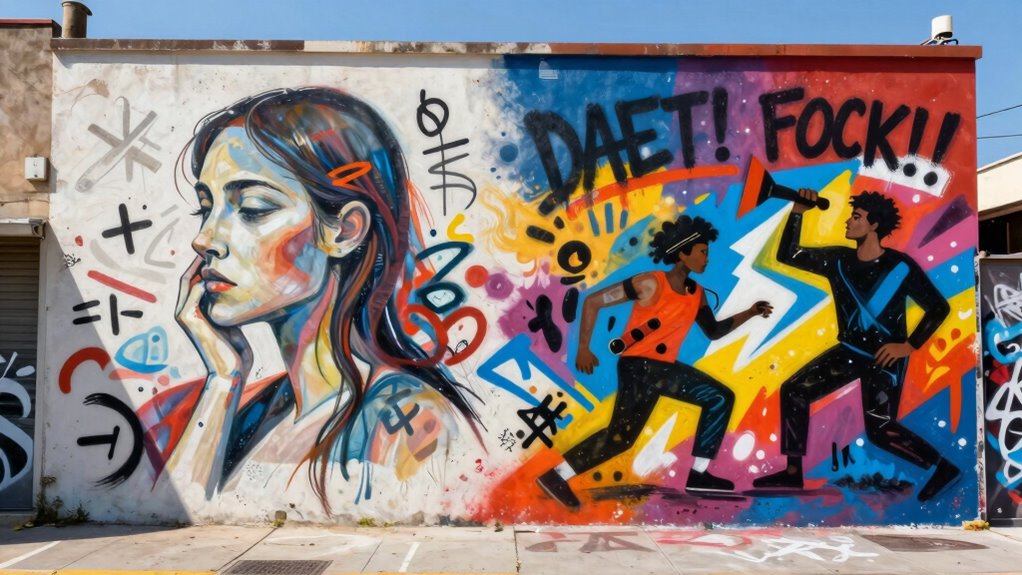
Art has long served as a mirror to society, but its purpose can vary from simply raising awareness to inspiring direct action. Awareness art aims to highlight issues, provoke thought, and spark an emotional response. When you encounter this kind of art, you’re invited to reflect on social injustices, environmental crises, or cultural shifts. Its strength lies in capturing attention and fostering understanding. You might find yourself moved by powerful imagery or poignant symbols, which stir feelings of empathy, outrage, or hope. This emotional response is essential because it lays the groundwork for change. Awareness art often resonates deeply within your cultural context, making the message more personal and compelling. It’s designed to be accessible and relatable, encouraging you to think differently or see the world through a new lens. Recognizing the power of visual storytelling in awareness art can amplify its impact and motivate viewers to consider their role in societal issues. Additionally, the emotional engagement fostered by awareness art can serve as a catalyst for deeper cultural awareness, encouraging viewers to explore and understand the broader social and environmental contexts.
In contrast, action-oriented art takes the next step. It doesn’t just aim to inform or inspire; it seeks to mobilize you toward change. This form of art often manifests in community projects, protests, murals, or participatory installations that invite your direct involvement. The cultural impact of action-oriented art is immediate and tangible—it’s meant to create a movement. When you engage with this type of art, you’re not just a passive observer—you become part of the solution. Whether it’s signing a petition, joining a rally, or contributing to a community effort, this art pushes you to act. It channels the emotional response generated by awareness art into concrete steps, transforming feelings into activism.
Both forms of art are interconnected, with awareness art laying the emotional groundwork that fuels action. You might see a striking image or hear a compelling story that stirs your conscience, then encounter an opportunity to get involved. The shift from awareness to action is essential for real change. While awareness art can evoke powerful feelings and spark conversations, action-oriented art channels that energy into tangible outcomes. The cultural impact of this progression is profound, fostering community engagement and societal transformation. Whether you’re moved by a piece that opens your eyes or inspired to participate in a movement, both types of art serve indispensable roles. They remind you that art isn’t just for aesthetic pleasure; it’s a catalyst for awareness, empathy, and ultimately, action.
awareness art posters
As an affiliate, we earn on qualifying purchases.
As an affiliate, we earn on qualifying purchases.
Frequently Asked Questions
How Do Artists Choose Between Awareness and Action Art?
You choose between awareness and action art based on your artist intention and the impact you want to have on viewer engagement. If your goal is to inform or raise consciousness, awareness art is your path. If you aim to inspire direct change, action-oriented art encourages viewers to participate actively. Your decision depends on whether you want to evoke thought or prompt tangible action, shaping how your audience interacts with your work.
Can Awareness Art Lead to Actual Social Change?
Awareness art can indeed lead to social change by sparking critical conversations and influencing cultural perceptions. Your artistic motivation to highlight issues raises awareness, which can inspire individuals and communities to act. When your art resonates deeply, it creates a cultural impact that may motivate collective actions or policy shifts. While awareness alone isn’t always enough, it lays essential groundwork for meaningful social change by engaging audiences emotionally and intellectually.
Are There Examples Where Awareness Art Failed to Inspire Action?
You might think awareness art always sparks change, but sometimes it falls flat, like a thunderclap that fades into silence. When impact measurement shows little to no actual action afterward, it reveals how artistic neutrality can limit influence. Without clear pathways for change, awareness art risks being just an emotional gesture, failing to motivate viewers to transform insight into tangible social action, leaving many efforts ineffective despite good intentions.
What Materials Are Commonly Used in Action-Oriented Art?
You’ll find that action-oriented art often uses mixed media, combining various materials like paint, fabric, and found objects to create impactful pieces. Recyclable materials are especially popular because they emphasize sustainability and environmental awareness. By using items like plastic bottles, paper, or metal scraps, artists turn everyday objects into powerful statements that encourage viewers to take action. This approach makes the art both visually compelling and meaningful, inspiring change through tangible, eco-friendly materials.
How Do Audiences Typically Respond Differently to Each Art Type?
Like a spark igniting a flame, awareness art often evokes reflection and emotional impact through subtle visuals, prompting viewers to contemplate social issues. Action-oriented art, however, often stirs a sense of urgency and motivation, inspiring immediate involvement. Audiences respond differently: awareness art fosters contemplation, while action-oriented pieces drive them to act, fueled by powerful visual storytelling that compels emotional engagement and a call to change.
social change protest art supplies
As an affiliate, we earn on qualifying purchases.
As an affiliate, we earn on qualifying purchases.
Conclusion
You might think awareness art and action-oriented art are just different methods, but they both serve a deeper purpose: sparking change. Awareness art plants a seed of thought, while action-oriented art pushes you to act. Together, they challenge you to question what’s possible. Maybe, the true power lies in their synergy—using understanding as a catalyst for real change. When you embrace both, you become part of the art’s transformative potential.
participatory art installation kits
As an affiliate, we earn on qualifying purchases.
As an affiliate, we earn on qualifying purchases.
activist art community projects
As an affiliate, we earn on qualifying purchases.
As an affiliate, we earn on qualifying purchases.