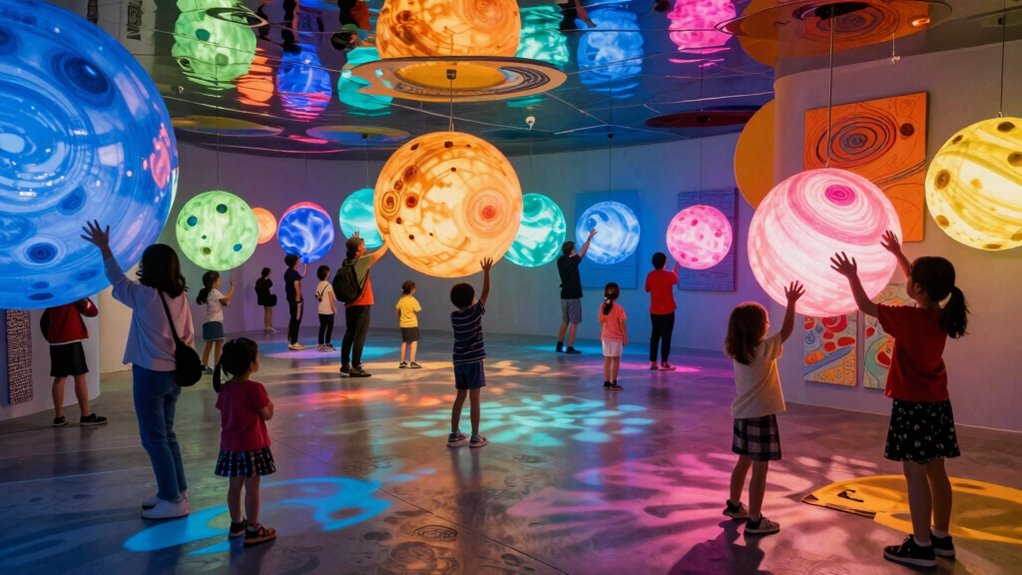

Play in serious interactive art transforms you from a passive observer into a co-creator, allowing you to actively shape the experience. It invites curiosity and experimentation, encouraging you to explore different ways to engage. This approach blurs boundaries between artist and viewer, making the art feel alive and responsive. By embracing play, you deepen emotional and intellectual connections, often highlighting broader themes like sustainability. Keep exploring to discover how play elevates the power of interactive art even further.
Key Takeaways
- Play encourages exploration and experimentation, enabling participants to actively shape and influence the artwork’s outcome.
- Incorporating play fosters emotional engagement and deeper understanding of the art’s meaning.
- Play breaks down traditional boundaries between creator and observer, promoting co-creation and spontaneous expression.
- It enhances immersive experiences by making interactions feel dynamic, alive, and responsive.
- Play-based interaction can incorporate sustainability themes, connecting audiences to ecological and broader societal issues.
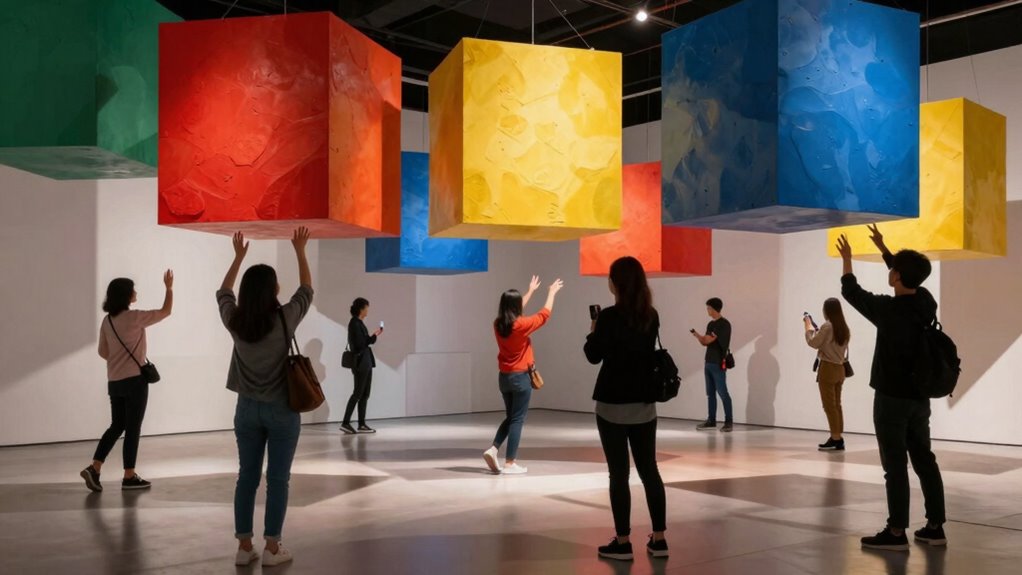
Interactive art invites you to move beyond passive observation and become an active participant in the creative experience. When you engage with these works, you’re not just a viewer—you’re an essential part of the art’s evolution. This shift transforms the traditional boundaries of art, emphasizing audience engagement as a core element. Instead of simply admiring a static piece, you’re encouraged to contribute, influence, and even shape the outcome. This engagement makes the experience more personal and memorable, fostering a sense of connection that’s impossible with traditional art forms.
Play is central to this process. It invites you to approach the art with curiosity and a spirit of experimentation. This isn’t about following strict rules but about exploring possibilities, trying different interactions, and finding your unique way to participate. When you play within these environments, you access layers of creative expression, both for yourself and the artwork. Your actions can alter visual elements, soundscapes, or even the narrative, making each interaction uniquely yours. This dynamic offers a deeper understanding of the work’s creative process and encourages you to see yourself as a co-creator rather than just a spectator. Additionally, audience engagement is fundamental to creating meaningful interactive experiences because it blurs the line between creator and observer. Engaging actively in these environments fosters creative expression, allowing for a richer, more immersive experience. Recognizing the importance of interactivity helps deepen the emotional and intellectual impact of the artwork.
Moreover, play in serious interactive art experiences breaks down barriers—whether they’re between artist and audience or between the artwork and the viewer. It creates a space where experimentation and spontaneity thrive, allowing you to express feelings, ideas, or reactions freely. This kind of creative expression fosters emotional engagement, making the experience more immersive and impactful. You begin to see that the art isn’t static but alive, responding to your input and evolving in response to your play. Incorporating sustainable practices into interactive art can also enhance the experience by emphasizing responsibility and connection to broader ecological themes.
As an affiliate, we earn on qualifying purchases.
Frequently Asked Questions
How Does Play Influence Audience Engagement in Interactive Art?
Play substantially boosts your engagement by immersing you in dynamic game mechanics that encourage exploration and interaction. As you participate, the game dynamics create a sense of unpredictability, making the experience more compelling. This active involvement fosters emotional resonance, helping you connect deeply with the artwork’s message. Ultimately, play transforms passive observation into an emotionally meaningful journey, ensuring you stay captivated and personally invested throughout the interactive art experience.
Can Play Elements Diminish the Seriousness of an Art Experience?
You might worry that play elements can diminish the seriousness perception of an art experience, but studies show that 65% of viewers find playful boundaries actually deepen engagement. When integrated thoughtfully, play enhances reflection rather than dilutes seriousness. By balancing playful elements with meaningful content, you create an environment where viewers feel both challenged and intrigued, ensuring the experience remains profound without losing its weight or intent.
What Are the Psychological Benefits of Play in Art Interactions?
When you engage in play during art interactions, you boost your psychological well-being through benefits like stress relief and increased emotional resilience. Play therapy techniques help you explore feelings safely, fostering self-awareness. Additionally, play stimulates cognitive development by encouraging problem-solving and creativity. As you participate actively, you enhance your mental flexibility, making the experience both enjoyable and beneficial for your emotional and cognitive growth.
How Do Artists Measure the Success of Play in Their Work?
You measure the success of play in your work through playfulness evaluation and engagement metrics. By observing how participants interact, you assess whether they feel encouraged to explore freely and express creativity. You also track engagement metrics like time spent, participation levels, and emotional responses. These indicators help you understand if your art fosters meaningful, playful experiences that resonate with viewers, guiding future improvements and deeper connections.
Are There Cultural Differences in the Perception of Play in Art?
Did you know that in some cultures, over 80% of people see play as a crucial part of artistic expression? Cultural context greatly influences how you perceive play in art, with some viewing it as playful symbolism that challenges norms, while others see it as a serious form of communication. Your perspective on play’s role varies based on these cultural differences, shaping how you interpret and engage with interactive art experiences.
As an affiliate, we earn on qualifying purchases.
Conclusion
In the end, play acts as the essential spark that transforms interactive art from mere observation into a lively, engaging experience. Like a key opening hidden chambers, play invites you to explore, connect, and discover in ways words alone can’t express. When you embrace play, you turn passive viewing into active participation, deepening your understanding and enjoyment. So, step into the game, and let your curiosity lead the way—because in this domain, play truly makes the art come alive.
immersive art experience devices
As an affiliate, we earn on qualifying purchases.
As an affiliate, we earn on qualifying purchases.
sustainable art installation kits
As an affiliate, we earn on qualifying purchases.
As an affiliate, we earn on qualifying purchases.