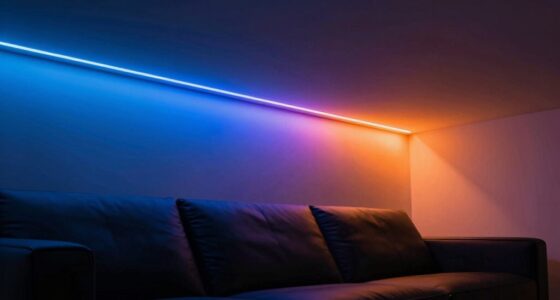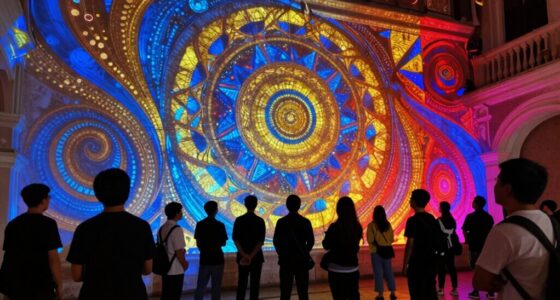
Responsive lighting feels more emotional than static lighting because it adapts to your mood and the atmosphere around you. Unlike static lights that remain unchanged, responsive lighting creates dynamic environments that resonate with your feelings. Whether it’s soft lights for relaxation or brighter tones for focus, this adaptability fosters a deeper connection to your space. It’s all about enhancing your experience and understanding your needs. Discover how this technology can transform your surroundings even further.
Key Takeaways
- Responsive lighting adapts to emotional states, creating an immersive experience that resonates deeply with users.
- Soft, warm lighting fosters comfort and relaxation, enhancing emotional connections in cozy spaces.
- Dynamic lighting changes during social gatherings, amplifying excitement and intimacy among guests.
- Tailored lighting options cater to individual needs, promoting a sense of understanding and engagement.
- Integration with smart technology allows for intentional design choices, enhancing overall emotional well-being.

As you step into a room, the lighting shifts to match your mood, creating an atmosphere that feels just right. This is what responsive lighting brings to your experience—an ability to adapt and evolve, crafting dynamic environments that resonate with your emotional responses. Unlike static lighting, which stays the same regardless of how you feel, responsive systems read the room and adjust accordingly, making you feel more in tune with your surroundings.
Imagine walking into a cozy living space. The lights soften, casting a warm glow that wraps around you like a comforting hug. You immediately feel at ease, as if the environment understands your need for relaxation. This is the magic of responsive lighting; it doesn’t just illuminate a space—it interacts with your emotions, creating a deeper connection. In contrast, static lighting can often feel harsh or uninspired. It lacks that personal touch, making it harder for you to engage with the space on an emotional level.
Imagine entering a cozy space where soft lights embrace you, fostering relaxation and a deeper emotional connection. That’s the magic of responsive lighting.
When you think about events like parties or gatherings, responsive lighting can elevate the experience. As laughter fills the air, the lights might pulse gently, mirroring the excitement. When the mood shifts to something more intimate, they can dim, fostering a sense of closeness. This adaptability allows you and your guests to feel more connected, enhancing the emotional responses that arise in those moments. Static lighting, however, can’t match this versatility; it remains unchanged, leaving you with a flat experience that fails to capture the energy of the occasion.
Moreover, responsive lighting can help you focus or relax, depending on your needs. If you’re working on a project, brighter lights can stimulate your creativity and concentration. Conversely, when you’re winding down for the evening, softer tones can signal your brain to relax. This tailored approach makes you feel understood, as if the space is designed specifically for you. Static lighting doesn’t offer this level of personalization; it’s one-size-fits-all, often leading to a disconnect between you and your environment. Additionally, smart home solutions make it easier to implement and control responsive lighting, bringing these benefits right into your everyday life. Understanding how lighting technology interacts with your environment can further enhance your ability to create spaces that support your emotional well-being. Recognizing the interactive nature of responsive lighting allows for more intentional and meaningful design choices.
By understanding how responsive lighting interacts with your environment, you can create spaces that truly reflect and enhance your emotional well-being. So next time you enter a room, notice how the light can shape your emotions, turning a simple space into something truly special.

Govee Smart RGB LED Strip Lights, 16.4ft WiFi LED Strip Lighting Work with Alexa and Google Assistant, 16 Million Colors with App Control and Music Sync LED Lights for Bedroom, Home Decor
Hands-Free Voice Control: The Smart RGB LED Light Strip work with both Alexa & Google Assistant. Free up…
As an affiliate, we earn on qualifying purchases.
As an affiliate, we earn on qualifying purchases.
Frequently Asked Questions
How Does Responsive Lighting Impact Mood in Different Environments?
Responsive lighting directly impacts your mood by adapting to your environment. When you enter a space, the light adjusts, creating mood shifts that can energize or calm you. For instance, warm tones can foster relaxation in a cozy room, while bright, cool light can enhance focus in a workspace. This adaptation makes you feel more connected to your surroundings, enhancing your emotional experience and overall well-being in various settings.
Can Responsive Lighting Enhance Focus During Work or Study?
Absolutely, responsive lighting can enhance your focus during work or study. Research shows that adjusting color temperature and light intensity can boost productivity by up to 20%. Cooler light temperatures mimic daylight, which keeps you alert and engaged, while dimmer, warmer tones can provide a calming atmosphere. By personalizing your lighting based on your tasks, you create an environment that supports concentration and helps you perform at your best.
What Technologies Enable Responsive Lighting Systems?
Smart sensors and dynamic controls are key technologies that enable responsive lighting systems. With smart sensors, your environment can detect changes in light levels or occupancy, automatically adjusting brightness to suit your needs. Dynamic controls allow you to customize settings easily, switching between different lighting moods and intensities. Together, these technologies create a flexible lighting experience that adapts to your activities, enhancing both comfort and productivity in your space.
Are There Energy-Saving Benefits to Using Responsive Lighting?
Yes, there are significant energy-saving benefits to using responsive lighting. You’ll enjoy energy efficiency, enhance your user experience, and reduce electricity costs. By adjusting to your needs—like dimming when no one’s around or brightening during active hours—these systems optimize energy use. You’re not just saving money; you’re also contributing to a more sustainable environment. Embracing responsive lighting means you’re making smarter choices for both your space and the planet.
How Can I Implement Responsive Lighting in My Home?
To implement responsive lighting in your home, start by installing smart bulbs that allow for ambient adjustments. You can set different color temperatures based on the time of day or your mood. For example, use warmer tones in the evening to create a cozy atmosphere, and cooler tones during the day to enhance focus. Pair these bulbs with a smart hub or app for easy control and scheduling, making your lighting truly responsive to your needs.

XEBKOR Sunset Lamp Projector Multicolor Changing LED Projection Lamp,Switch Button and APP Control 360 Degree Rotation Sunlight Lamp for Bedroom, Photography, Party, Tiktok Live, Room Decor
【Endless Color RGB Sunset Lamps】 – This upgraded sunset projection lamp features high-refraction lenses , farther distance ,wider…
As an affiliate, we earn on qualifying purchases.
As an affiliate, we earn on qualifying purchases.
Conclusion
In a world where static lighting feels like a monotonous hum, responsive lighting dances like a close friend who knows just when to laugh or comfort you. Think of how a sunset shifts from fiery orange to soft lavender, reflecting your mood. Just as that sunset captures fleeting emotions, responsive lighting adapts to your surroundings, creating a symphony of feelings. It’s this dynamic interplay that transforms a space, making it not just seen, but truly felt.

INTELLIGENT LIGHTING SYSTEM DESIGN: adaptive illumination control and energy efficient solutions
As an affiliate, we earn on qualifying purchases.
As an affiliate, we earn on qualifying purchases.

Govee RGBIC Floor Lamp Basic, 1000lm LED Corner Lamp Compatible with SmartThings, Alexa, and Matter, Modern Floor Lamp with Music Sync and 16 Million DIY Colors, Standing Lamp for Bedroom Living Room
Dynamic RGBIC Color: Unleash your creativity with Govee RGBIC technology, you can customize each segment color base and…
As an affiliate, we earn on qualifying purchases.
As an affiliate, we earn on qualifying purchases.