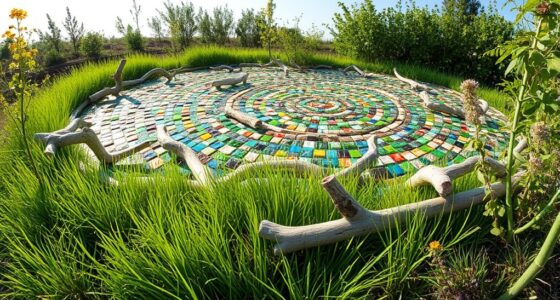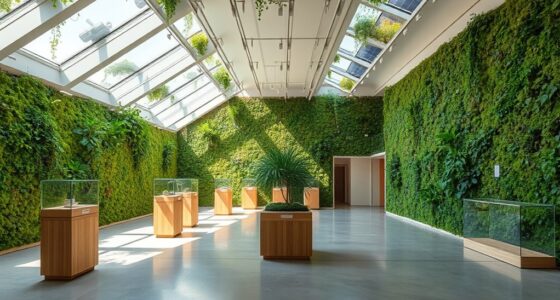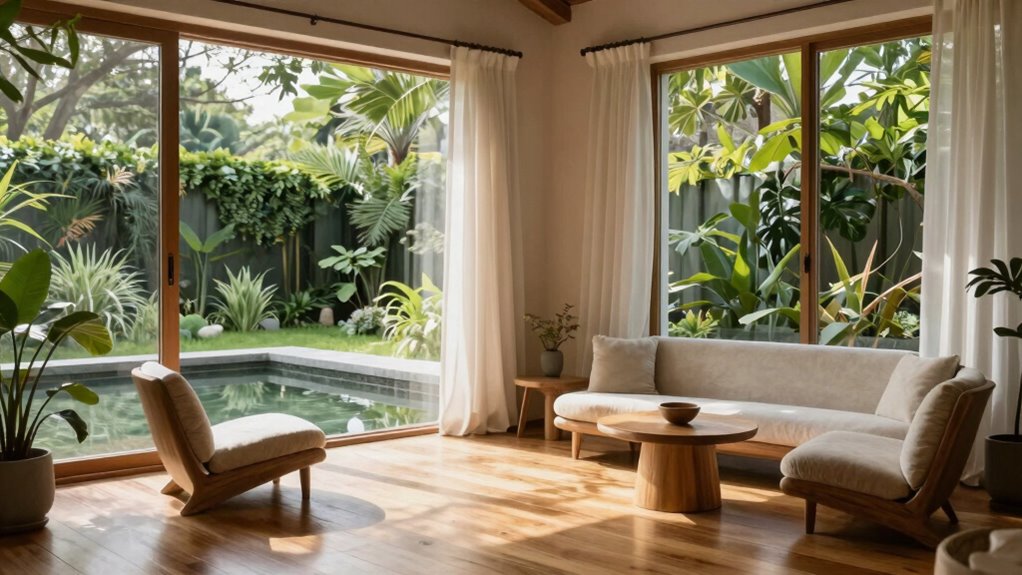

In sustainable studio design, you need to prioritize air quality, natural light, and water efficiency. Clean air enhances your health, so use natural materials and plants to improve it. Harnessing natural light cuts energy costs and optimizes warmth. Water efficiency reduces waste through smart fixtures and systems. Together, these elements create a vibrant, adaptable environment. If you explore further, you’ll discover even more ways to enhance your studio’s sustainability and comfort.
Key Takeaways
- Clean indoor air quality enhances health, achieved through natural materials, plants, and effective ventilation systems in studio design.
- Maximizing natural light with windows and skylights reduces energy costs and promotes passive heating in sustainable studio environments.
- Water efficiency is promoted through eco-friendly fixtures, rainwater harvesting, and greywater recycling, supporting sustainability in studio design.
- Acoustic treatment enhances sound quality using natural materials while maintaining aesthetic appeal, creating healthier indoor environments for studios.
- Space optimization encourages multifunctional layouts and modular design, reducing material waste and energy consumption in sustainable studio spaces.
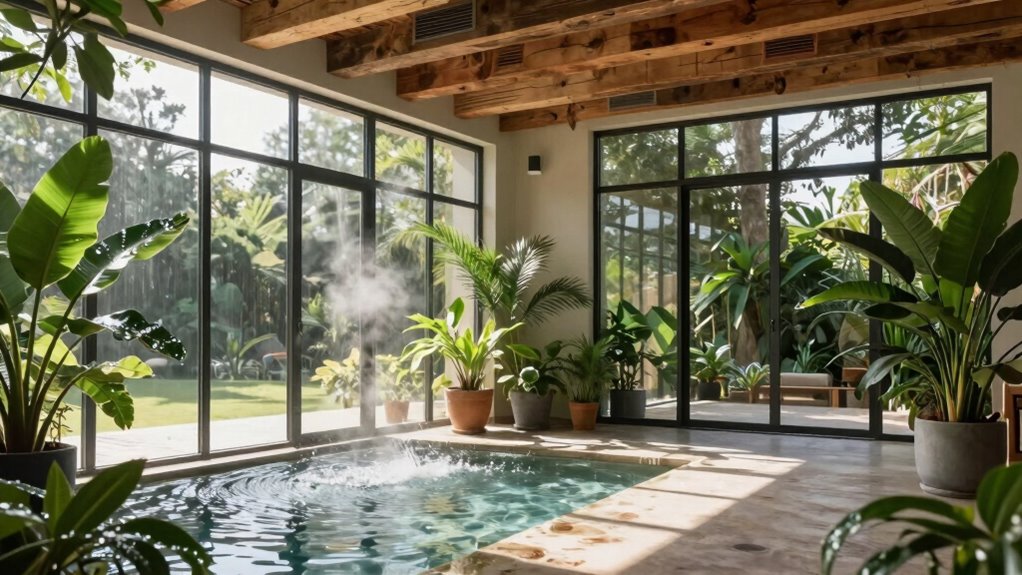
When you think about designing a studio, sustainability should be at the forefront of your mind. The role of air, light, and water is essential in creating a space that not only feels good but also promotes environmental responsibility. By integrating these elements effectively, you can enhance user comfort and optimize the space for various activities.
First, let’s consider indoor air quality. You want to guarantee that the air people breathe is clean and fresh. Using natural materials like wood and bamboo can greatly reduce harmful emissions that synthetic materials often release. These materials not only contribute to healthier indoor air but also add aesthetic value. You might also want to incorporate plants into your design, aligning with biophilic design principles. Plants act as natural air purifiers, improving both air quality and the overall ambiance of your studio. Additionally, ensuring proper ventilation systems are in place helps to continually refresh the air, supporting overall indoor air quality.
Prioritize indoor air quality by using natural materials and incorporating plants to enhance both health and aesthetics in your studio.
Next, think about how light enters your studio. Natural light is a game-changer for energy efficiency. By maximizing windows and skylights, you can reduce reliance on artificial lighting, cutting energy costs while creating a warm, inviting atmosphere. The strategic placement of windows allows for passive heating during colder months, enabling sunlight to warm your space without additional energy consumption. This not only enhances user comfort but also supports sustainability efforts. Incorporating passive heating techniques can further enhance this effect by optimizing how sunlight naturally heats the space. Additionally, designing windows with energy-efficient glazing can help maintain indoor temperature stability and reduce energy use.
Water usage is another key factor. Implementing water-efficient fixtures and systems can minimize waste while guaranteeing that your studio remains functional and inviting. Consider incorporating rainwater harvesting systems or greywater recycling to further enhance sustainability. These systems can support landscaping and other non-potable uses, reducing your overall water footprint. Incorporating water conservation strategies can further boost the sustainability of your studio. Properly managing water resources not only conserves this vital resource but also aligns with environmentally responsible practices. Moreover, choosing fixtures made from eco-friendly materials can contribute to overall sustainability.
Acoustic treatment is essential in a studio setting. You want to create an environment where sound quality is optimized, especially if you’re working with music or recording. Using natural materials for sound insulation can help absorb noise effectively, making your space both functional and comfortable. It’s all about striking a balance between aesthetics and performance. Incorporating sound-absorbing natural materials can further improve the acoustic environment and promote a healthier indoor setting.
Lastly, space optimization plays a fundamental role in sustainable design. By thoughtfully planning the layout, you can create multifunctional areas that serve various purposes. This reduces the need for excess materials and promotes a more efficient use of space. Thoughtful space planning also encourages flexible use of areas, which can adapt to changing needs over time. Incorporating modular design principles can further enhance this adaptability and sustainability. Proper space utilization can also reduce energy consumption associated with heating, cooling, and lighting, making your studio more sustainable overall.
natural air purifying indoor plants
As an affiliate, we earn on qualifying purchases.
As an affiliate, we earn on qualifying purchases.
Frequently Asked Questions
How Can I Incorporate Renewable Energy Sources in Studio Design?
You can incorporate renewable energy sources in your studio design by installing solar panels and wind turbines for clean energy. Use energy storage solutions to maximize your power usage. Implement passive design techniques and geothermal heating to enhance energy efficiency. Don’t forget daylight harvesting to utilize natural light effectively. Smart technology can optimize energy consumption, while green roofs improve insulation and reduce heat. Together, these elements create a sustainable and efficient studio environment.
What Are the Best Materials for Sustainable Studio Construction?
For sustainable studio construction, use materials like bamboo and reclaimed wood for their durability and low environmental impact. Incorporate natural insulation such as sheep’s wool or cellulose to enhance energy efficiency. Opt for eco-friendly finishes, like non-toxic paints and finishes, to guarantee a healthier indoor environment. These choices not only reduce your carbon footprint but also create a warm, inviting space that reflects your commitment to sustainability.
How Do I Measure My Studio’s Energy Efficiency?
To measure your studio’s energy efficiency, start with energy audits to assess current consumption. Use efficiency metrics like energy use intensity (EUI) to compare against performance benchmarks. Implement design strategies that optimize insulation, lighting, and HVAC systems. Regularly track changes to see how adjustments improve efficiency. By focusing on these elements, you’ll identify areas for improvement and guarantee your studio operates sustainably and cost-effectively.
Can I Retrofit an Existing Studio for Sustainability?
Yes, you can retrofit your existing studio for sustainability! Start by conducting energy audits to identify inefficiencies. Then, focus on green upgrades, like installing energy-efficient lighting, improving insulation, and using sustainable materials. Consider adding smart technology to optimize energy usage. Don’t forget about water conservation measures, such as low-flow fixtures. With these steps, you’ll create a more sustainable environment while reducing your energy costs and environmental impact.
What Certifications Exist for Sustainable Studio Design?
“Every little bit helps!” You can pursue several certifications for sustainable studio design, including LEED certification, which focuses on energy efficiency and sustainable materials. Green Building certifications emphasize eco-friendly practices, while Energy Star helps you improve energy performance. Additionally, incorporating passive design strategies can enhance your studio’s sustainability. By seeking these certifications, you not only boost your studio’s value but also contribute to a healthier environment.
energy-efficient skylights for studio
As an affiliate, we earn on qualifying purchases.
As an affiliate, we earn on qualifying purchases.
Conclusion
Incorporating air, light, and water into your studio design isn’t just about aesthetics; it’s about creating a space that breathes and thrives. Imagine walking into a room filled with natural light, where fresh air flows freely, and water features bring tranquility. Coincidentally, this environment not only boosts your creativity but also nurtures your well-being. So, as you plan your sustainable studio, remember that these elements are more than just design choices—they’re essential for a vibrant, inspiring space.
As an affiliate, we earn on qualifying purchases.
sustainable studio ventilation systems
As an affiliate, we earn on qualifying purchases.
As an affiliate, we earn on qualifying purchases.