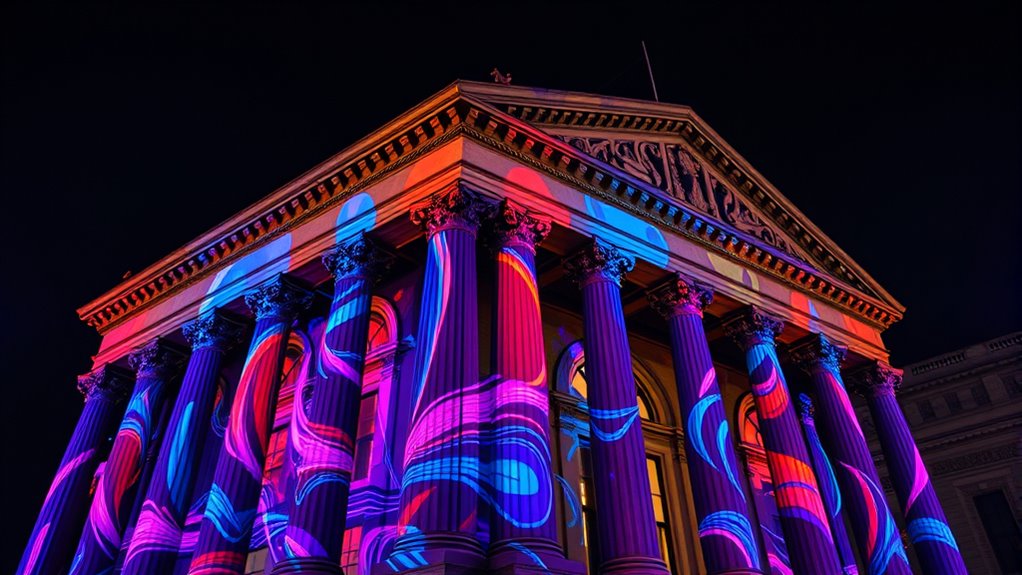

Projection mapping transforms buildings and architectural surfaces into stunning, moving artworks by combining advanced technology, high-powered projectors, and specialized software. It involves precisely calibrating visuals to surfaces, creating immersive displays for cultural events, festivals, and public art. As technology advances, it becomes more versatile with innovations like augmented reality, drones, and eco-friendly systems. To explore how you can start creating these mesmerizing displays, continue exploring the exciting world of projection mapping.
Key Takeaways
- Projection mapping uses high-powered projectors and specialized software to transform static architecture into dynamic visual art displays.
- It involves precise calibration, surface analysis, and multi-projector edge blending for seamless, large-scale projections on buildings.
- Artists utilize projection mapping to create immersive storytelling, cultural celebrations, and cityscape enhancements during festivals and events.
- Technological advancements like AI, laser projectors, and drones are expanding creative possibilities and aerial projection capabilities.
- Sustainable practices are increasingly integrated, focusing on eco-friendly materials and energy-efficient systems for environmentally responsible art.
The Evolution of Projection Mapping Technology
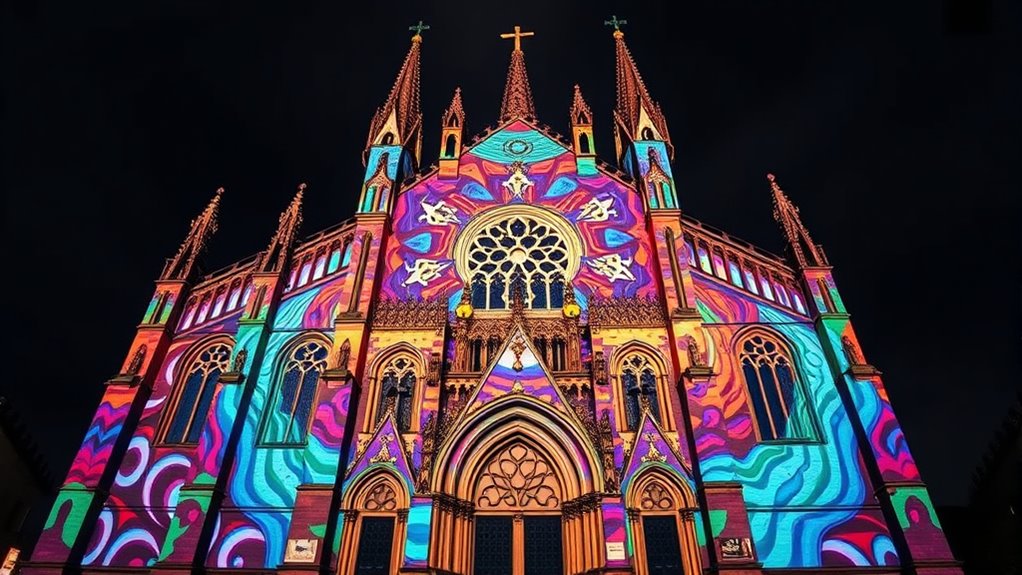
Projection mapping has come a long way since its early experiments with simple light displays. Initially, it involved basic projections onto static surfaces, limited by low-resolution projectors and minimal software. Over time, technological advancements dramatically transformed the field. High-definition projectors emerged, allowing for sharper, more detailed visuals. The development of specialized software made it easier to create complex animations that perfectly fit architectural surfaces. Real-time rendering and 3D mapping became possible, enabling dynamic presentations and interactive experiences. As hardware became more affordable and powerful, projection mapping expanded beyond art installations to commercial and public events. Today, it’s a sophisticated art form that seamlessly integrates visuals with architecture, creating immersive environments. The importance of color accuracy in projection mapping ensures that colors are vibrant and true to the intended design, enhancing visual impact. This evolution continues as new innovations push the boundaries of what projection mapping can achieve.
Techniques and Equipment Behind Projection Mapping
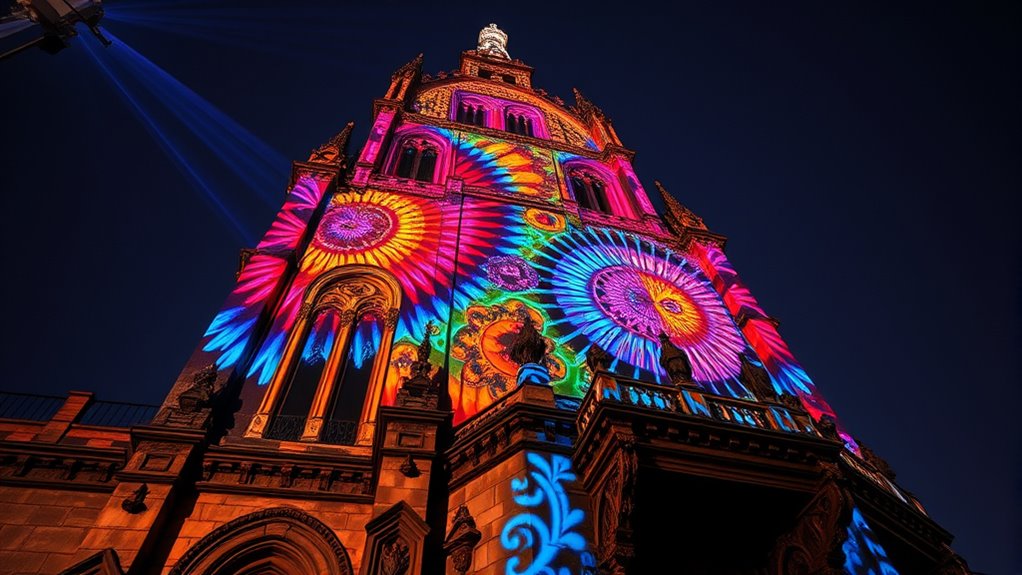
The success of projection mapping relies heavily on the specific techniques and equipment used to bring visuals to life. You begin with high-powered projectors that deliver bright, crisp images capable of covering complex surfaces. Precise calibration is essential; you use specialized software to align visuals perfectly with architectural features, ensuring seamless integration. You also need powerful computers to process large video files and run projection mapping software smoothly. Lens selection and image blending techniques help achieve sharp focus and continuous visuals across surfaces. Additionally, you might employ multiple projectors for larger areas, using edge blending to create a unified display. Properly chosen equipment and meticulous technique enable you to transform static architecture into dynamic, immersive art experiences.
Creative Applications in Urban Spaces

Urban spaces become vibrant canvases when projection mapping is creatively applied, transforming ordinary buildings and streets into immersive art installations. You can turn a dull facade into a storytelling backdrop, engaging passersby with dynamic visuals. During festivals, projection mapping adds excitement by projecting vivid animations that interact with the environment. It can also highlight cultural themes or historical moments, creating a sense of community pride. Imagine a city square illuminated with shifting images that evoke emotion and spark conversations. Here’s a snapshot of typical applications: analyzing key performance indicators | Application Type | Effect | |———————-|——————————————-| | Cultural Events | Celebrates heritage with vibrant displays | | Public Art Installations | Invites interaction and engagement | | Nighttime Cityscapes | Transforms urban environments into art
Notable Projects and Case Studies
Many innovative projection mapping projects have captured public attention by transforming ordinary spaces into mesmerizing visual experiences. One standout example is the annual Coachella Valley Music and Arts Festival, where artists project stunning visuals onto stage structures, creating an immersive atmosphere. Another notable case is the Sydney Opera House, which has hosted spectacular light shows that highlight its iconic architecture. The Edinburgh Castle’s illumination during the Festival of Lights transforms the historic site into a vibrant canvas for storytelling. In 2012, the “Light Matter” project in London used projection mapping to animate a building facade, illustrating its history creatively. These projects demonstrate how projection mapping can elevate public spaces, blending art and architecture to captivate audiences and showcase technological innovation.
Impact on Architecture and Public Art

Projection mapping has revolutionized how architects and artists approach public spaces by turning buildings into dynamic canvases that communicate stories and evoke emotions. It transforms static structures into immersive experiences, encouraging community engagement and redefining visual storytelling. This technology blurs the line between architecture and art, making structures more interactive and memorable. Public art installations now incorporate projection mapping to reflect cultural themes or celebrate events, fostering a sense of identity and pride. The table below highlights some key impacts:
| Aspect | Effect | Example |
|---|---|---|
| Visual Engagement | Creates mesmerizing, interactive displays | City festivals |
| Cultural Expression | Showcases local stories and traditions | Urban murals |
| Architectural Enhancement | Adds dynamic features to existing structures | Historic building renovations |
Additionally, projection mapping can enhance empathy by allowing viewers to connect emotionally with stories conveyed through these visual displays.
Challenges and Limitations of Projection Mapping
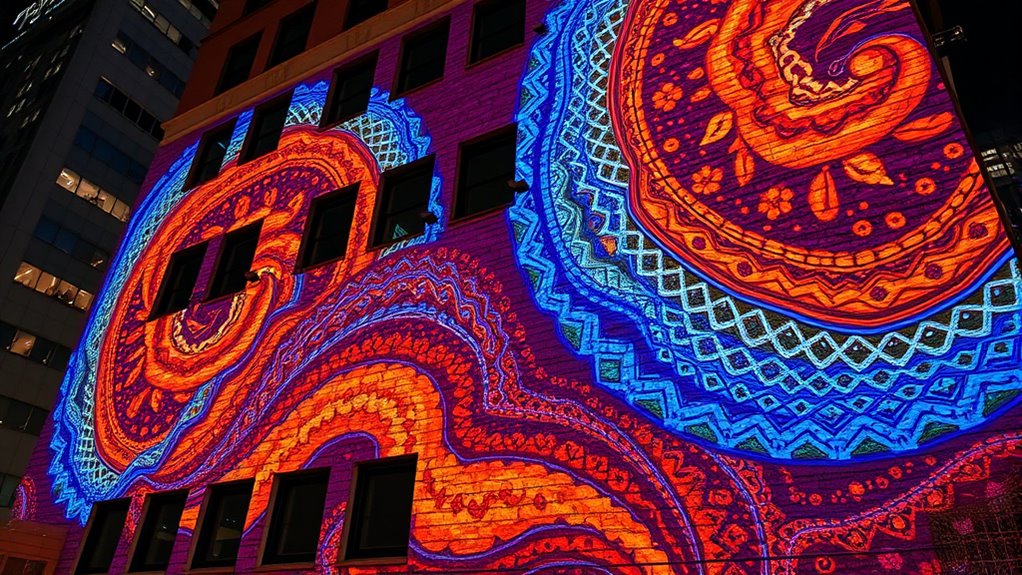
Projection mapping can encounter significant technical constraints, causing failures or distortions during displays. Environmental factors like weather and lighting conditions also pose challenges that can affect performance. Additionally, logistical issues such as equipment setup and power requirements can limit where and how you use projection mapping effectively. Ensuring proper performance and support solutions is essential to overcoming these limitations.
Technical Constraints and Failures
While projection mapping offers stunning visual effects, it also faces significant technical constraints that can hinder its success. Precise calibration is essential; even minor misalignments can distort images and ruin the illusion. You must account for surface irregularities, which complicate projector placement and image warping. Brightness levels pose challenges—an overly dim projection reduces visibility, especially outdoors, while intense light can cause glare. Equipment failures, such as projector overheating or bulb burnout, can abruptly disrupt displays. Complex surfaces demand advanced software and multiple projectors, increasing setup time and costs. Additionally, syncing animations with architecture requires meticulous planning. The choice of Kia Tuning components, such as performance enhancements, can influence lighting and reflective surfaces, adding another layer of complexity. These technical limitations demand thorough testing and adaptation, or you risk compromised visuals, reduced impact, and project failures.
Environmental and Logistical Challenges
Technical challenges such as precise calibration and equipment failures can be difficult enough, but environmental and logistical factors often add another layer of complexity. Weather conditions, like wind, rain, or extreme temperatures, can disrupt setup and operation, risking damage or misalignment. You must also consider ambient lighting, which can diminish the visibility and impact of your projection. Logistically, coordinating access to the site, securing permits, and transporting equipment demand careful planning. Unpredictable factors like power outages or crowd movement can further complicate your project. To succeed, you need to anticipate these challenges, adapt your setup accordingly, and build flexibility into your plan. Addressing environmental and logistical hurdles is vital to delivering a seamless projection mapping experience that transforms architecture into mesmerizing moving art. Additionally, understanding personal development techniques like goal setting and mindfulness can help project teams stay focused and adaptable under pressure.
Future Trends and Innovations

Have you ever wondered what the future of projection mapping might look like? It’s evolving rapidly, driven by technological advancements and creative experimentation. You can expect more seamless integration with augmented reality, making projections interact dynamically with viewers and surroundings. AI will play a key role, enabling real-time adjustments and personalized experiences. Innovations in light sources, like laser projectors, will improve brightness and clarity, even on complex surfaces. Additionally, the use of drones and autonomous devices will open new possibilities for aerial and mobile projections. Finally, sustainability will become a priority, with eco-friendly materials and energy-efficient systems shaping future projects. These trends will push the boundaries of what’s possible, transforming how you experience architecture and urban spaces in exciting ways. Sustainable design practices will also influence the development of eco-conscious projection technologies, ensuring that artistic innovation aligns with environmental responsibility.
How to Get Started With Projection Mapping
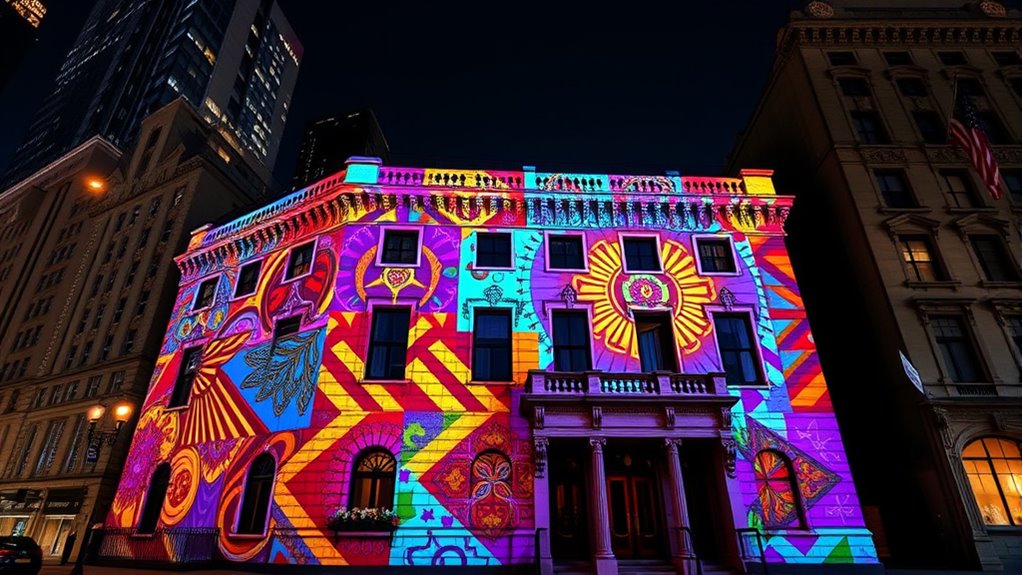
Are you ready to plunge into projection mapping but unsure where to begin? First, choose a simple project, like mapping a small surface or object. Learn the basics of mapping software such as MadMapper or Resolume Arena—many offer free trials or beginner tutorials. Next, gather your equipment: a projector with enough brightness for your setting, and a compatible computer. Start experimenting by capturing your target surface with a camera, then import the footage into your software. Use the software’s tools to align your visuals precisely. Keep your design simple at first, focusing on mastering the process. Practice, experiment, and gradually take on more complex projects. With patience and curiosity, you’ll soon transform ordinary surfaces into enthralling visual experiences. Remember to consider the Bedroom environment and how lighting and decor can influence the overall effect.
Frequently Asked Questions
How Does Projection Mapping Influence Architectural Design Processes?
Projection mapping influences your architectural design process by enabling you to visualize ideas dynamically, testing aesthetics and functions in real time. It encourages creativity, allowing you to experiment with lighting, textures, and forms directly on building surfaces. This technology helps you communicate concepts more effectively to clients and stakeholders, streamlining decision-making. Ultimately, it transforms your approach, making your designs more innovative, interactive, and engaging.
What Are the Environmental Impacts of Large-Scale Projection Installations?
You might be surprised to learn that large-scale projection installations can consume significant energy—up to 20 times more than typical lighting. This impacts your environment by increasing carbon emissions and contributing to light pollution, which affects wildlife and ecosystems. To minimize these effects, you should consider using energy-efficient projectors, renewable energy sources, or limiting operation hours. Responsible planning guarantees your creative displays don’t harm the environment or detract from sustainability goals.
Can Projection Mapping Be Used for Security or Surveillance Purposes?
Yes, you can use projection mapping for security or surveillance purposes. It allows you to project real-time images or data onto buildings and areas, helping monitor activity or identify threats visually. You might deploy it to display alerts, track movements, or even create invisible security layers. This technology enhances situational awareness, making security efforts more dynamic and engaging, especially in crowded or complex environments.
How Do Cultural Differences Affect Projection Mapping Content and Styles?
Did you know that over 60% of global audiences prefer culturally relevant visuals? When you create projection mapping content, you need to take into account cultural differences, as they influence color choices, symbols, and storytelling styles. You’ll find that adapting your visuals to respect local traditions and values enhances engagement. By understanding these nuances, you make your projections more meaningful and impactful, resonating deeply with diverse audiences worldwide.
Are There Legal Regulations Governing Projection Mapping in Public Spaces?
Yes, there are legal regulations governing projection mapping in public spaces. You need permits from local authorities, adhere to zoning laws, and respect intellectual property rights. You should also consider noise ordinances and restrictions on light pollution. Failing to comply can result in fines or legal action. Always research specific regulations for your location and obtain necessary permissions before executing your projection mapping project to avoid issues.
Conclusion
Projection mapping has revolutionized how you experience architecture, turning static structures into dynamic works of art. Did you know that the projection mapping market is expected to grow at a CAGR of over 20% through 2027? This rapid expansion highlights its transformative power. As technology advances, you’ll find endless creative possibilities to captivate audiences and enhance urban environments. Embrace these innovations, and you’ll be at the forefront of turning buildings into moving, immersive masterpieces.