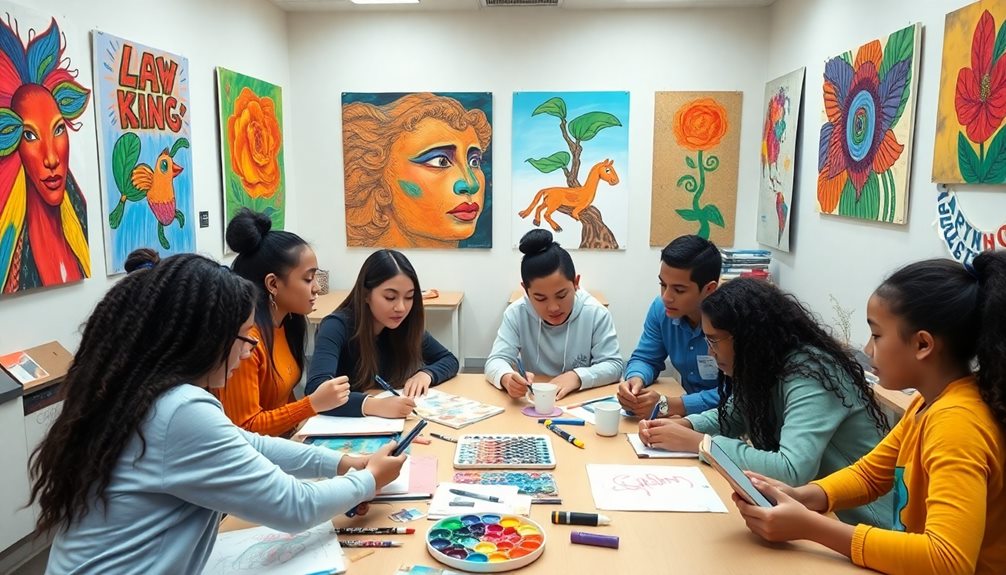
To effectively adapt art lessons to varied skill levels, you should use differentiated instruction strategies. This involves offering choices for projects, providing varied content, and scaffolding tasks for beginners while challenging advanced students. Grouping students strategically and using diverse assessment methods help identify individual needs. Regularly evaluating progress allows you to tailor your approach, ensuring everyone stays engaged and confident. Keep exploring these techniques to create a more inclusive and dynamic art classroom that truly meets each learner’s needs.

Get the latest gadgets delivered free — and shop member deals
- Fast, free delivery on millions of items
- Access to Prime Big Deal Days deals on October 6–7
- Prime Video, Amazon Music and more included
Key Takeaways
- Use scaffolding techniques like tutorials and simplified projects to support beginners and build foundational skills.
- Offer varied project options to match students’ interests and skill levels, fostering engagement and ownership.
- Implement tiered assignments with increasing complexity to challenge advanced students while supporting others.
- Group students strategically for peer learning, collaboration, and differentiated critique sessions.
- Continuously assess and adjust instruction based on individual progress to ensure all skill levels are appropriately supported.

Differentiated instruction in art recognizes that students have diverse learning styles, skill levels, and interests, and it adapts teaching methods accordingly. When you tailor your approach, you create a more inclusive environment where students feel valued and motivated to participate. One of the key benefits of this approach is increased student engagement; when lessons resonate with individual preferences and abilities, students become more invested in their work. To achieve this, you need to implement varied assessment strategies that accurately reflect each student’s progress and understanding. Instead of relying solely on traditional tests or static grading, you can incorporate performance-based assessments, portfolios, self-reflections, and peer reviews. These strategies allow students to demonstrate their skills creatively and authentically, catering to different strengths and learning styles.
Differentiated art instruction fosters engagement by accommodating diverse learning styles and assessment methods.
In practice, you might offer students options for how they demonstrate their learning. For example, some students may prefer creating a detailed drawing or painting, while others might excel in digital art or sculpture. By providing choices, you respect their individual interests and skill levels, which boosts motivation and ownership of their work. Regular formative assessment becomes vital here, as it helps you gauge each student’s progress and adjust instruction accordingly. Observing how students approach their projects, asking reflective questions, and providing targeted feedback enables you to identify areas where they need more support or challenge. Incorporating differentiated instruction techniques further ensures that all learners remain engaged by meeting their unique needs and preferences. Recognizing the various artistic skill levels within your classroom allows for more targeted and effective instruction. Additionally, understanding how to differentiate instruction based on these skill levels can lead to more meaningful and personalized learning experiences. Incorporating varied teaching methods that address multiple learning styles can also enhance engagement and comprehension among diverse students. Moreover, integrating appropriate resources tailored to different skill levels can facilitate more effective skill development and foster confidence.
Differentiation also involves scaffolding techniques to support varying skill levels. For beginners, you could offer step-by-step tutorials or simplified projects that build foundational skills. More advanced students might work on complex compositions or explore different art styles, pushing their boundaries. This approach ensures that all students stay engaged without feeling bored or overwhelmed. Additionally, grouping students strategically—pairing those with different skill levels or interests—can foster peer learning and collaboration, further increasing engagement and providing opportunities for assessment through group critique and discussion.
Ultimately, your goal is to create a flexible learning environment that responds to each student’s needs. By continuously evaluating their work through diverse strategies, you can tailor instruction to keep them challenged yet supported. This not only promotes artistic growth but also helps students develop confidence in their abilities. When they see that their unique perspectives and skills are recognized and nurtured, their enthusiasm for art deepens, leading to a more dynamic and inclusive classroom experience.
art project choice kits for students
As an affiliate, we earn on qualifying purchases.
As an affiliate, we earn on qualifying purchases.
Frequently Asked Questions
How Can Technology Support Differentiated Art Instruction?
Technology supports differentiated art instruction by offering tools like digital portfolios and virtual galleries, which allow you to tailor projects to each student’s skill level. You can provide personalized feedback through digital portfolios, helping students track their progress. Virtual galleries enable students to showcase their work, fostering confidence and motivation. Using these tools, you create an inclusive environment where every student can develop their artistic skills at their own pace.
What Assessment Methods Best Measure Diverse Artistic Skills?
Like Da Vinci’s keen eye, you should use diverse assessment methods to gauge artistic skills. Rubric design offers clear criteria, guaranteeing fair evaluation across varied abilities. Portfolio assessments showcase individual progress and creativity, highlighting strengths and growth areas. Combining these tools helps you effectively measure diverse skills, providing meaningful feedback that encourages students to develop their unique artistic voices. This approach ensures all learners are recognized and supported.
How Do I Manage Classroom Resources for Varied Skill Levels?
You manage classroom resources effectively by focusing on resource management and material adaptation. You organize supplies so students with different skill levels can access appropriate materials easily. You adapt art supplies, offering simpler tools for beginners and complex ones for advanced students. By planning and rotating resources, you ensure all learners have what they need, fostering an inclusive environment where each student can thrive regardless of their skill level.
What Strategies Encourage Peer Collaboration Among Different Skill Students?
Did you know students who engage in peer mentoring improve their skills by 25%? To encourage collaboration among varied skill levels, you can organize peer mentoring sessions and collaborative projects. Pair advanced students with beginners to foster mutual learning and build confidence. These strategies promote teamwork, enhance understanding, and create an inclusive art environment where everyone feels valued and motivated to contribute their unique talents.
How Can Parents Support Differentiated Art Learning at Home?
You can support differentiated art learning at home by encouraging your child with tailored home art projects that match their skill level and interests. Provide customized art supplies to foster creativity and confidence, such as varied brushes, papers, or colors suited to their needs. Offer positive feedback and allow them to explore their unique style, helping them develop their skills at their own pace while enjoying the creative process.
art assessment portfolios for students
As an affiliate, we earn on qualifying purchases.
As an affiliate, we earn on qualifying purchases.
Conclusion
Remember, “A problem shared is a problem halved.” By adapting your art lessons to meet diverse skill levels, you create a supportive environment where every student feels valued and capable. Differentiated instruction encourages growth, confidence, and creativity in all learners. Embrace flexibility and personalization, knowing that when you tailor your approach, you’re helping each student unleash their unique artistic potential. Ultimately, your efforts foster a more inclusive and inspiring classroom for everyone.
digital art tablets for beginners
As an affiliate, we earn on qualifying purchases.
As an affiliate, we earn on qualifying purchases.
scaffolding art tutorials for teachers
As an affiliate, we earn on qualifying purchases.
As an affiliate, we earn on qualifying purchases.
Halloween Picks
halloween
As an affiliate, we earn on qualifying purchases.