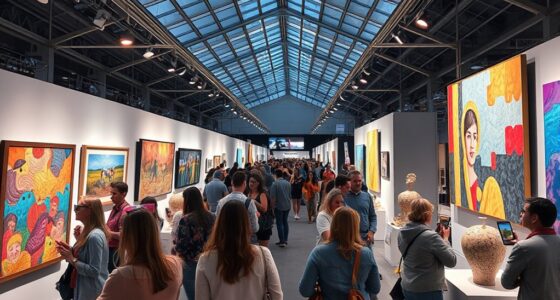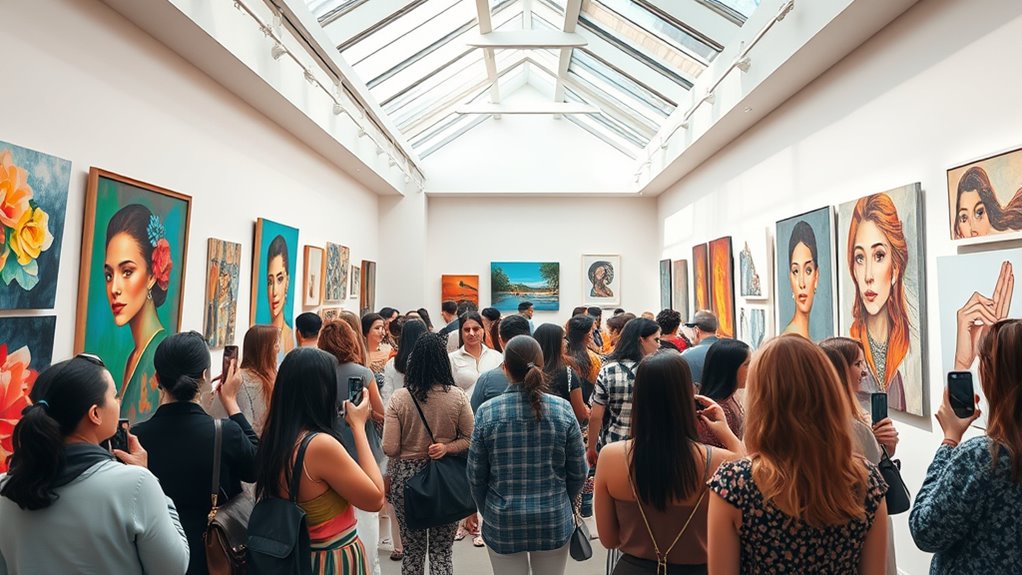

You can see that female artists are gaining more recognition in galleries, but they’re still underrepresented in major exhibitions and collections worldwide. Systemic biases and historical stereotypes have long limited opportunities for women in the art world. Thankfully, many galleries now focus on initiatives that showcase women’s work and promote diversity. Supporting these efforts helps change the industry’s landscape. Keep exploring how these shifts are evolving and what more can be done to achieve true representation.
Key Takeaways
- Increasing galleries host women-focused exhibitions and programs to address historical underrepresentation of female artists.
- Curatorial awareness and initiatives are actively challenging gender biases in art selection and display.
- Audience support and institutional advocacy promote visibility and recognition for female creators.
- Emerging trends emphasize diverse perspectives, helping to balance gender disparities in major collections.
- Systemic efforts and cultural shifts are gradually transforming gallery practices toward greater gender equity.

Despite ongoing efforts to promote gender equality in the art world, female artists remain underrepresented in galleries worldwide. This persistent disparity highlights the entrenched gender gap that continues to shape how art is presented and valued. You might notice that, even today, male artists dominate major exhibitions and museum collections, leaving many talented women overlooked. This imbalance isn’t just about individual choices; it’s rooted in systemic issues like curatorial bias, which often influences whose work gets showcased and celebrated. Curators, consciously or unconsciously, tend to favor male artists or prioritize their narratives, reinforcing traditional gender roles within the art industry. This bias limits visibility for female creators, making it harder for their work to reach broad audiences. Additionally, developing a growth mindset around gender equality can empower more individuals and institutions to challenge these biases and foster meaningful change. You might wonder why curatorial bias persists despite growing awareness and advocacy. Part of the reason lies in longstanding stereotypes about gender and artistic talent. For years, the art world has associated masculinity with innovation and dominance, while femininity has been undervalued or dismissed. As a result, curators may unconsciously select works that align with these stereotypes, perpetuating the cycle. This unconscious bias influences decision-making at every level, from gallery programming to acquisition policies. It’s not always a matter of outright discrimination but a subtle reinforcement of existing biases that continue to skew representation. However, you’ll also notice that change is happening. More galleries and institutions now recognize the importance of addressing the gender gap and actively work to combat curatorial bias. Initiatives like women-focused exhibitions, dedicated programs, and calls for submissions that prioritize female artists are gaining traction. These efforts aim to diversify perspectives and provide more equitable opportunities for women to showcase their work. As a result, audiences are beginning to see a broader range of voices, which enriches the cultural landscape. You, too, can play a role in this shift. By supporting galleries that prioritize gender equity and attending exhibitions that feature female artists, you help challenge the gender gap and curatorial bias. Your engagement encourages institutions to continue fostering inclusive practices and elevating diverse voices. The rise of female artists in galleries signals a promising shift toward a more balanced and representative art world—one where talent and vision are recognized regardless of gender. While progress might be slow, your awareness and support can contribute to creating a future where female artists receive the recognition they deserve.
Frequently Asked Questions
How Do Female Artists Influence Contemporary Art Trends?
You influence contemporary art trends by challenging gender dynamics and pushing creative expression in new directions. Female artists bring fresh perspectives, often exploring themes like identity, social justice, and personal narratives, which reshape audiences’ understanding of art. Your work fosters diversity and innovation, inspiring others to question traditional norms and expand the boundaries of contemporary art. This active contribution helps create a more inclusive, dynamic art landscape for everyone.
What Barriers Do Emerging Female Artists Face Today?
You face barriers like gender bias that can limit opportunities and recognition for your work. Mentorship gaps also pose challenges, making it harder to access guidance and support in steering the art world. These obstacles can hinder your growth and visibility. To overcome them, seek out supportive networks, advocate for equal representation, and stay persistent in showcasing your talent despite these systemic issues.
How Has Gallery Representation Changed Over the Past Decade?
Over the past decade, gallery representation has blossomed with increasing gender parity, making artistic visibility more accessible for everyone. You’ll notice more women’s work featured alongside their male counterparts, fostering a diverse and inclusive art scene. This shift encourages emerging female artists to gain recognition, helping to break down old barriers. As a result, galleries now celebrate a richer variety of voices, enriching the cultural landscape for all art lovers.
Are There Differences in Media or Styles Preferred by Female Artists?
You’ll notice that female artists often explore gendered themes, emphasizing personal and societal issues through their work. They tend to prefer vibrant color palettes, making bold statements with their choices. Styles can range from expressive and abstract to detailed realism, reflecting diverse perspectives. By embracing these differences, female artists contribute unique voices to the art world, challenging traditional norms and enriching gallery collections with fresh, compelling narratives.
What Role Do Art Collectors Play in Promoting Female Artists?
Imagine art collectors as gardeners, cultivating the growth of female artists’ careers through patronage opportunities. Your support not only nurtures their talent but also influences investment trends, making their work more visible and valued. By actively promoting female artists, you help diversify the art world’s landscape, ensuring their voices bloom alongside their male counterparts. Your role becomes essential in shaping a more inclusive, vibrant future for contemporary art.
Conclusion
As you witness this vibrant shift, picture galleries blooming like gardens in full bloom, each petal representing a woman’s voice. The rise of female artists isn’t just a trend; it’s a revolution painting our art world in brighter, more inclusive colors. Embrace this change, for it’s the dawn where equality and creativity intertwine, creating a masterpiece that belongs to us all. The future of art is female, and it’s waiting to be seen.