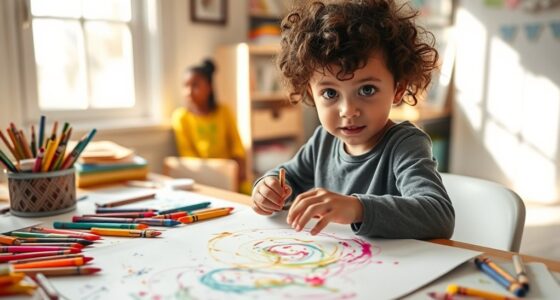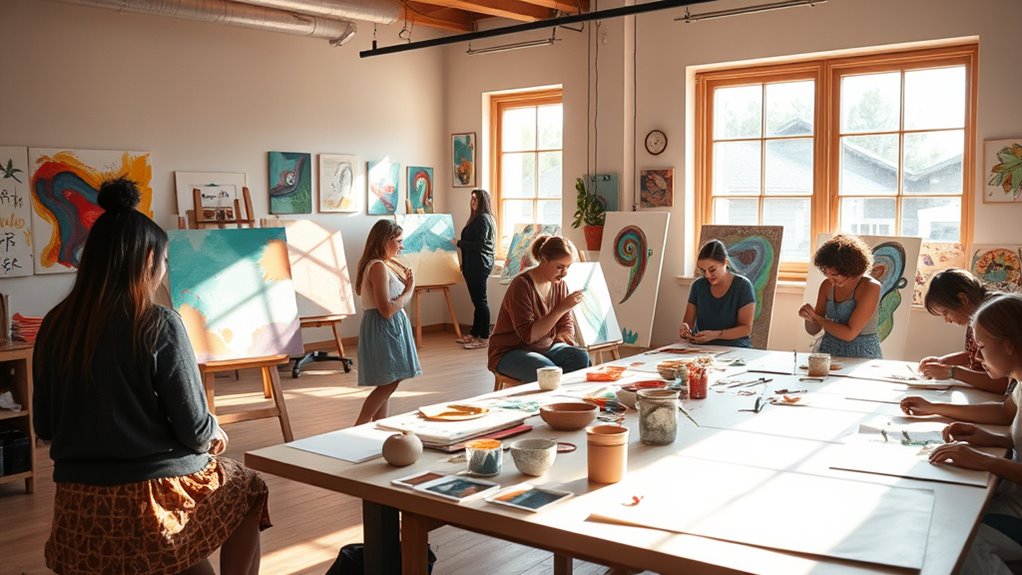

Art therapy offers a compassionate way to process trauma when talk therapy feels overwhelming. Techniques like creating images, sculptures, or collages help you release subconscious feelings and express complex emotions without words. This process can boost feelings of control and resilience, turning painful experiences into symbols of growth and hope. Many survivors find it empowers them to gain insights and healing. If you’re curious about how these techniques work, you’ll discover more about inspiring success stories and practical approaches ahead.
Key Takeaways
- Art therapy uses creative expression like drawing, sculpture, and collage to process complex trauma emotions non-verbally.
- Techniques such as guided imagery and symbolism help clients access subconscious feelings safely.
- Success stories highlight how art therapy fosters emotional release, resilience, and insight into traumatic experiences.
- The process empowers individuals by focusing on expression rather than artistic skill, promoting control and self-awareness.
- Visual artwork serves as a tangible reminder of healing, aiding in trauma recovery and personal growth.

Trauma can leave deep emotional scars, making traditional talk therapy feel overwhelming or insufficient. When words aren’t enough to express what you’re feeling, creative expression through art can open new pathways to emotional healing. Art therapy harnesses your innate creativity to help you process complex emotions, memories, and experiences that might be too painful or confusing to articulate verbally. Instead of focusing solely on talking, you’re encouraged to create images, sculptures, or visual symbols that reflect your inner world. This non-verbal approach often feels less intimidating, allowing you to bypass the barriers that silence or shame might have erected.
Through creative expression, you can access parts of yourself that have been locked away, giving your subconscious a voice. The act of making art becomes a form of emotional release—each stroke, shape, or color allows you to externalize feelings that have been bottled up. Over time, this process fosters emotional healing by helping you confront and make sense of trauma in a safe, controlled environment. Many find that their art becomes a mirror of their internal struggles, providing insights and clarity that might not emerge through conversation alone. This visual journey can also evoke a sense of accomplishment and control, counteracting feelings of helplessness often tied to traumatic experiences.
Moreover, engaging in creative activities doesn’t require artistic talent; it’s about expression, not perfection. The emphasis is on the process, which can be incredibly empowering. As you explore different mediums—be it painting, collage, or clay—you learn to tolerate ambiguity and develop new ways of understanding your trauma. Many practitioners incorporate guided imagery or prompts to help you focus your creative energy on specific emotions or memories, enhancing the therapeutic effect. This process can lead to breakthroughs, where images or symbols unexpectedly reveal insights or connections that facilitate emotional healing. Additionally, incorporating artistic mediums like collage or sculpture can deepen the therapeutic experience by engaging multiple senses and fostering a more holistic healing process.
Success stories abound of individuals who, through art therapy, have uncovered hidden strengths and found peace. Some report that their creative expression allowed them to process grief or anger constructively, reducing feelings of shame or isolation. Others describe how their artwork became a tangible reminder of resilience—a testament to their journey toward recovery. These stories highlight how art therapy isn’t just about creating beautiful images; it’s about transforming pain into understanding and hope. When words fall short, your creativity becomes a powerful tool for healing, helping you reclaim your story and move forward with renewed strength.
Frequently Asked Questions
Can Art Therapy Replace Traditional Psychotherapy for Trauma?
Art therapy can’t fully replace traditional psychotherapy for trauma because it has limitations, especially for severe cases requiring deep verbal processing. While art therapy offers a powerful, creative outlet for expressing emotions, traditional psychotherapy provides structured techniques like cognitive-behavioral therapy that target thought patterns. Combining both approaches often yields the best results, allowing you to explore feelings visually and analyze them verbally for an all-encompassing healing process.
Is Art Therapy Suitable for Children and Teenagers?
If you’re wondering whether art therapy suits children and teenagers, the answer is yes. For example, a 12-year-old using creative expression helped her process anxiety and build emotional development. Art therapy offers a safe space for young people to explore feelings, improve emotional skills, and express themselves without words. It’s especially effective because it adapts to their developmental needs, making it a valuable complement or alternative to traditional therapy.
How Long Does It Typically Take to See Results?
You might start seeing progress within a few sessions, but the full therapy duration varies based on individual needs. Typically, it takes about 8 to 12 sessions to notice significant changes, though some see quicker results. Keep in mind that the progress timeline depends on your trauma’s complexity and your engagement. Regular sessions and open communication with your art therapist help guarantee steady progress throughout the therapy duration.
Are There Specific Art Mediums That Are More Effective?
You might find that digital mediums and mixed media are especially effective in art therapy for trauma. Digital tools allow for easy expression and revision, reducing fear of judgment, while mixed media combines different materials to explore complex emotions. Using these mediums helps you process trauma creatively and flexibly, making it easier to access your feelings and see progress over time. Experimenting with both can offer unique therapeutic benefits tailored to your needs.
Can Art Therapy Help With Complex or Ongoing Trauma?
Research shows that nearly 80% of trauma survivors find art therapy effective for emotional expression and trauma processing. Yes, it can help with complex or ongoing trauma by providing a safe space to explore feelings non-verbally. Through creative activities, you gain new insights and emotional release, making it easier to manage persistent trauma. Art therapy’s adaptable nature supports ongoing healing, even when trauma feels overwhelming or unresolved.
Conclusion
As you explore art therapy for trauma, you may find that sometimes, healing unfolds in unexpected ways—like a brushstroke revealing more than just color. It’s in those coincidences, those small breakthroughs, that progress often quietly begins. Trust the process, and stay open to the surprises it brings. You might discover that healing isn’t just about the art you create but also about how life subtly reflects your journey, guiding you toward wholeness.