
Integrating art therapy into schools can greatly boost student well-being by offering a safe outlet for emotional expression, reducing stress, and building resilience through creative activities. You can incorporate these techniques into everyday lessons through projects, journaling, or mindfulness art. Training staff to recognize emotional needs and fostering supportive environments are also key. If you keep exploring, you’ll discover successful strategies and real stories that show how creative therapy transforms school communities.
Key Takeaways
- Embed creative art projects and visual storytelling into curricula to promote emotional expression and self-awareness.
- Train educators in art therapy techniques to recognize emotional needs and facilitate supportive activities.
- Incorporate mindfulness art exercises to help students manage stress and improve focus.
- Use collaborative art projects to enhance teamwork, communication, and social-emotional skills.
- Seek community partnerships and grants to address funding and space challenges for sustainable implementation.
The Benefits of Art Therapy for Student Well-Being

Art therapy offers students a valuable outlet to express emotions they might find difficult to put into words. It provides a safe space where you can explore feelings like sadness, anger, or anxiety through creative activities. Engaging in art allows you to process experiences, reduce stress, and develop emotional resilience. As you create, you might discover new ways to understand yourself and communicate your needs better. This process promotes self-awareness and boosts self-esteem, helping you navigate challenging situations more effectively. Art therapy also encourages mindfulness, which can improve focus and overall mental health. Additionally, understanding AI’s role in mental health highlights how technology is increasingly supporting emotional well-being. By participating, you’re not just making art; you’re actively nurturing your well-being and building skills that support your academic and personal growth.
Ways to Incorporate Art Therapy Into School Curricula

Have you ever considered how to seamlessly integrate art therapy into everyday classroom activities? Incorporating art therapy doesn’t have to be complicated. You can start by embedding creative projects into your lessons, making space for students to express emotions through art. Here are some effective ways:
- Use art-based journaling to encourage self-reflection.
- Incorporate visual storytelling to explore emotions and experiences.
- Design collaborative art projects to promote teamwork and communication.
- Dedicate time for mindfulness art activities to help manage stress.
- Be mindful of retail hours to plan workshops or activities around available time slots.
Training Educators and Staff in Art-Based Wellness Strategies
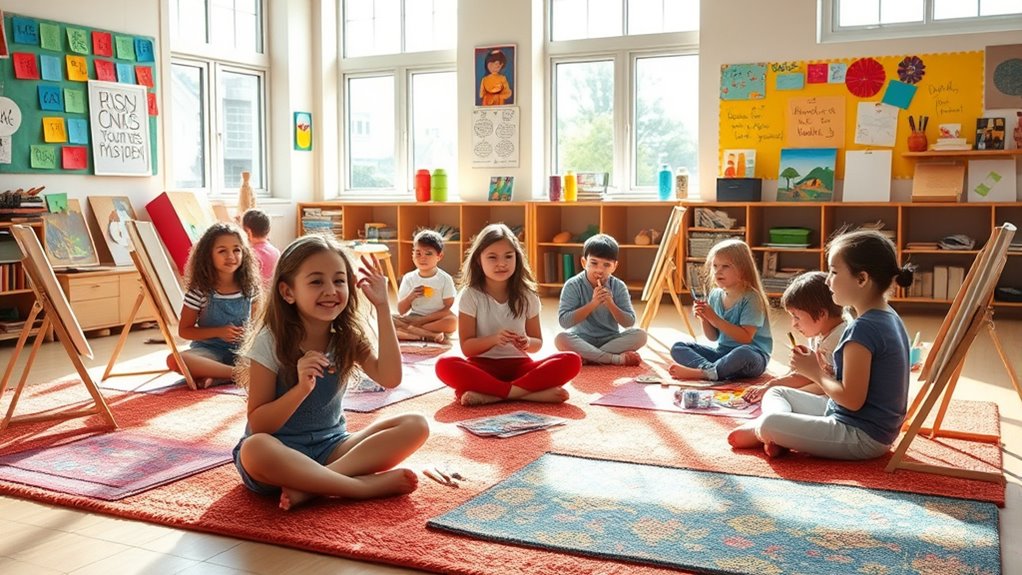
To effectively incorporate art-based wellness strategies in schools, training educators and staff is essential. You need to provide comprehensive workshops that cover fundamental art therapy techniques, emphasizing how to create a supportive environment for students. By doing this, you empower teachers to recognize emotional needs and respond with appropriate creative activities. Incorporate practical exercises that demonstrate how art can facilitate emotional expression and stress reduction. It’s also important to equip staff with tools to manage sensitive situations, ensuring they feel confident guiding students through art-based interventions. Ongoing professional development keeps your team updated on new methods and best practices. When educators are well-trained, they can seamlessly integrate art therapy principles into daily routines, fostering a more inclusive and emotionally supportive school climate. Additionally, understanding the importance of emotional expression helps staff to better support students’ mental health and well-being through creative outlets.
Success Stories: Schools Transforming Through Creative Therapy

Many schools that invest in training staff in art-based wellness strategies see remarkable changes in student well-being and school climate. These success stories highlight how creative therapy can foster resilience, reduce behavioral issues, and improve engagement. Schools report increased attendance, calmer classrooms, and stronger peer relationships. Some notable examples include:
- A middle school where art therapy reduced suspension rates by 30%.
- An elementary school that saw improved emotional expression among students with trauma histories.
- A high school where students used visual arts to build self-esteem and social skills.
- A district-wide program that created a supportive environment, encouraging students to express themselves safely.
These transformations demonstrate that integrating creative therapy isn’t just beneficial — it’s a catalyst for lasting positive change in school communities. Incorporating color accuracy in visual arts activities can further enhance students’ understanding and appreciation of their creative expressions.
Challenges and Considerations for Implementing Art Therapy Programs

Implementing art therapy programs in schools presents several challenges that need careful consideration. Funding often limits access, making it tough to sustain these programs long-term. You may also face resistance from staff unfamiliar with art therapy’s benefits, requiring education and advocacy. Finding space and time within busy school schedules is another hurdle. Additionally, ensuring qualified therapists are available can be difficult. Consider the following factors:
| Challenge | Solution |
|---|---|
| Limited Funding | Seek grants, community partnerships |
| Staff Resistance | Provide training and awareness sessions |
| Scheduling Conflicts | Integrate into existing wellness or counseling programs |
| Lack of Qualified Therapists | Hire or train school staff in art therapy techniques |
| Space Constraints | Use multipurpose areas creatively |
Frequently Asked Questions
How Can Art Therapy Be Adapted for Diverse Student Needs?
You can adapt art therapy for diverse student needs by customizing activities to fit their cultural backgrounds, language skills, and individual interests. Incorporate various art forms like drawing, sculpture, or digital art to engage different learning styles. Use flexible approaches, such as one-on-one or group sessions, and be sensitive to emotional and developmental differences. Continuously assess and modify techniques to guarantee each student feels understood, supported, and empowered through creative expression.
What Are the Funding Options for Implementing Art Therapy Programs?
You can tap into various funding options to bring art therapy into your school. Grants from federal and state agencies, local nonprofits, and foundations act as lifelines, supporting mental health initiatives. Crowdfunding campaigns and partnerships with community organizations also open doors. By painting a compelling picture of how art therapy transforms lives, you’ll attract donors enthusiastic to invest in student wellness, turning the dream of accessible art therapy into a vibrant reality.
How Is Student Privacy Maintained During Art Therapy Sessions?
You maintain student privacy during art therapy sessions by keeping all artwork and discussions confidential, just like in traditional therapy. You guarantee that sessions occur in private, secure spaces where others cannot overhear or see what’s happening. You also follow strict confidentiality policies, explaining them clearly to students and parents, and only sharing information when legally required or with the student’s consent. This approach helps students feel safe and supported.
Are There Specific Age Groups That Benefit Most From Art Therapy?
Did you know that children aged 6 to 12 often benefit most from art therapy? You might notice that this age group responds well because they’re developing emotional awareness and communication skills. As you work with them, you’ll see how creative expression helps reduce anxiety and build confidence. This age-specific response makes art therapy a powerful tool for supporting their mental health during vital developmental years.
How Do Schools Measure the Long-Term Impact of Art Therapy?
You can measure the long-term impact of art therapy by tracking students’ emotional, social, and academic progress over time. Use surveys, standardized assessments, and teacher observations to gather data before and after therapy sessions. Follow up periodically to identify sustained improvements. Additionally, gather feedback from students, parents, and teachers to understand how art therapy influences students’ well-being and resilience over the years.
Conclusion
Imagine walking into a classroom where colorful paintings and calming sketches line the walls, each one telling a story of growth and healing. By embracing art therapy, you create a vibrant space where students feel safe to express themselves and find balance amid life’s challenges. When you integrate wellness through creativity, you’re nurturing resilient, confident learners. Together, you can transform education into a sanctuary where every brushstroke fosters hope and well-being.