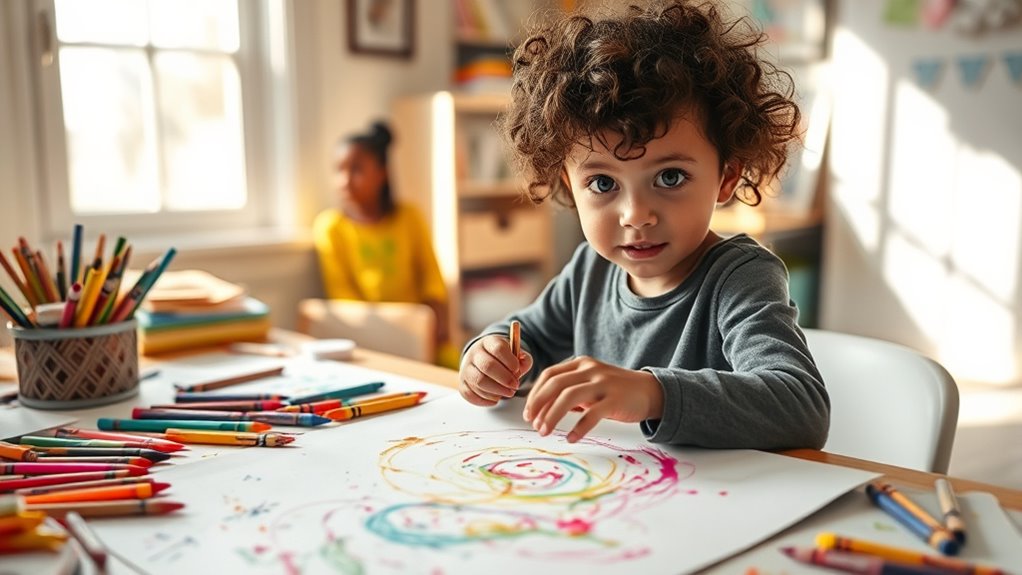

Art therapy helps children express complex emotions in a safe, creative way. By using colors and various art techniques, they can share feelings they might not have words for. Watching their choices reveals emotional states, aiding understanding and resilience. This process encourages healthy communication and emotional regulation. As you explore further, you’ll discover how these expressive methods can truly support children in steering their inner worlds with confidence.
Key Takeaways
- Art therapy provides a safe, nonverbal outlet for children to express complex emotions through creative activities.
- Using colors strategically reveals children’s inner feelings and guides tailored emotional support.
- Techniques like scribbling and collage help children depict emotions they may struggle to verbalize.
- Observing artistic choices offers insights into children’s emotional states, fostering understanding and resilience.
- Overall, art therapy enhances emotional regulation, communication, and self-awareness in children facing challenges.
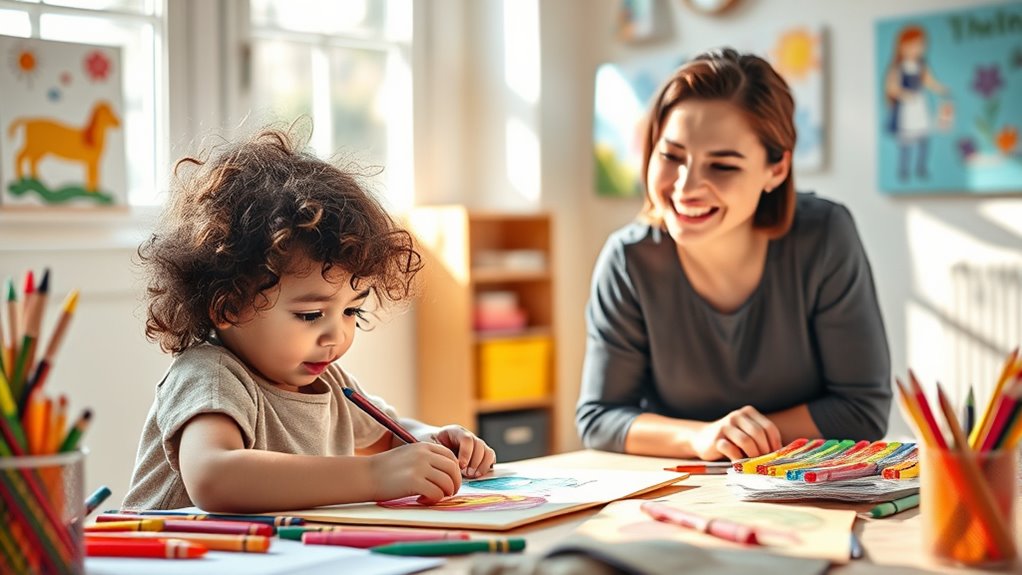
Art therapy with children offers a creative and nonverbal way for young individuals to express their feelings, thoughts, and experiences. As a parent, caregiver, or therapist, you’ll find that encouraging children to create art allows them to communicate complex emotions they might not yet have the words for. By engaging in this process, children can explore their inner worlds in a safe, supportive environment. One powerful aspect of art therapy is the use of color psychology. Colors evoke specific feelings and associations—bright yellows can symbolize happiness, while darker blues may reflect sadness or introspection. When children choose and combine colors intentionally, they reveal emotional states that might otherwise stay hidden. As you observe their choices, you gain insight into their inner experiences and can tailor your support accordingly.
Encouraging children to create art reveals hidden emotions through color choices and visual expression.
Expressive techniques play a crucial role in helping children open up and process emotions. These techniques go beyond simply drawing or coloring; they include activities like scribbling, collage, or even abstract forms that allow children to channel their feelings freely. For example, a child might use aggressive, erratic strokes to depict frustration or paint a calm landscape to convey a sense of peace. These methods give children a voice without relying on language, making them particularly effective for those who struggle to articulate their emotions verbally. When you encourage children to experiment with different expressive techniques, you help them develop a deeper understanding of their own feelings and build emotional resilience. Additionally, understanding the mental health benefits of creative expression can motivate children to engage more openly in art therapy.
In practice, you might ask a child to select colors that represent their mood or to create a piece that reflects how they’re feeling inside. As they work through their art, pay attention to their choices and the way they manipulate materials—these details often communicate what words cannot. You can also guide them in exploring different expressive techniques to see which ones resonate most deeply. For instance, some children may find comfort in repetitive patterns, while others might prefer spontaneous, chaotic strokes to express intense emotions. By fostering this creative exploration, you not only support emotional release but also promote self-awareness and emotional regulation.
Ultimately, art therapy with children isn’t about perfect artistic skill; it’s about facilitating honest expression through visual means. By understanding the importance of color psychology and encouraging the use of various expressive techniques, you help children navigate their feelings more effectively. This approach can lead to greater emotional understanding, making it easier for children to cope with life’s challenges and develop healthy ways to communicate their inner worlds.
Frequently Asked Questions
How Do Art Therapists Handle Sensitive or Traumatic Topics?
When handling sensitive or traumatic topics, you use trust-building techniques like creating a safe, supportive environment and actively listening. You also follow strict confidentiality protocols to guarantee the child’s privacy and comfort. By establishing trust and maintaining confidentiality, you help the child feel secure enough to express their feelings through art. This approach encourages healing while respecting their boundaries and emotional needs.
What Age Is Most Suitable for Starting Art Therapy?
You can start art therapy with children as young as age three, since early intervention can support their developmental milestones. Research shows that children under five often express themselves best through art, which helps uncover their artistic preferences and emotional states. At this age, their natural creativity and limited verbal skills make art therapy especially effective in fostering emotional expression and building trust with the therapist.
How Can Parents Support Children’s Emotional Expression Through Art?
You can support your child’s emotional expression by actively engaging in their art activities and showing genuine interest. Encourage their creative confidence by praising their efforts, not just the outcome. Be involved without directing, allowing them to explore freely. Your support fosters trust and openness, helping your child express feelings through art. Parental involvement boosts their confidence, making art a safe space for emotional growth and self-discovery.
Are There Specific Art Materials Recommended for Children With Special Needs?
Did you know that 15% of children worldwide have some form of disability? For children with special needs, you should choose sensory friendly materials and adaptive art supplies. These tools help them express emotions comfortably and safely. Look for textured, easy-to-hold supplies or items with simple features, ensuring accessibility and engagement. Supporting their creativity with the right materials fosters emotional growth and confidence through art.
How Is Progress Measured in Children’s Art Therapy Sessions?
You measure progress in children’s art therapy sessions through assessment methods like observing changes in their use of colors, symbols, and detail. Look for progress indicators such as increased emotional expression, improved motor skills, and greater willingness to share their artwork. Regularly document these observations to track development over time. This approach helps you understand how the child’s emotional and creative growth unfolds throughout therapy, guiding your next steps effectively.
Conclusion
As you guide children through art therapy, imagine their emotions as vibrant colors spilling onto a blank canvas, each stroke a release of what’s inside. Their drawings become windows into their hearts, revealing feelings words can’t capture. With every brushstroke and scribble, you help them paint a brighter, more expressive future. You aren’t just fostering creativity—you’re opening a safe space where their inner worlds can shine, heal, and grow.