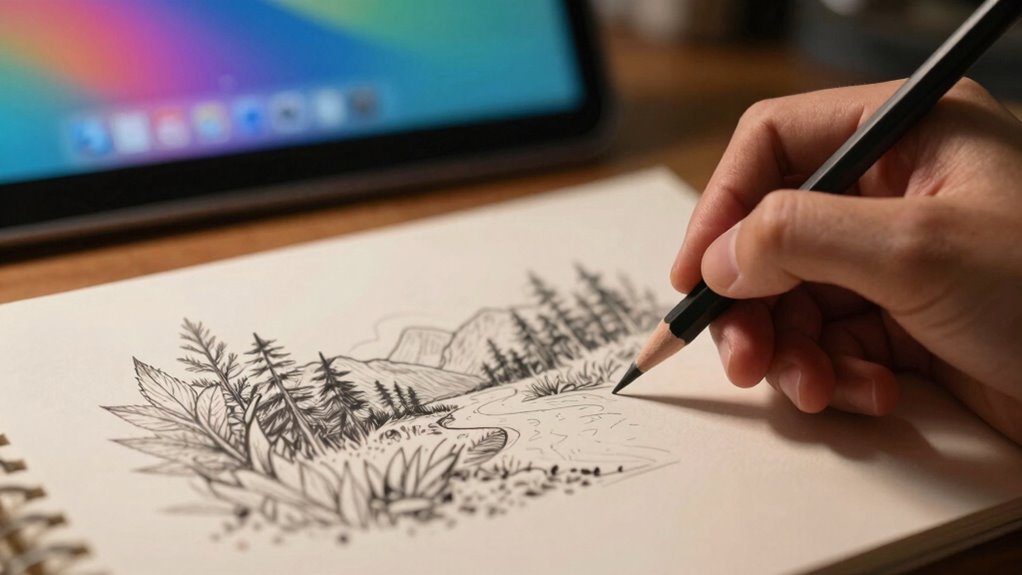

Drawing sharpens your focus by engaging your senses and anchoring you in the present moment. As you create lines, shapes, and details, you quiet mental chatter and shift attention away from distractions. It encourages full immersion, helping you develop patience, persistence, and clarity. Regular drawing taps into flow states, making it easier to concentrate even in overstimulating environments. Keep exploring, and you’ll discover more ways to harness drawing’s power to boost your focus.

Get the latest gadgets delivered free with Prime
- Fast, free delivery on millions of items
- Prime Video, Amazon Music and more included
- Member-only deals all year
Key Takeaways
- Drawing serves as a mindfulness practice, anchoring attention and quieting mental chatter amid distractions.
- Visualizing desired outcomes before drawing sharpens focus and primes the brain for attentive engagement.
- Creating art stimulates neural pathways related to sustained attention and enhances cognitive flexibility.
- The flow state experienced during drawing deepens concentration and reduces awareness of external stimuli.
- Regular drawing practice improves overall attention span, patience, and mental resilience in overstimulating environments.

Drawing can be a surprisingly effective way to boost your focus, especially when your mind feels distracted or overwhelmed. In a world full of constant notifications, noise, and information overload, finding a moment of clarity can be challenging. Engaging in drawing allows you to pause, reset, and anchor your attention. It’s more than just creating art; it’s a mindfulness practice that helps you stay present in the moment. When you pick up a pencil or pen, you activate your senses—seeing lines, shapes, and details—and you become fully immersed in the act. This immersion quiets the mental chatter and redirects your focus away from worries or distractions. Incorporating creative visualization into your drawing practice can further enhance its focus-boosting effects. Visualizing your desired outcome before you start drawing can sharpen your concentration and set clear intentions. For example, imagine the image you want to create in vivid detail, feeling the textures and colors in your mind’s eye. This mental rehearsal primes your brain to pay close attention to the task, making it easier to stay engaged as you translate your visualization onto paper. creative visualization acts as a mental anchor, helping you maintain focus even when your mind begins to drift. Additionally, the act of drawing can stimulate neural pathways associated with sustained attention, further supporting your ability to focus in other areas of life. Developing mindfulness through drawing can deepen your awareness of your thoughts and feelings, making it easier to manage distractions. This heightened awareness can also encourage a greater appreciation for the natural world, linking back to the importance of biodiversity and our environment. Regularly practicing drawing can also enhance neuroplasticity, strengthening the brain’s capacity to adapt and improve focus over time. Cultivating attention span through regular practice can also lead to improved patience and persistence in completing complex tasks. Drawing also encourages a flow state, a mental zone where your attention is fully absorbed in the activity. When you’re in this state, you lose track of time and external disturbances, allowing your focus to deepen naturally. Achieving flow through drawing doesn’t require perfection; it’s about being fully present with your creation, whether you’re sketching, doodling, or shading. As you practice regularly, you’ll notice that your ability to concentrate in other areas of life improves as well. The focused attention cultivated during drawing becomes a transferable skill, helping you tackle tasks with more clarity and less mental clutter.
As an affiliate, we earn on qualifying purchases.
Frequently Asked Questions
Can Drawing Help Reduce Anxiety in Addition to Improving Focus?
Yes, drawing can help reduce anxiety through art therapy techniques that promote emotional expression. When you put your feelings onto paper, you create a safe space to process emotions and release stress. This act of focused creativity distracts your mind from anxious thoughts, fostering calmness. Over time, regular drawing practice can strengthen your emotional resilience, making it easier to manage anxiety and improve overall mental well-being.
What Types of Drawing Materials Are Best for Beginners?
Forget fancy art supplies; as a beginner, you’re better off with basic pencils and sketchbooks. Opt for simple sketching techniques like shading and contour drawing to get started. When selecting art supplies, choose affordable, easy-to-use tools—think graphite pencils and erasers—so you can focus on improving your skills without feeling overwhelmed by choices. Remember, even the greatest artists started with humble materials—so don’t overthink it!
How Long Should One Practice Drawing to Notice Focus Improvements?
You should practice drawing for at least 15-20 minutes daily to see noticeable focus development. Consistency is key, so gradually increase your drawing duration as your skills and concentration improve. Over time, regular drawing sessions help train your mind to stay focused, reducing distractions. Keep practicing, and within a few weeks, you’ll likely notice enhanced attention span and better mental clarity, making it easier to stay engaged in other tasks too.
Is Drawing More Effective Than Other Mindfulness Activities?
Drawing can be more effective than other mindfulness activities because it combines creative expression with emotional release, which studies show can considerably reduce stress. Unlike some activities, drawing actively engages your mind and hands, helping you stay present. This dual focus helps improve concentration and emotional well-being more effectively, especially in overstimulating environments. So, if you seek a powerful way to calm your mind, drawing’s your best bet.
Can Children Benefit From Drawing to Enhance Their Concentration Skills?
Yes, children can benefit from drawing to enhance their concentration skills. Drawing encourages creative expression and engages visual learning, helping children focus better by allowing them to channel their energy into a calming activity. When kids draw, they develop attention to detail and patience, which strengthens their ability to concentrate. Plus, it makes learning enjoyable, boosting their motivation and overall focus in various tasks.
As an affiliate, we earn on qualifying purchases.
Conclusion
By picking up your pencil and drawing, you create a calm harbor amid the storm of overstimulation. It’s like planting a seed of focus in your busy mind, helping you nurture attention one stroke at a time. As you immerse yourself in sketching, you’ll find your thoughts settling, clarity emerging like sunlight breaking through clouds. So, let drawing be your anchor, guiding you back to stillness in a world that never seems to pause.
neural pathway stimulation art tools
As an affiliate, we earn on qualifying purchases.
As an affiliate, we earn on qualifying purchases.
As an affiliate, we earn on qualifying purchases.
Fall Picks
fall essentials
As an affiliate, we earn on qualifying purchases.