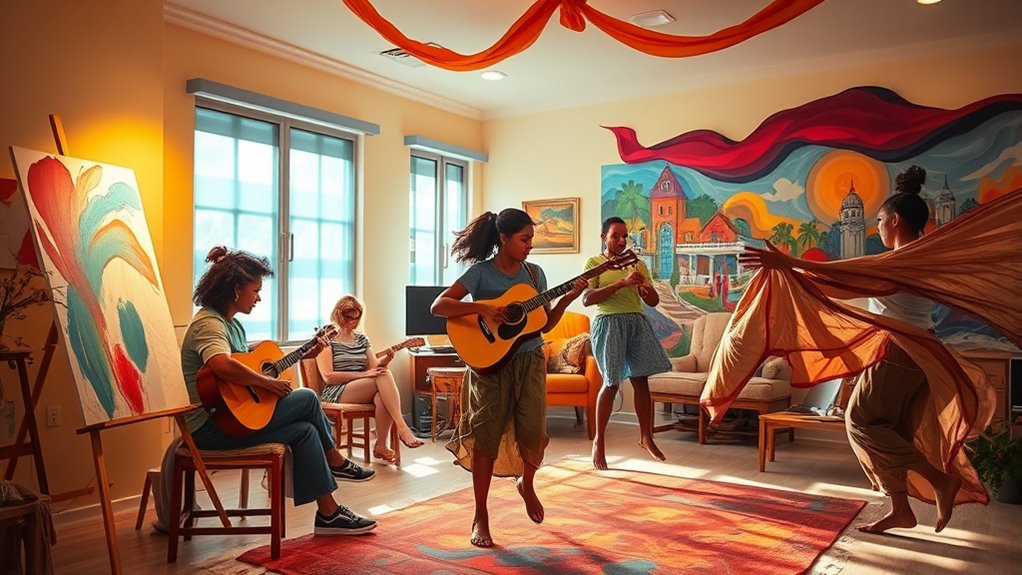

Expressive arts therapy combines visual art, music, and movement to help you explore and express deep emotions beyond words. By actively creating and moving, you can process complex feelings, release tension, and gain new insights about yourself. This holistic approach encourages self-awareness, healing, and resilience through art and physical activity. If you keep exploring, you’ll discover how these creative practices can transform your emotional well-being and support your journey toward growth and renewal.
Key Takeaways
- Combines visual art, music, and movement to facilitate emotional healing and self-expression beyond traditional talk therapy.
- Uses creative activities to help process complex emotions, promote self-awareness, and foster personal growth.
- Engages the body and senses to deepen emotional understanding and release tension through movement and artistic creation.
- Provides a safe, non-judgmental space for exploring inner experiences, especially beneficial for trauma recovery.
- Encourages active participation, turning art, music, and movement into tools for resilience, self-care, and emotional transformation.

Have you ever considered how creative expression can promote healing and personal growth? When you engage in the creative process, you tap into your inner world, allowing emotions to surface and be expressed in ways that words sometimes can’t capture. This is the foundation of expressive arts therapy, which combines visual art, music, and movement to facilitate emotional healing. Instead of relying solely on talk therapy, you actively participate in making, moving, and creating, which helps release feelings that might be difficult to articulate. This approach recognizes that healing isn’t just about understanding your emotions but also about experiencing and transforming them through artistic expression.
Creative expression fosters healing by helping you process and transform emotions through art, music, and movement.
As you move through the creative process, you begin to connect with your feelings in a more embodied way. For example, painting or drawing enables you to visualize complex emotions, giving shape and color to experiences that might feel overwhelming or confusing. Music, on the other hand, allows you to access feelings that resonate deeply within, often bypassing the mental filters that block clarity. Moving your body—whether through dance, yoga, or simple gestures—can release tension and promote a sense of freedom, helping you process emotions physically and psychologically. These activities aren’t just artistic activities; they’re tools for emotional healing, helping you to confront, accept, and integrate your feelings. Additionally, incorporating energy-efficient appliances in your creative space can support sustainability and reduce environmental impact while engaging in your art practices.
Participating in expressive arts therapy encourages you to be present in the moment, fostering self-awareness and self-compassion. As you create artwork or engage in movement, you might notice new insights about yourself or discover previously hidden emotions. This process can be especially powerful if you’ve experienced trauma or prolonged stress, as it offers a safe space to explore your inner landscape without judgment. The act of creating becomes a form of self-care, allowing you to release pent-up feelings and gain a sense of control over your emotional state. Over time, this can lead to greater resilience and a deeper understanding of your personal narrative.
Ultimately, expressive arts therapy leverages the creative process to facilitate emotional healing in ways that words alone often can’t. You become an active participant in your healing journey, using art, music, and movement as tools to express, explore, and transform your inner experiences. This holistic approach recognizes that healing is a dynamic process—one that involves engaging your whole self. When you embrace creative expression, you open up new pathways for growth and recovery, turning the act of creating into a powerful act of self-discovery and renewal.
Frequently Asked Questions
Can Expressive Arts Therapy Be Tailored for Children?
Yes, you can tailor expressive arts therapy for children by using child-centered approaches that respect their unique needs and interests. You consider developmental considerations, adapting activities to suit their age and emotional stage. By engaging children through creative, playful methods like drawing, music, or movement, you foster expression and healing, making therapy both accessible and effective for their growth and emotional well-being.
How Does Expressive Arts Therapy Differ From Traditional Talk Therapy?
You’ll find that expressive arts therapy differs from traditional talk therapy by emphasizing non-verbal communication and creative expression. Instead of relying solely on words, you use art, music, and movement to explore feelings and experiences. This approach helps you access emotions that might be hard to express verbally, making it especially effective for those who find traditional talk therapy challenging. It’s a dynamic way to foster healing and self-discovery.
What Specific Conditions Benefit Most From Expressive Arts Therapy?
You’ll find expressive arts therapy especially effective for trauma recovery and anxiety management. It allows you to explore and express emotions non-verbally through art, music, and movement, which can be more accessible than traditional talk therapy. This approach helps you process difficult feelings, reduce stress, and build resilience. If you’re dealing with trauma or anxiety, engaging in creative expression can foster healing and emotional balance more deeply than words alone.
How Long Does a Typical Expressive Arts Therapy Session Last?
A typical expressive arts therapy session lasts about 60 to 90 minutes. You might have sessions weekly or bi-weekly, depending on your needs and therapy goals. The duration allows enough time for you to explore creative activities like visual art, music, and movement, while maintaining focus and engagement. Consistent therapy frequency can help you process emotions effectively and track your progress over time.
Are There Any Risks or Contraindications Associated With Expressive Arts Therapy?
You should be aware that expressive arts therapy may pose risks like potential emotional triggers, especially if certain topics or memories surface unexpectedly. Additionally, artistic limitations might hinder your ability to fully express yourself, which can be frustrating. It’s important to communicate openly with your therapist about any discomfort or concerns. With proper guidance, these risks are manageable, making the therapy a valuable tool for emotional growth and healing.
Conclusion
Think of expressive arts therapy as a vibrant garden where your emotions, thoughts, and creativity bloom together. By blending visual art, music, and movement, you cultivate a space for healing and self-discovery. Just as a garden needs care and attention, your inner world flourishes when you embrace these expressive forms. So, step into this colorful garden and watch your inner landscape grow stronger, more vibrant, and beautifully whole.