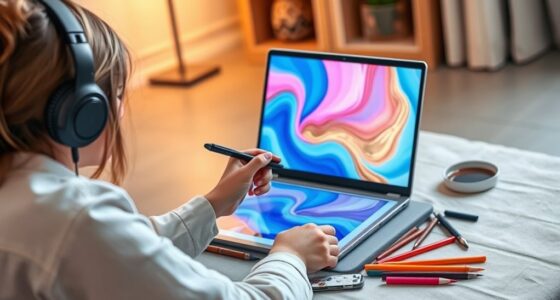
The history of art therapy begins with pioneers like Hans Prinzhorn, who believed that creative expression could reveal subconscious truths and aid healing. Over time, psychiatrists and artists realized that art helps people access emotions difficult to put into words, leading to its integration into mental health care. Today, art therapy combines psychological insights with artistic process, continuing to grow as a powerful tool for emotional recovery. If you’re curious, there’s more to discover about its fascinating evolution.

Get the latest gadgets delivered free with Prime
- Fast, free delivery on millions of items
- Prime Video, Amazon Music and more included
- Member-only deals all year
Key Takeaways
- Early art therapy emerged over a century ago, emphasizing creative expression as a means for emotional healing and trauma processing.
- Psychiatrists and artists recognized art’s role in helping patients communicate feelings difficult to verbalize.
- Hans Prinzhorn’s collection and analysis of psychiatric patient art shifted perspectives, highlighting art as a tool for self-discovery and healing.
- Throughout the 20th century, art therapy evolved into a structured practice integrating psychology, art, and specialized training.
- Modern art therapy continues to leverage creative acts to promote emotional well-being, resilience, and personal growth.

Have you ever wondered how art became a tool for healing? It’s a fascinating journey that traces back over a century, rooted in the idea that creative expression can play a vital role in psychological healing. Early pioneers recognized that art could serve as more than just a form of entertainment; it could *access* emotions, provide insight, and foster recovery for those dealing with mental health challenges. This understanding laid the groundwork for what we now call art therapy—a practice that combines psychological healing with artistic creation. In its infancy, art therapy emerged from the work of psychiatrists and artists who observed that patients often communicated their inner worlds more freely through images than words. This was especially true for individuals who struggled to articulate their feelings verbally. By encouraging patients to create art, practitioners saw how they could *reach* subconscious thoughts, reduce anxiety, and process trauma. Creative expression became a bridge, allowing people to explore complex emotions safely and constructively. The development of specialized training programs and certification processes further solidified art therapy’s role within mental health care.
The influence of German psychiatrist Hans Prinzhorn marked a significant turning point in the development of art therapy. Prinzhorn studied the art of psychiatric patients, believing that these works could reveal deeper truths about mental illness and human experience. His collection and analysis of patient art emphasized that creative output wasn’t merely a symptom of mental disorder but also a form of psychological healing. This approach challenged traditional views, suggesting that art could serve as a therapeutic tool, offering insight into the mind and aiding recovery. Prinzhorn’s work inspired others to see art not just as a product of mental illness but as a potential healer and a means of self-discovery. Over time, this perspective gained traction, leading to more structured practices and the integration of art therapy into mental health treatment.
As the 20th century progressed, professionals expanded on these early ideas, blending psychology, art, and therapy into formalized practices. They recognized that every individual’s creative process was unique, and that art could help clients express feelings they might find difficult to put into words. Today, modern art therapy continues to evolve, incorporating new techniques and scientific understanding. Yet, at its core, it remains rooted in the belief that creative expression isn’t just a form of artistic activity—it’s a powerful tool for psychological healing. By engaging in art, you can explore inner struggles, build resilience, and foster emotional well-being. The history of art therapy reminds us that healing often begins with a simple act of creation, *unleashing* the potential for growth and recovery through the universal language of art. Additionally, understanding the role of color accuracy and contrast ratio in therapeutic art can enhance the visual impact and emotional resonance of the artwork.
art therapy supplies for emotional healing
As an affiliate, we earn on qualifying purchases.
As an affiliate, we earn on qualifying purchases.
Frequently Asked Questions
How Has Technology Influenced Modern Art Therapy Techniques?
Technology has transformed modern art therapy by enabling digital tools and virtual sessions. You can now access therapy from anywhere, making it more flexible and accessible. Digital tools like tablets and apps allow you to create art digitally, offering new ways to express yourself. Virtual sessions also foster connection and support, especially for those who might face barriers to in-person therapy, making art therapy more inclusive and adaptable to your needs.
What Are the Qualifications Required to Become an Art Therapist Today?
You need to earn specific art therapy credentials to succeed today. The certification pathways typically require you to complete a master’s degree in art therapy or a related field, along with supervised clinical experience. Then, you must pass a national exam to become licensed or certified. These qualifications guarantee you’re fully prepared to help clients through creative expression, making your journey into art therapy both challenging and rewarding.
How Does Art Therapy Differ Across Various Cultural Contexts?
You’ll find that art therapy varies across cultures through different cultural symbolism and traditional practices. In some communities, specific symbols or rituals hold special meaning, shaping how therapy uses art to address emotional issues. Traditional practices influence methods, materials, and themes, making therapy more culturally relevant. By respecting these differences, you can create a supportive environment that honors clients’ backgrounds, fostering healing through culturally sensitive art-based interventions.
What Are Some Common Misconceptions About Art Therapy’s Effectiveness?
Some people see art therapy as a silver bullet, but that’s a misconception. While it’s effective for emotional expression and healing, evidence skepticism exists because results vary. Many believe it’s just “painting it out,” but research shows it can provide deep insight and growth. Don’t underestimate its power—art therapy isn’t a cure-all, but an invaluable tool for exploring feelings and fostering emotional resilience.
How Has Art Therapy Been Integrated Into Mainstream Mental Health Treatment?
You’ll see that art therapy has gained historical integration into mainstream mental health treatment through increased professional acceptance over the years. Mental health professionals now recognize its benefits, incorporating it alongside traditional therapies like counseling and medication. Schools, hospitals, and clinics regularly include art therapy programs, reflecting its established role. This integration helps you access a holistic approach, blending creative expression with clinical practices, ultimately improving mental health outcomes.
creative expression therapy kits
As an affiliate, we earn on qualifying purchases.
As an affiliate, we earn on qualifying purchases.
Conclusion
As you reflect on the evolution from Prinzhorn’s groundbreaking work to today’s modern practices, it’s almost uncanny how art’s healing power continues to resonate across time. You realize that, much like the unexpected connections in a masterpiece, the history of art therapy reveals a blend of chance and deliberate discovery. Ultimately, this journey reminds you that healing through art remains a timeless journey—one shaped by both serendipity and dedication.
art therapy coloring books for adults
As an affiliate, we earn on qualifying purchases.
As an affiliate, we earn on qualifying purchases.
As an affiliate, we earn on qualifying purchases.
Columbus Day / Indigenous Peoples' Day Picks
long weekend sales
As an affiliate, we earn on qualifying purchases.