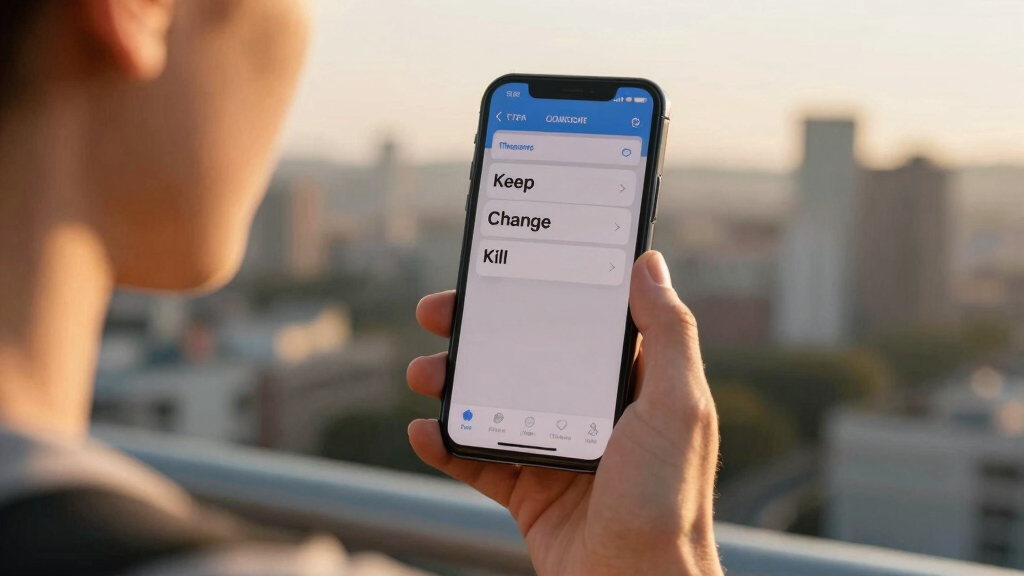

📊 Full opportunity report: Outcome-First Decisions: Keep, Change, or Kill on ThorstenMeyerAI.com — validation score, market gap, and execution plan.

Get the latest gadgets delivered free with Prime
- Fast, free delivery on millions of items
- Prime Video, Amazon Music and more included
- Member-only deals all year
TL;DR
A new decision-making framework, Outcome-First, emphasizes evaluating ongoing initiatives solely on current outcomes to determine if they should be kept, changed, or killed. It aims to improve portfolio health by reducing waste and reclaiming capacity.
A new decision framework called Outcome-First is gaining attention for its focus on evaluating ongoing initiatives solely based on their current outcomes, rather than past effort or sunk costs. Developed by Thorsten Meyer, it offers a structured approach for organizations to decide whether to keep, change, or kill projects, aiming to improve portfolio efficiency and reduce waste.
The Outcome-First framework centers on a simple but powerful question: given the current state of an initiative, is the outcome it produces worth its ongoing cost? It introduces the Worth Filter, which directs decision-makers to prioritize outcomes over effort or investment history. The framework results in three possible verdicts: keep, change, or kill. Its primary goal is to prevent organizations from continuing projects that no longer justify their costs, thereby freeing up capacity for more valuable work.
Developed as an open-source tool under the AGPL-3.0 license, Outcome-First is designed to be provider-agnostic and local-first, allowing organizations to run evaluations internally without relying on external platforms. It aims to close the decision loop in portfolio management, providing a disciplined way to prune projects that are no longer productive. The framework emphasizes that the hardest decision is often to kill, but that making it systematically can significantly improve organizational agility and focus.
Outcome-First Decisions — keep, change, or kill
The hardest decision isn’t what to start — it’s what to stop. Judge every initiative by the outcome it produces now, not the effort already spent.
Independent commentary, produced with AI assistance under human editorial oversight. The views are the author’s own and may change. Outcome-First Decisions is open source under AGPL-3.0, provided “as is” without warranty; see the repository LICENSE. The framework’s verdicts are reasoning aids based on the inputs given and may be wrong — decision support, not decisions; verify independently before acting. Product and company names are trademarks of their respective owners; mention does not imply endorsement.
Why Outcome-First Is a Game-Changer for Portfolio Management
This framework matters because it addresses a common but often overlooked problem: organizations tend to accumulate ongoing projects that drain resources without delivering proportional value. By focusing on current outcomes, Outcome-First helps organizations identify and eliminate dead weight, freeing capacity for more impactful initiatives. Its emphasis on making kill decisions easier and more systematic can lead to more efficient use of time, capital, and attention—crucial factors in competitive and resource-constrained environments.
Furthermore, by making the decision process transparent and based on measurable outcomes, it encourages a culture of accountability and continuous improvement. The open-source nature of the tool also promotes widespread adoption and adaptation, potentially transforming how organizations manage their portfolios at scale.
As an affiliate, we earn on qualifying purchases.
The Challenge of Maintaining Healthy Portfolios
Many organizations struggle with a long tail of projects and commitments that persist beyond their usefulness. These ‘zombie’ initiatives continue consuming attention and resources, often justified by sunk costs, organizational identity, or effort justification. Traditional decision-making processes tend to be backward-looking, emphasizing past investments rather than current value, which hampers effective pruning.
Thorsten Meyer’s framework builds on the recognition that the hardest decisions involve stopping initiatives. It responds to the widespread need for a disciplined way to evaluate ongoing work based on real-time outcomes, not emotional attachment or historical effort. This approach aligns with agile and lean principles that prioritize continuous assessment and elimination of waste.
“The hardest decision in any portfolio isn’t what to start. It’s what to stop.”
— Thorsten Meyer
As an affiliate, we earn on qualifying purchases.
Limitations and Risks of the Outcome-First Framework
While promising, the framework’s effectiveness depends on accurately measuring outcomes, which can be subjective or gamed. There is a risk of premature killing of initiatives that develop slowly or are early in their lifecycle. Additionally, the framework cannot provide emotional courage to make tough decisions, and misapplication could lead to over-pruning or neglecting valuable long-term efforts. Its real-world adoption and impact remain to be seen as organizations experiment with it.
As an affiliate, we earn on qualifying purchases.
Next Steps for Adoption and Validation
Organizations interested in Outcome-First are encouraged to adopt the open-source tool and tailor it to their portfolios. Further validation and case studies are expected as more teams implement the framework, providing insights into its practical benefits and limitations. Industry groups and decision-makers will likely monitor its impact on portfolio health and resource allocation.
As an affiliate, we earn on qualifying purchases.
Key Questions
How does Outcome-First differ from traditional portfolio management?
It shifts the focus from past investments and effort to current outcomes, making kill decisions easier and more systematic based on real-time value.
Can Outcome-First help prevent project bloat?
Yes, by systematically evaluating ongoing initiatives and killing those that no longer produce worthwhile outcomes, it reduces unnecessary ongoing commitments.
Is the framework suitable for all types of organizations?
While designed to be provider-agnostic and flexible, organizations should consider their specific context and measurement capabilities before applying it broadly.
What are the main challenges in implementing Outcome-First?
Accurately measuring outcomes, overcoming emotional resistance to killing projects, and ensuring consistent application are key challenges.
Will Outcome-First eliminate the need for strategic planning?
No, it complements strategic planning by providing a disciplined process for maintaining a healthy portfolio aligned with organizational goals.
Source: ThorstenMeyerAI.com
Fall Picks
fall essentials
As an affiliate, we earn on qualifying purchases.