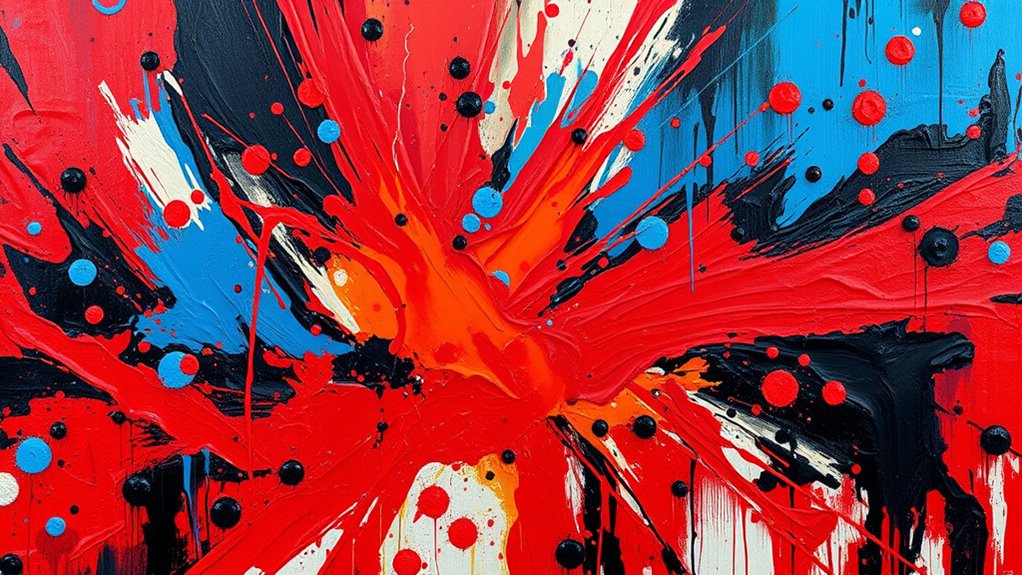

Abstract Expressionism is a bold American art movement focused on conveying raw emotion through spontaneous and energetic brushwork. Instead of traditional realism, artists emphasize physicality, improvisation, and personal expression, creating powerful, visceral works. Icons like Jackson Pollock and Willem de Kooning led the way with techniques like drip painting and aggressive strokes. This movement broke conventional rules, inspiring future artists and transforming modern art. If you keep exploring, you’ll discover how this vibrant style reshaped artistic boundaries.
Key Takeaways
- Abstract Expressionism emphasized raw emotion, spontaneity, and physical engagement, transforming American art in the mid-20th century.
- Techniques like drip painting and gestural brushwork prioritized improvisation and the act of creation.
- Key artists such as Jackson Pollock, Willem de Kooning, and Mark Rothko pioneered diverse styles within the movement.
- The movement broke traditional standards, inspiring experimentation and emphasizing individual expression.
- Its legacy demonstrates the power of emotion and personal expression, influencing modern art and pushing creative boundaries.
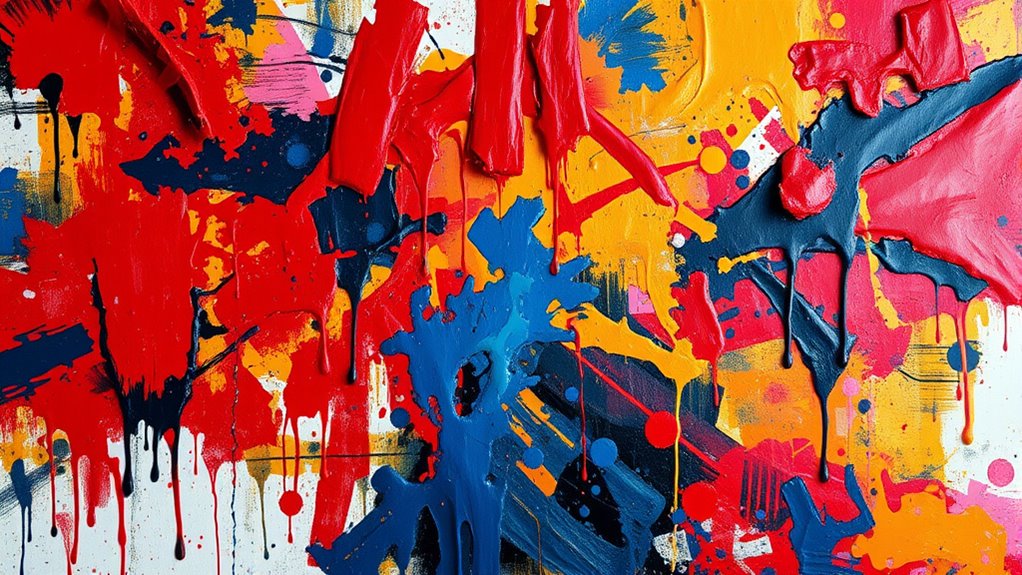
Have you ever wondered how artists can convey intense emotion without depicting recognizable objects? This is the essence of Abstract Expressionism, a movement that transformed the American art scene in the mid-20th century. You might not find detailed landscapes or figures here; instead, the focus is on raw emotion, spontaneity, and the act of creation itself. The techniques evolution within this movement reflects a shift from traditional methods to more experimental approaches. Artists began to emphasize gestures, brushstrokes, and the physical act of painting as a means to express their inner feelings. This shift allowed for a more personal, visceral connection between the artist and the canvas, which viewers can often feel viscerally. Key artists like Jackson Pollock, Willem de Kooning, and Mark Rothko pioneered these approaches, each bringing their unique style to the movement. Pollock, for instance, revolutionized the act of painting with his drip techniques, where he flung and layered paint onto large canvases laid out on the floor. His approach emphasized the physicality of art-making, making the process as significant as the finished piece. de Kooning, on the other hand, combined aggressive brushwork with abstracted figures, blurring the lines between figuration and pure abstraction. Rothko focused on large color fields, creating immersive experiences meant to evoke deep emotional responses. These key artists helped shape the movement’s diversity and its core aim: to evoke emotion through abstraction. As Abstract Expressionism evolved, it moved away from representational art, favoring spontaneity and improvisation. Techniques like action painting and gestural brushwork became central, emphasizing the artist’s physical engagement with the canvas. This evolution was fueled by a desire to break free from traditional standards and explore new ways of communicating feelings and ideas. The movement’s emphasis on individual expression and the act of painting itself set it apart from previous art movements. It was about capturing moments of genuine emotion rather than perfect realism. The techniques used by these key artists continue to influence contemporary art, inspiring new generations to experiment with materials, methods, and emotional depth. Additionally, the emphasis on color accuracy and bold use of color in Abstract Expressionism demonstrates how the movement also sought to evoke visceral reactions through visual intensity. Abstract Expressionism’s legacy lies in its boldness and its refusal to conform, encouraging artists and viewers alike to embrace the unpredictable, the spontaneous, and the deeply personal. You can see this influence in how contemporary artists approach their work today, pushing boundaries and exploring new ways to communicate complex human experiences without relying on recognizable imagery. Ultimately, Abstract Expressionism remains a testament to the power of raw emotion and the importance of individual expression in art, forever changing the landscape of modern painting.
Frequently Asked Questions
How Did Abstract Expressionism Influence Contemporary Art?
You see how abstract expressionism shaped contemporary art by emphasizing raw emotion through techniques like gestural brushwork and bold color fields. This movement encourages you to explore personal expression and spontaneity, inspiring modern artists to experiment with abstract forms and intense colors. Its focus on individual creativity and emotional impact continues to influence today’s art, pushing boundaries and fostering new styles that prioritize personal voice and innovative techniques.
Who Were the Key Female Artists in the Movement?
You might see women pioneers in Abstract Expressionism as shining stars breaking through a cloudy sky, their voices often muted but powerful. Artists like Lee Krasner and Joan Mitchell brought a feminist influence that challenged male dominance, shaping the movement’s bold spirit. Their fearless brushstrokes and innovative techniques made them key female artists whose contributions continue to inspire and redefine the art world today.
What Techniques Did Abstract Expressionists Commonly Use?
You’ll find that abstract expressionists commonly used techniques like gesture painting, which involves energetic, spontaneous brushstrokes, and color field painting, emphasizing large areas of solid color to evoke emotion. They often applied thick layers of paint and embraced improvisation, allowing their emotions to guide their hands. These methods created dynamic, expressive works that focus on raw emotion and the physical act of painting itself.
How Was Abstract Expressionism Received Internationally?
Did you know that over 200 abstract expressionist works were exhibited internationally in the 1950s? You might be surprised by how well this movement received international acclaim, helping to shape global perceptions of American art. Its cultural impact was profound, inspiring artists worldwide and challenging traditional aesthetics. As a result, abstract expressionism became a symbol of American innovation, gaining widespread recognition and influencing artistic development across continents.
Did Abstract Expressionism Have Any Political or Social Messages?
You might wonder if abstract expressionism carried political activism or social critique. Yes, some artists used bold forms and colors to challenge societal norms and express personal struggles, subtly conveying political messages. While not all works are overtly political, many reflect social issues of their time, encouraging viewers to question authority and societal values. So, this movement often served as a silent yet powerful form of political and social commentary.
Conclusion
You might think abstract expressionism is just chaotic splashes of paint, but it’s actually a powerful way to connect with raw emotion and innovation. Don’t dismiss it as messy; instead, see how it pushes boundaries and invites personal interpretation. By embracing this bold movement, you open yourself to a new perspective on art’s potential. So, give it a chance—you might discover a fresh way to see the world and your own creativity.