In early 20th-century modernism, artists broke away from traditional art rules to explore new ways of expressing emotion and ideas. Movements like Fauvism, Cubism, and Expressionism used bold, vivid colors and abstract forms to challenge realism and highlight inner feelings. Fauvism focused on wild colors, Cubism deconstructed objects into geometric shapes, and Expressionism aimed to evoke raw emotion. Exploring these styles reveals how artists redefined art’s expressive potential—if you keep going, you’ll discover even more about their groundbreaking innovations.

Get the latest gadgets delivered free with Prime
- Fast, free delivery on millions of items
- Prime Video, Amazon Music and more included
- Member-only deals all year
Key Takeaways
- Fauvism used vivid, expressive colors to convey emotion, breaking traditional approaches to shading and perspective.
- Cubism deconstructed objects into geometric shapes and presented multiple viewpoints simultaneously, emphasizing form over realism.
- Expressionism focused on raw emotion and subjective experience, often using distorted forms and intense colors.
- Early modernism challenged classical art constraints, highlighting innovative use of color and form to express inner worlds.
- These movements collectively redefined artistic boundaries, emphasizing emotional intensity and pioneering new artistic techniques.
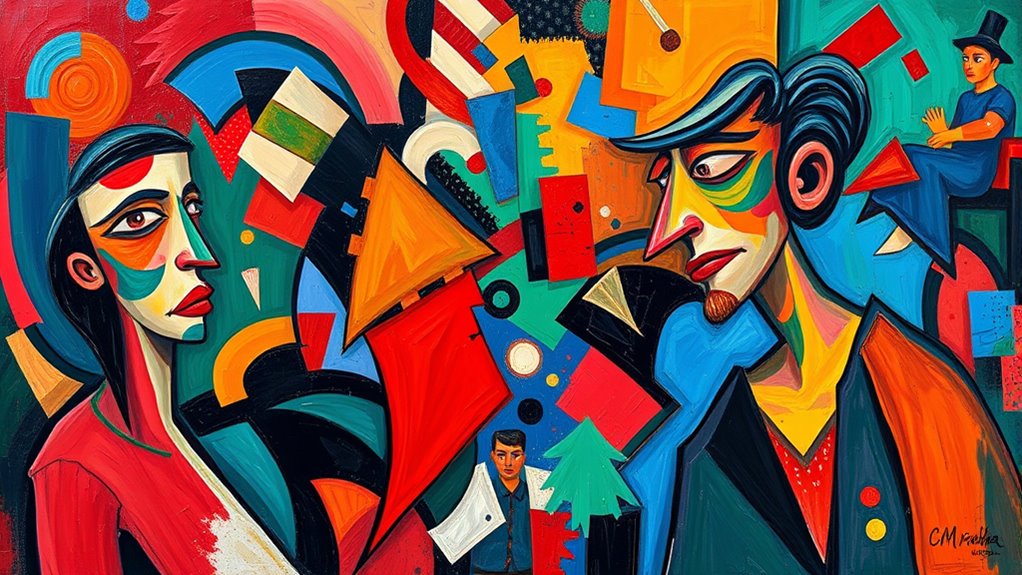
Have you ever wondered how art and design transformed in the early 20th century? It was a time of radical change, where artists broke away from traditional styles to explore new ways of expressing emotion and ideas. This era, known as early modernism, was marked by bold artistic innovation that challenged long-held conventions. One of the key elements that fueled this transformation was a deeper understanding of color theory. Artists began experimenting with color not just for realism, but as a powerful tool to evoke mood and meaning. They used vivid, often unnatural hues to create emotional intensity, pushing the boundaries of what color could do. This emphasis on color theory allowed painters to move beyond representational accuracy and embrace expressive, subjective visions of the world.
During this period, artistic innovation became the heartbeat of new movements like Fauvism, Cubism, and Expressionism. Fauvist artists, such as Henri Matisse, used wild, vibrant colors straight from their emotional core. They believed color could stand alone as a primary means of communication, disregarding traditional shading or perspective. Their approach was revolutionary, turning color into an emotional language that viewers could feel. Meanwhile, Cubism, pioneered by Picasso and Braque, shattered the idea of a single perspective. They deconstructed objects into geometric shapes and presented multiple viewpoints simultaneously. This artistic innovation challenged viewers to see familiar scenes in a new, fragmented way, emphasizing form over realistic depiction. These artists didn’t just experiment with shapes—they also played with color in innovative ways, often using muted or monochromatic palettes to focus attention on form and structure.
Expressionism took yet another route by emphasizing raw emotion and subjective experience. Artists like Edvard Munch used distorted forms and intense colors to communicate feelings of anxiety, fear, or longing. Their bold use of color theory amplified emotional impact, making viewers feel the intensity directly. These movements collectively pushed the boundaries of artistic expression, showing how color and form could be harnessed to convey complex inner worlds. They broke free from the constraints of classical art, embracing radical approaches that continue to influence contemporary art today. In essence, the early 20th century was a dynamic period where artists harnessed the power of color theory and embraced artistic innovation to redefine what art could be, making each piece a reflection of a new, more expressive vision of the world.
Frequently Asked Questions
How Did World War I Influence Modernist Artistic Movements?
You see that World War I deeply influenced modernist artistic movements by exposing war trauma and chaos, prompting artists to explore new ways of expression. This period sparks artistic innovation as creators challenge traditional forms to depict emotional intensity and disillusionment. You witness how artists use bold colors, fragmented shapes, and raw emotion, reflecting the profound impact of war and shaping the revolutionary styles that define modernism.
Which Artists Were Pivotal in Shaping Fauvism, Cubism, and Expressionism?
You should know that famous Fauvist artists like Henri Matisse and André Derain, along with key Cubist figures such as Pablo Picasso and Georges Braque, played vital roles in shaping these movements. These artists pushed boundaries with bold colors and fragmented forms, defining the styles. Their innovative approaches influenced modern art, inspiring future generations to explore new visual languages and challenge traditional perspectives.
What Were the Societal Reactions to These Avant-Garde Styles?
Did you know that less than 10% of the public embraced avant-garde art initially? You’d see strong public reception divided between admiration and shock, while institutions often resisted these styles, labeling them as radical or unsettling. This societal reaction fueled controversy, prompting artists to challenge norms further. Despite resistance, these styles eventually gained recognition, transforming modern art and influencing future generations.
How Did Technological Advances Impact Modernist Art Techniques?
You see, technological advances like digital tools revolutionized modernist art techniques, allowing you to experiment with new methods easily. These innovations enable you to create innovative techniques, such as photo manipulation, digital collage, and computer-generated imagery. As a result, you can push artistic boundaries beyond traditional skills, producing dynamic, complex works that challenge viewers’ perceptions and expand the possibilities of modern art.
What Is the Legacy of Early 20TH Century Modernism Today?
Imagine modernism as a seed planted long ago, now blossoming in your world. Its influence shapes your art, inspiring bold styles and new perspectives. Today, contemporary adaptations carry that legacy, pushing boundaries and fostering innovation. The modernist influence persists, reminding you to challenge conventions and embrace experimentation. Its enduring impact fuels your creativity, showing that the spirit of early 20th-century art still drives progress and transformation.
Conclusion
As you’ve seen, Fauvism, Cubism, and Expressionism revolutionized art with bold colors, fragmented forms, and raw emotion. They challenge you to see the world differently, breaking traditional rules and embracing innovation. Isn’t it exciting to think how these movements still influence art today? By understanding their daring ideas, you get a glimpse into a time when artists dared to push boundaries and redefine creativity. Isn’t that a story worth exploring?
Halloween Picks
halloween
As an affiliate, we earn on qualifying purchases.