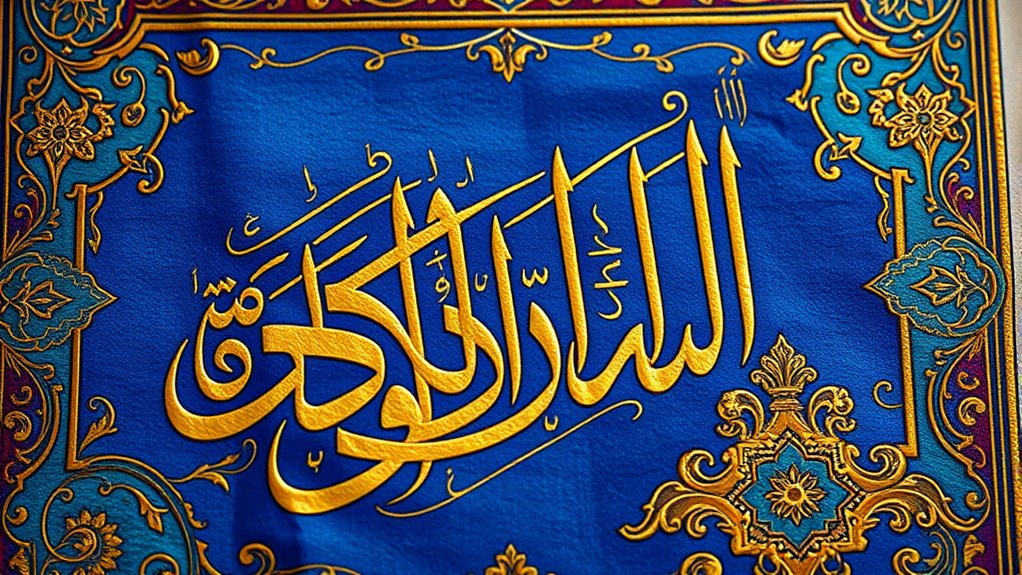
Islamic art skillfully blends calligraphy and geometric patterns to express spiritual beliefs and cultural identity across centuries. You’ll notice intricate scripts, often featuring Quranic verses, combined with mesmerizing designs symbolizing divine unity and infinity. These patterns, built with precise mathematical principles, encourage contemplation and spiritual connection. The vibrant colors and gold accents highlight their sacred significance. Exploring these artistic elements reveals a deep interconnection between science, faith, and beauty—if you continue, you’ll discover even more about their profound symbolism and history.
Key Takeaways
- Islamic calligraphy evolved as a revered art form, emphasizing divine words through intricate scripts across centuries.
- Geometric and arabesque patterns symbolize divine unity, reflecting spiritual beliefs and artistic innovation over time.
- Patterns and calligraphy integrate mathematical precision, showcasing Islamic scientific knowledge and cultural exchange.
- Artistic techniques use vibrant colors and gold to enhance spiritual symbolism and meditative reflection.
- The enduring motifs express cultural identity, spiritual devotion, and the pursuit of divine harmony through centuries.
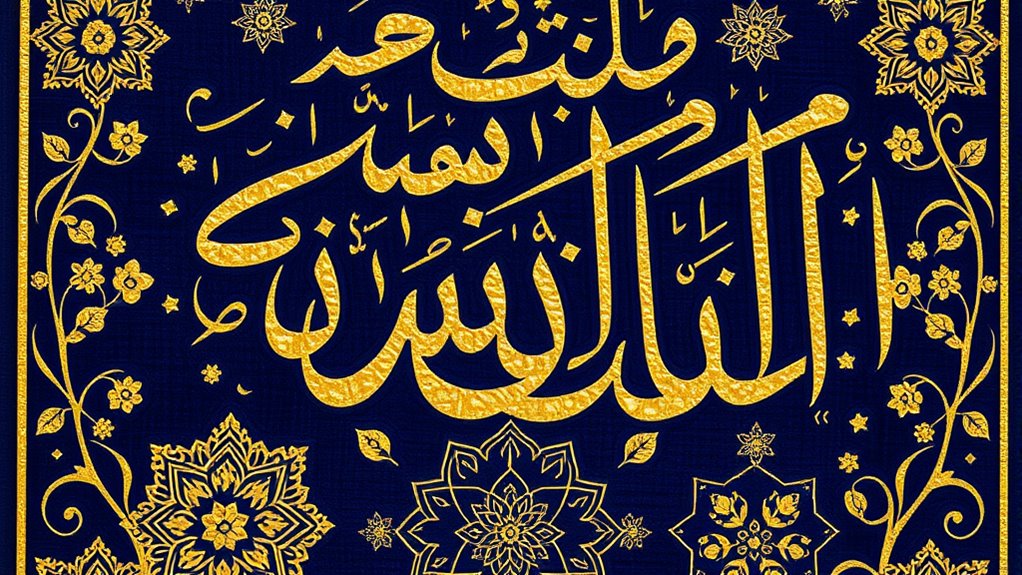
Have you ever wondered what makes Islamic art so distinctive? It’s the intricate blend of patterns, calligraphy, and symbolism that creates a visual language unlike any other. Central to its appeal are the geometric motifs and arabesque designs that fill mosques, manuscripts, and textiles with mesmerizing complexity. These elements aren’t just decorative; they embody deep spiritual meanings and reflect the Islamic worldview. When you observe Islamic art, you notice how the repetition and symmetry of geometric motifs serve as a metaphor for unity and the infinite nature of Allah. They often consist of interlaced polygons, stars, and tessellations that seem to extend endlessly, inviting contemplation and spiritual reflection. These motifs are carefully calculated, demonstrating the advanced mathematical understanding of Islamic artisans, who used precise geometry to craft their patterns. The arabesque designs, with their flowing, floral-inspired motifs, complement the geometric patterns by adding a sense of organic rhythm and harmony. They often feature stylized leaves, vines, and tendrils that weave through the geometric background, creating a seamless unity of natural and abstract forms. This combination underscores the Islamic belief in the interconnectedness of all creation. You’ll find these designs everywhere—on the walls of mosques, in illuminated manuscripts, and on everyday objects—each piece reflecting a devotion to beauty and spirituality. Islamic artists avoided realistic depictions of living beings to focus on divine transcendence, so they turned to these intricate patterns as a form of visual worship. The repetitive nature of the motifs encourages a meditative state, helping viewers transcend the material world and connect with the divine. Over centuries, these patterns evolved but remained rooted in fundamental principles of symmetry and harmony, demonstrating a shared artistic language across different regions and periods. The use of vibrant colors and gold accents further enhances their mesmerizing effect, making the patterns not just visual ornaments but symbols of divine order. Whether in the detailed tilework of a courtyard or the delicate illumination of a manuscript, these elements serve as a reminder of the infinite nature of Allah and the perfection of creation. Additionally, the precise geometry used in Islamic art reveals the mathematical brilliance of its creators, emphasizing their sophisticated understanding of complex shapes and proportions. This mathematical precision is often achieved through the use of geometric calculations that guide artisans in creating intricate, harmonious designs. The development of such patterns also illustrates the cultural exchange across different Islamic regions, fostering a shared artistic language that transcended borders. Furthermore, the study of these geometric patterns can provide insights into the scientific knowledge that Islamic scholars developed over centuries. Interestingly, the integration of art and science in Islamic culture reflects a broader intellectual tradition that valued the pursuit of knowledge. As you study Islamic art, you realize that these motifs and designs are more than just decoration—they are a visual dialogue that spans centuries, expressing spirituality, mathematical brilliance, and cultural identity in a single, enthralling form.
Frequently Asked Questions
How Did Islamic Calligraphy Influence Other Art Forms?
Islamic calligraphy acts as storytelling, conveying spiritual and cultural messages through elegant script. Its influence on modern typography is profound, inspiring designers to incorporate flowing, intricate letterforms into contemporary design. You see this impact in logos, digital fonts, and visual arts, where the beauty and rhythm of calligraphy shape visual communication. By blending tradition with innovation, Islamic calligraphy continues to influence art forms beyond its original context, enriching modern aesthetics.
What Materials Are Commonly Used in Islamic Decorative Patterns?
Imagine wrapping yourself in a tapestry woven with history. In Islamic decorative patterns, you often find 陶瓷装饰 and 织物图案 crafted from glazed ceramics, delicate tiles, and richly woven textiles. These materials serve as the canvas for intricate designs, blending vibrant colors and geometric precision. You’ll notice how the choice of ceramics and textiles transforms spaces into living works of art, echoing centuries of cultural symbolism and craftsmanship.
How Did Islamic Art Evolve During Different Dynasties?
You see how Islamic art evolved through dynastic influences, each bringing new styles and techniques. During different dynasties, you notice shifts in design, with some emphasizing intricate calligraphy and others focusing on geometric patterns. Architectural integration became key, as rulers commissioned mosques and palaces that showcased unique artistic elements. This evolution reflects a blend of cultural exchange and religious devotion, shaping Islamic art across centuries into a rich, diverse tradition.
Are There Regional Variations in Islamic Calligraphy Styles?
Imagine a river winding through diverse landscapes; regional calligraphy styles flow with unique cultural influences shaping their course. You’ll notice variations across regions, reflecting local traditions and aesthetics. These styles adapt to cultural influences like Persian elegance or Ottoman grandeur, creating a rich tapestry of artistic expression. As you explore, you’ll see how regional calligraphy styles serve as visual stories, revealing the distinct identities and histories woven into Islamic art.
How Is Islamic Art Preserved and Restored Today?
You’re curious about how Islamic art is preserved and restored today. Modern methods like digital restoration help you revive damaged artworks without physical contact, safeguarding their longevity. Preservation techniques such as climate control and careful conservation protect priceless pieces. By combining traditional methods with innovative technology, you can ensure that Islamic art, including calligraphy and patterns, remains accessible and beautiful for future generations.
Conclusion
As you explore Islamic art, you see how calligraphy and intricate patterns reflect a rich cultural heritage that has endured for centuries. These artistic traditions remind us that beauty and faith are deeply intertwined, shaping a legacy that continues to inspire. Remember, “A picture is worth a thousand words,” and in Islamic art, every detail speaks volumes about spirituality and identity. Keep appreciating these timeless expressions of creativity and devotion.