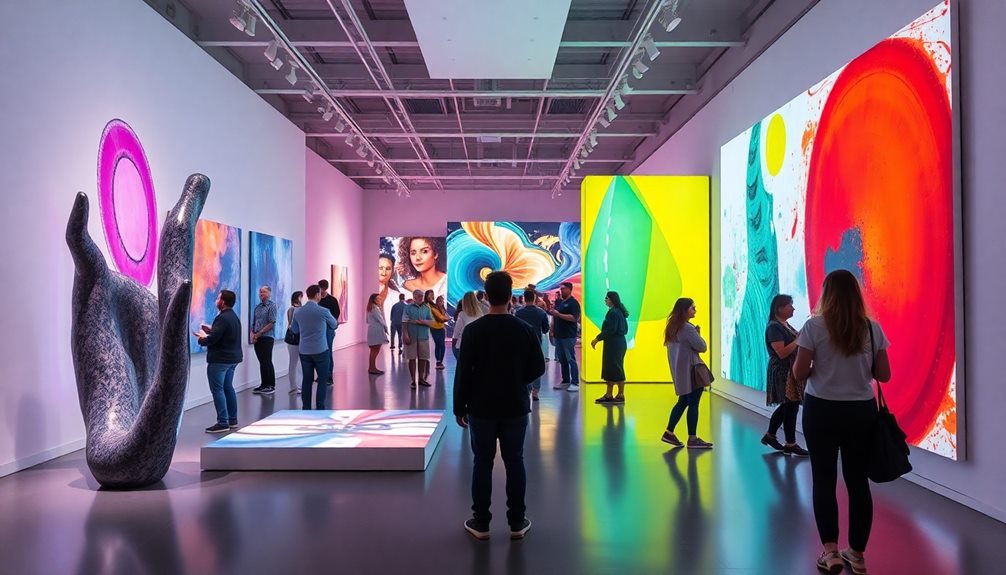

Conceptual art emphasizes ideas as the main medium, meaning the message takes precedence over traditional aesthetics or physical form. Instead of focusing on beauty or craftsmanship, you engage with provocative concepts, installations, or performances that challenge societal norms or provoke thought. This approach transforms the viewer into an active participant, encouraging interpretation and critical dialogue. If you explore further, you’ll discover how this movement redefines art as a vessel for cultural and philosophical ideas.
Key Takeaways
- Conceptual art elevates ideas as the primary artistic medium, often using text, installations, or performances to convey complex concepts.
- It shifts focus from visual aesthetics to provoking thought, interpretation, and active viewer engagement.
- The movement challenges traditional notions of beauty and craftsmanship, emphasizing intellectual exploration over materiality.
- Conceptual art acts as a tool for social critique, questioning societal norms, politics, and cultural assumptions.
- It democratizes artistic expression by validating diverse ideas, often blurring boundaries between disciplines and encouraging innovation.

What exactly defines conceptual art? At its core, it shifts the focus from traditional aesthetics to the power of ideas. Instead of emphasizing craftsmanship or visual appeal, this movement champions artistic innovation by making concepts the primary medium. You might visualize a piece not as a painting or sculpture but as a thought-provoking statement or a set of instructions. This approach challenges you to think beyond the physical form, encouraging a deeper engagement with the message behind the work. As a viewer, you’re invited to interpret, question, and even participate, which transforms the experience from passive observation into active dialogue. Conceptual art often acts as a cultural critique, scrutinizing societal norms, political issues, or philosophical questions. It pushes you to confront uncomfortable truths or hidden assumptions embedded within everyday life. By doing so, it becomes a mirror reflecting the complexities, contradictions, and power dynamics of the culture it emerges from.
You might encounter an artwork that is just a simple sentence or a provocative idea written on a wall, yet its impact can be profound. These works demand your intellectual involvement, making you reconsider the very nature of art and its purpose. This emphasis on ideas over materiality was revolutionary, breaking away from traditional notions of beauty and technical mastery. It’s a deliberate move to democratize art, emphasizing that anyone’s ideas could be valid artistic expressions. As you explore conceptual art, you realize that it often questions the commercialization of art or critiques institutions that dictate what is considered valuable. It challenges the status quo, asking you to think critically about cultural values and the role of art within society.
Furthermore, conceptual art has paved the way for innovative practices, blending disciplines like philosophy, politics, and social activism. It pushes you to see art as a tool for change, not just an object of aesthetic appreciation. Through this lens, artistic innovation isn’t just about creating new forms but about expanding the boundaries of what art can communicate. Whether through installations, performances, or written propositions, it invites you to engage more deeply with ideas that might otherwise be overlooked. Ultimately, conceptual art transforms your understanding of creativity, positioning ideas as the most potent form of artistic expression. It’s a movement that urges you to look beyond the surface, to question assumptions, and to see art as a dynamic force shaping cultural and societal conversations.
Frequently Asked Questions
How Does Conceptual Art Influence Contemporary Digital Media?
You see how contemporary digital media is shaped by ideas and concepts, much like conceptual art. It influences digital storytelling by encouraging creators to focus on the message rather than just visuals. Interactive platforms are designed to engage users actively, echoing conceptual art’s emphasis on ideas. This approach pushes you to think creatively, making digital experiences more thought-provoking and meaningful, just as conceptual art transformed traditional art practices.
What Are the Ethical Considerations in Conceptual Art?
Did you know that 60% of artists face authenticity concerns in their work? When you create conceptual art, you need to ensure ethical issues like authenticity and intellectual property. You might wonder if your ideas are protected or if others could copy them. Addressing these concerns ensures respect for original thought and avoids legal trouble, helping you maintain integrity and trust in your artistic practice.
Can Conceptual Art Be Commercially Successful?
You might wonder if conceptual art can be commercially successful. While it often emphasizes ideas over aesthetics, its market viability depends on how well it resonates with collectors and audiences. Artistic innovation can boost its appeal, attracting those interested in unique, thought-provoking pieces. If your work pushes boundaries and sparks conversations, you increase its potential for commercial success, blending creative daring with market appeal.
How Do Viewers Typically Interpret Conceptual Artworks?
They say, “Beauty is in the eye of the beholder,” and for you, that’s especially true with conceptual artworks. Viewers often experience perception shifts, challenging their usual ways of seeing. You interpret these works through personal and cultural interpretative frameworks, which can lead to diverse understandings. Your interpretation isn’t fixed; it evolves as you engage more deeply, revealing the layered ideas artists embed within their pieces.
What Role Does Audience Participation Play in Conceptual Art?
In conceptual art, audience participation fuels interactive engagement and personal interpretation, making you a essential part of the artwork. Your active involvement transforms the piece from a static object into a dynamic experience. By engaging with the concept, you help convey the artist’s message, blurring the line between creator and viewer. This participatory process emphasizes that meaning isn’t fixed but shaped through your personal perspective and interaction.
Conclusion
You realize that conceptual art is like planting a seed—you might not see the full bloom immediately, but its roots grow deep with ideas. Just as a simple phrase can spark a revolution, your thoughts can transform a blank canvas into a powerful statement. Remember, it’s the idea behind the art that truly matters, turning your mind into the most creative tool. Embrace this mindset, and watch how your concepts can reshape perceptions.