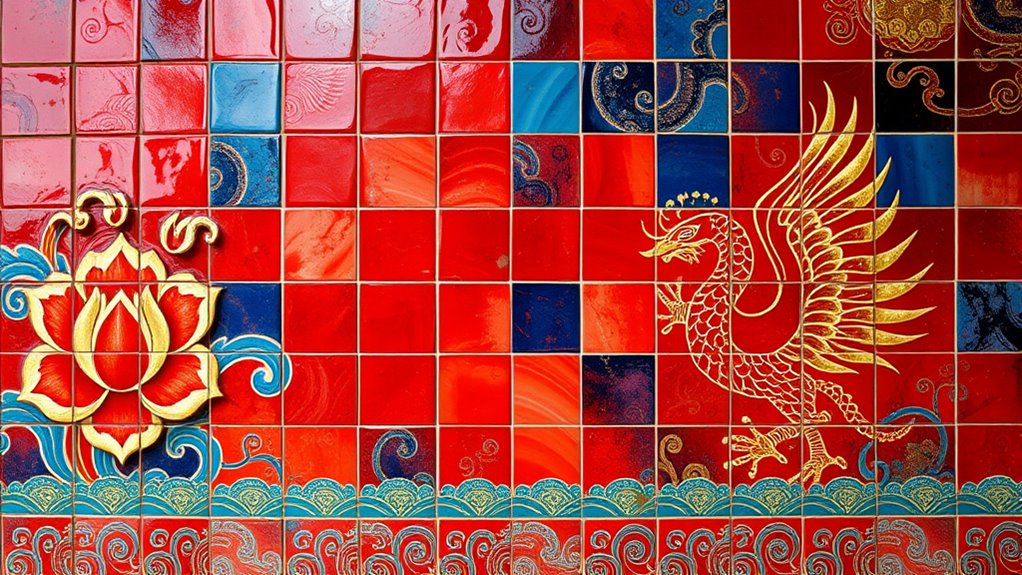

To understand cultural symbolism in art, focus on how colors and motifs reflect societal beliefs, values, and history. Colors like red, blue, and green carry specific emotional or spiritual meanings across cultures, while motifs act as visual signs of shared stories, spiritual beliefs, or historical events. Recognizing these symbols helps you uncover deeper messages and cultural identity behind artworks. Exploring further reveals more about how these elements convey complex cultural stories and significance.

Get the latest gadgets delivered free with Prime
- Fast, free delivery on millions of items
- Prime Video, Amazon Music and more included
- Member-only deals all year
Key Takeaways
- Colors in art carry emotional and spiritual meanings unique to each culture, such as red for luck or green for fertility.
- Motifs function as visual symbols representing societal beliefs, spiritual themes, or historical narratives.
- Recognizing cultural context helps decode the layered messages conveyed through color and motifs.
- Traditional patterns serve as cultural signposts, reflecting community identity and shared stories.
- Understanding these symbols enhances appreciation of the deeper cultural significance behind artworks.

Cultural symbolism in art reveals the deeper meanings and values of a society, allowing viewers to connect with images that go beyond their visual appearance. As you explore a piece of art, you’ll notice that certain motifs and colors carry specific significance rooted in cultural traditions. Traditional motifs, for instance, often serve as visual shorthand for shared beliefs, stories, and historical events. These patterns and symbols aren’t randomly chosen—they reflect a community’s identity, spiritual beliefs, or social status. Recognizing these motifs helps you understand the context behind the artwork, giving you insight into what a culture deems important or sacred. For example, a dragon in East Asian art symbolizes power and good fortune, while a lotus flower in Indian art signifies purity and enlightenment. These motifs act as cultural signposts, guiding you through a society’s worldview.
Color meanings are equally crucial in decoding art’s symbolism. Colors aren’t just aesthetic choices; they embody emotional and spiritual significance that varies across cultures. When you see red, it might evoke passion, energy, or danger, but in some cultures, it’s also associated with good luck and prosperity. Blue, often linked to calmness and spirituality, can represent immortality in Chinese art or divinity in Christian icons. Green may symbolize fertility and growth, yet in some contexts, it can also indicate jealousy or decay. Understanding these color meanings enhances your appreciation, helping you see how artists communicate complex ideas and values through their palette. It’s worth noting that these associations are deeply embedded in cultural histories, so a color’s significance in one society might differ in another. This nuanced understanding allows you to read between the lines of an artwork, grasping the layered symbolism that the artist intends to convey.
As an affiliate, we earn on qualifying purchases.
Frequently Asked Questions
How Do Cultural Symbols Evolve Over Time in Art?
You see cultural symbols evolve through historical shifts and cross-cultural reinterpretations. As societies change, they adapt symbols to new meanings, blending traditional ideas with modern perspectives. This evolution often results in reinterpretations across cultures, enriching the symbolism. You’ll notice motifs transforming over time, reflecting societal values, beliefs, and influences. By observing these changes, you gain a deeper understanding of how art communicates shifting cultural identities and shared histories.
Are There Universal Color Meanings Across All Cultures?
Think of colors as a universal language, yet each culture speaks it differently. While red often symbolizes passion or danger and white purity, these meanings can vary across borders. Cross-cultural color interpretations reveal symbolic motif variations, making no single color universally understood. You, as an observer, must consider these nuances to truly grasp an artwork’s intended message, recognizing that cultural context shapes every shade and symbol.
How Do Artists Intentionally Incorporate Cultural Symbolism?
You intentionally incorporate cultural symbolism by selecting symbolic colors that convey specific meanings, like red for passion or danger, and integrating motifs that hold cultural significance, such as religious symbols or traditional patterns. You strategically combine these elements to communicate deeper messages or evoke particular feelings, ensuring your artwork resonates with cultural contexts. This deliberate motif integration helps viewers interpret your work through a richer, more meaningful cultural lens.
What Role Does Context Play in Interpreting Motifs?
Think of motifs as puzzle pieces; without context, you might misplace them. Context shapes your interpretive frameworks, helping you see cultural symbolism clearly. For example, a dragon in Chinese art signifies power and good fortune, but in Western contexts, it might evoke fear. Your understanding depends on cultural background, historical time, and social setting, all of which influence how you interpret motifs accurately and meaningfully.
Can Cultural Symbolism in Art Influence Social Change?
Cultural symbolism in art can definitely influence social change by shaping your identity and highlighting societal values. When you see symbols that resonate with your culture, it can inspire pride, challenge norms, or promote understanding. Artists use these symbols intentionally to influence public perception and encourage dialogue, which can lead to shifts in societal attitudes and behaviors over time. Your engagement with these symbols can be a powerful catalyst for social transformation.
As an affiliate, we earn on qualifying purchases.
Conclusion
As you explore the vibrant dance of colors and motifs, you begin to see how they whisper stories across cultures. Every hue and symbol weaves a tapestry of meaning, like threads in a shared fabric of humanity. Embrace these visual languages, for they invite you to listen with your eyes and feel with your soul. In understanding cultural symbolism, you unseal a world where art becomes a bridge—connecting hearts, histories, and hopes in a timeless melody.
As an affiliate, we earn on qualifying purchases.
As an affiliate, we earn on qualifying purchases.
Halloween Picks
halloween
As an affiliate, we earn on qualifying purchases.