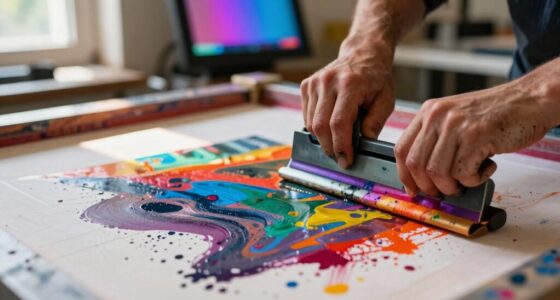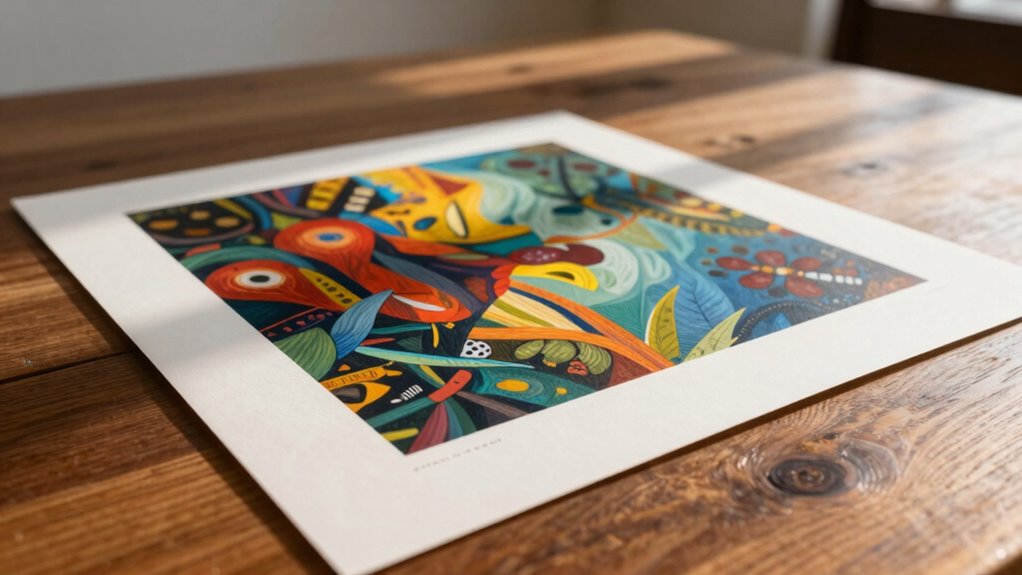

When it comes to fine art prints, your choice of paper isn’t just a detail—it’s a game changer. Different papers can dramatically affect color vibrancy and texture, transforming how your artwork feels and is perceived. Whether you opt for textured cotton rag or sleek glossy finishes, each paper type plays a vital role in your piece’s overall impact. Understanding these nuances can elevate your art, making it more immersive. Discover how to make the best choice for your creations.
Key Takeaways
- Paper choice significantly impacts the visual and tactile qualities of fine art prints, influencing the overall aesthetic experience.
- Textured papers enhance color vibrancy and create depth, making them ideal for an artisanal feel.
- Smooth papers provide higher color saturation and clarity, perfect for detailed and vibrant artworks.
- Heavier papers contribute to durability and longevity, ensuring prints maintain their beauty over time.
- Selecting the right paper is essential for achieving the desired effect and preserving the artist’s vision.

When it comes to fine art prints, the choice of paper can make all the difference. You might not realize it, but the paper you select can dramatically alter the overall look and feel of your artwork. Each type of paper brings its own unique characteristics to the table, influencing not only the texture impact but also the color vibrancy of your prints. If you want your art to truly shine, understanding these differences is essential.
Think about it: a soft, textured paper can add a depth that makes the colors pop in ways you wouldn’t expect. If you’re aiming for a more traditional, fine art look, think about using a cotton rag or a watercolor paper. These options often provide a rich texture that enhances the visual experience. The fibers in these papers create subtle variations in how light reflects off the surface, giving your prints a tactile quality that flat, smooth papers simply can’t match. When someone runs their fingers across the surface, they’ll feel that artistry, making the experience more immersive.
On the other hand, if you’re looking for a sleek, modern aesthetic, a glossy or satin paper could be your go-to choice. These papers typically boast a higher color vibrancy, allowing for bold hues and deep contrasts. If your artwork features bright colors or intricate details, a glossy finish can elevate those aspects, helping your prints capture attention in any setting. The smooth surface guarantees that your colors remain true to life, making every detail stand out. Additionally, understanding the paper finish can help you select the perfect surface for your artwork’s intended presentation. Recognizing the impact of paper texture on visual and tactile qualities can further refine your selection process. Moreover, considering the paper’s durability can ensure your prints maintain their beauty over time, especially if they are meant to last or be displayed frequently.
But don’t overlook the role of weight and thickness. Heavier papers not only feel more substantial, but they can also affect how colors are perceived. A thicker stock can reduce light penetration, enhancing color saturation and richness, while thinner paper might let light pass through, leading to a softer, more muted appearance. Paying attention to paper weight can help you achieve your desired visual effect and durability, ensuring your artwork stands the test of time. It’s all about finding the right balance that aligns with your artistic vision.

Epson Velvet Fine Art Paper (8.5×11 Inches, 20 Sheets) (S041636), White
- Museum quality, acid-free base: Preserves fine art and photos
- 100% cotton rag: Archival quality paper
- Bright white surface: Enhances color reproduction
As an affiliate, we earn on qualifying purchases.
As an affiliate, we earn on qualifying purchases.
Frequently Asked Questions
How Do I Choose the Right Frame for My Fine Art Print?
To choose the right frame for your fine art print, consider various frame styles that complement the artwork. Classic wood frames often enhance traditional prints, while sleek metal frames suit modern pieces. Don’t overlook matting options—select a mat that adds depth and contrast, drawing attention to the print. Guarantee the frame’s size fits your space and protects the artwork. Ultimately, your choice should reflect your personal style and the print’s character.
What Is the Difference Between Digital and Traditional Fine Art Prints?
Digital fine art prints use digital techniques to achieve high print quality, often allowing for precise color reproduction and detail. In contrast, traditional prints rely on manual reproduction methods, emphasizing the artist’s intent and tactile qualities. While digital prints can replicate artwork efficiently, traditional prints often carry a sense of authenticity and craftsmanship. Ultimately, your choice reflects your preference for modern technology versus classic artistry, shaping how you connect with the pieces you love.
Can Fine Art Prints Fade Over Time?
Yes, fine art prints can fade over time. Print longevity largely depends on factors like UV exposure, which can greatly affect colors. Environmental factors, such as humidity and temperature, also play an essential role in how well your print holds up. To guarantee your prints last, practice proper print care; keep them away from direct sunlight and store them in a controlled environment. Taking these steps can help maintain their vibrancy for years.
How Should I Store My Fine Art Prints?
To store your fine art prints, use archival materials to guarantee their longevity. Keep humidity control in mind; aim for a stable environment. Avoid light exposure by storing prints in dark conditions. Flat storage is ideal—stack prints without bending or folding. Consider using protective sleeves, which not only shield from dust but also provide an extra layer of security. By following these steps, you’ll help preserve the beauty of your prints for years to come.
What Are the Benefits of Investing in Limited Edition Prints?
Investing in limited edition prints is like planting a seed in a fertile garden; it can yield significant rewards. These prints often appreciate in investment value, making them appealing in the art market. They connect you to a vibrant collector community, enhancing your experience as a collector. Plus, owning such pieces can elevate your status in the art world, reflecting positively on the artist’s reputation and your discerning taste.

Koala Double Sided Photo Paper Woven Textured Thick 8.5×11 Inch 69LB
- Double-sided glossy finish: Printable on both sides, 8.5×11 inch
- Premium woven textured paper: Delicate, durable, enhances image quality
- Compatible with inkjet and dye ink: Fast drying, suitable for high-quality photos
As an affiliate, we earn on qualifying purchases.
As an affiliate, we earn on qualifying purchases.
Conclusion
In the world of fine art prints, your choice of paper is like the canvas to a painter’s brush—transformative and essential. It breathes life into the colors, textures, and emotions captured in each piece. Whether you opt for the soft embrace of cotton rag or the sleek touch of satin, each paper tells a story, enhancing your art’s voice. So, choose wisely; the right paper can turn mere images into timeless treasures that resonate long after the last glance.

HahnemhlePlatinum Rag Fine Art Paper (8 x 10", 25 Sheets)
- Material: 100% cotton, 300 gsm
- Surface Texture: Smooth, subtle textured surface
- Color: Natural bright white
As an affiliate, we earn on qualifying purchases.
As an affiliate, we earn on qualifying purchases.

KOVIEDE 100 Sheets Watercolor Paper 8.5×11 Inch 102LB/230GSM
- Heavyweight Watercolor Paper: 230gsm, warp-resistant, minimizes bleed-through
- Ideal for Beginners & Classrooms: 100 sheets, perfect for practice and group projects
- Printer Compatible: Fits standard 8.5×11 printers for printing sketches
As an affiliate, we earn on qualifying purchases.
As an affiliate, we earn on qualifying purchases.