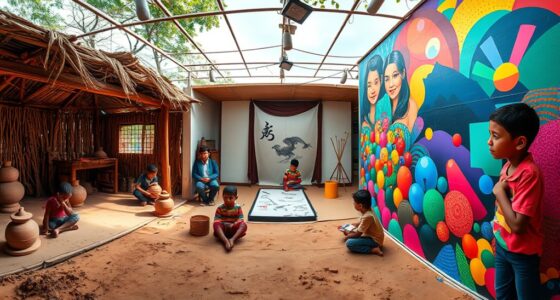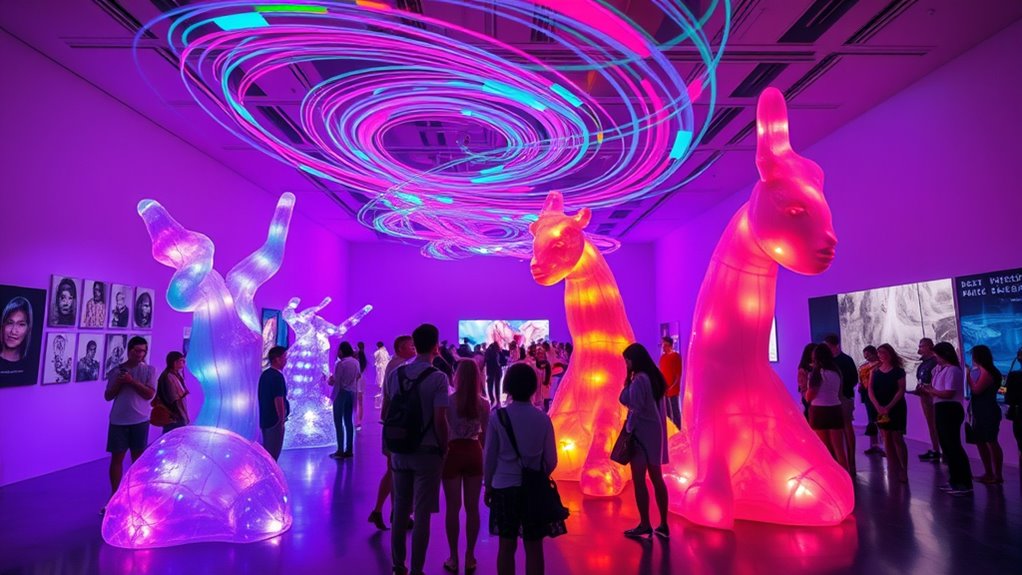

Future trends in global art movements will see greater digital curation shaping diverse, hybrid, and accessible creative expressions. You’ll notice more artists blending traditional and digital media, promoting cultural hybridity and identity exploration. Digital platforms will boost cross-border collaborations and community engagement, breaking down geographical barriers. Innovation and experimentation will be central, reflecting our interconnected world. To understand how these trends are reshaping the art landscape, explore what’s on the horizon next.
Key Takeaways
- Increasing integration of digital curation to democratize access and foster global collaboration in art movements.
- Growth of hybrid and multimedia art forms blending traditional and digital media for innovative expressions.
- Emphasis on cultural hybridity, challenging boundaries and promoting diverse, interconnected narratives.
- Utilization of digital platforms to facilitate cross-border dialogue and rapid adaptation to social issues.
- Embracing experimentation with new technologies like VR, AR, and AI to shape future artistic practices.
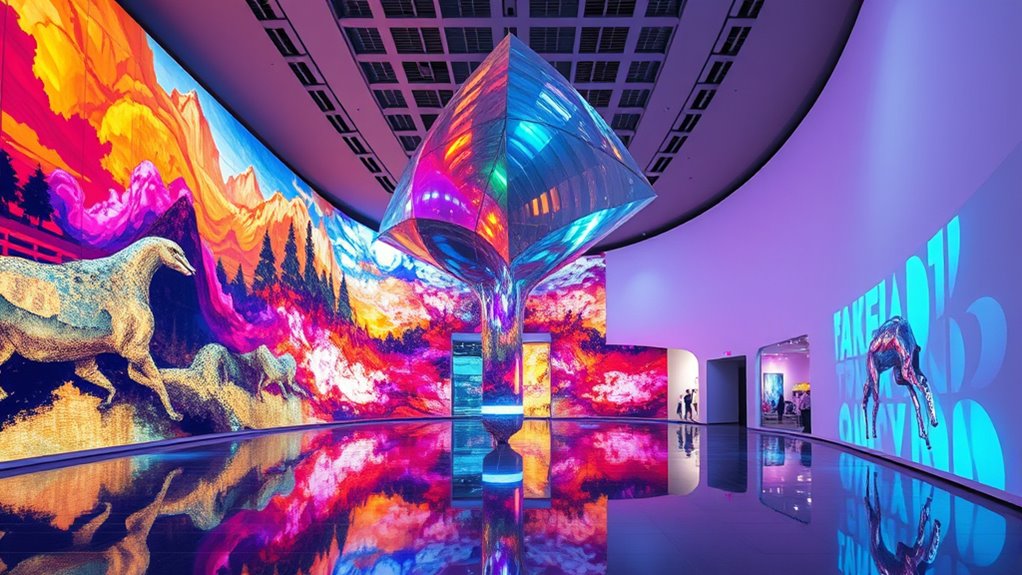
As the world continues to evolve rapidly, so do the ways artists express themselves and connect with audiences. One of the most significant shifts you’ll notice in future art movements is the growing role of digital curation. With technology advancing at an unprecedented pace, artists now have tools to organize, present, and share their work in ways that transcend traditional gallery spaces. Digital curation allows you to compile diverse media—images, videos, interactive elements—into cohesive virtual exhibitions accessible worldwide. This shift not only democratizes access to art but also enables you to experiment with new formats, blending different media seamlessly. As a result, your creative expression becomes more dynamic and engaging, fostering deeper connections with an increasingly global audience. Furthermore, digital curation makes it easier to incorporate cultural hybridity into your work. You can draw from multiple cultural influences, merging traditions, aesthetics, and narratives to craft pieces that reflect a complex, interconnected world. This blending allows you to challenge conventional notions of identity and cultural boundaries, encouraging viewers to embrace diversity and complexity. Future art movements will likely emphasize this cultural hybridity, encouraging you to explore and celebrate the fluidity of cultural identities. You’ll find that digital platforms serve as fertile ground for these explorations, where collaborations across borders become commonplace and cultural dialogues flourish. As you engage with digital curation, you’ll notice how it amplifies your voice within this hybrid landscape, enabling you to reach audiences that are more varied and globally dispersed. The ability to curate digitally also means you can respond more swiftly to current events, social issues, or cultural shifts, integrating them into your work in real-time. This immediacy fosters a more relevant, resonant form of artistic expression. Additionally, the integration of digital tools provides new opportunities for innovation and experimentation in your creative process. The future of art is increasingly about breaking down barriers—geographical, cultural, and disciplinary—and digital curation plays a critical role in this process. It empowers you to craft narratives that honor multiple cultural perspectives simultaneously, reflecting the interconnected, hybrid world we inhabit. As you continue to explore these trends, you’ll find that embracing digital curation and cultural hybridity not only enhances your creative freedom but also positions you at the forefront of evolving global art movements. Your work will become an essential part of a larger conversation—one that celebrates diversity, innovation, and the shared human experience in an interconnected world.
Frequently Asked Questions
How Will AI Influence Future Art Styles Globally?
AI will profoundly influence future art styles globally by enhancing creativity through innovative AI creativity tools. You’ll see artists experimenting with algorithmic aesthetics, blending technology and traditional techniques to create unique visuals. This shift encourages diverse expressions and pushes boundaries, making art more accessible. As AI continues evolving, it will inspire new genres and collaborations, transforming how you create and experience art worldwide.
What Role Will Virtual Reality Play in Art Exhibitions?
Virtual reality will revolutionize art exhibitions by creating immersive experiences you can enjoy from anywhere. Instead of physical visits, you’ll explore digital galleries that feel incredibly real, engaging your senses and emotions more deeply. Some might worry about losing the personal touch, but VR enhances interaction and accessibility. As a result, you’ll discover new ways to connect with art, making exhibitions more engaging, inclusive, and innovative than ever before.
How Are Emerging Economies Shaping New Art Movements?
Emerging markets are shaping new art movements by blending diverse cultural influences, creating vibrant cultural fusion. You’ll notice artists from these economies drawing on local traditions while experimenting with global styles, pushing boundaries and redefining contemporary art. This dynamic mix fosters innovation, making their work stand out on the world stage. As you explore these movements, you’ll see how emerging markets are becoming essential hubs for fresh, exciting artistic expressions rooted in cultural fusion.
Will Traditional Techniques Survive in Digital Art Trends?
Traditional techniques will definitely survive amidst digital art trends, but you’ll face preservation challenges like never before. As technology evolves at lightning speed, older methods risk fading into obscurity, yet their cultural significance keeps them alive. You must adapt and innovate, blending technique evolution with digital tools, to guarantee these timeless skills endure. Embracing change while respecting tradition creates a powerful bridge between past and future artistry, keeping heritage vibrant and relevant.
How Do Global Political Shifts Impact Art Themes Worldwide?
You see that global political shifts greatly influence art themes worldwide. They often inspire artists to explore cultural identity and engage in political activism through their work. As politics evolve, you might notice more pieces addressing social justice, nationalism, or resistance. These themes help reflect current events and encourage dialogue, making art a powerful tool for expressing collective concerns and fostering understanding across diverse communities.
Conclusion
As you look ahead, you’ll see that global art movements will continue to evolve with technology and cultural exchange. An intriguing statistic shows that over 60% of new art pieces are now created digitally, highlighting the shift toward virtual creativity. Embrace these changes, as they offer fresh ways to connect and express yourself. The future of art is dynamic, inclusive, and more accessible than ever—so stay open and curious about what’s next.