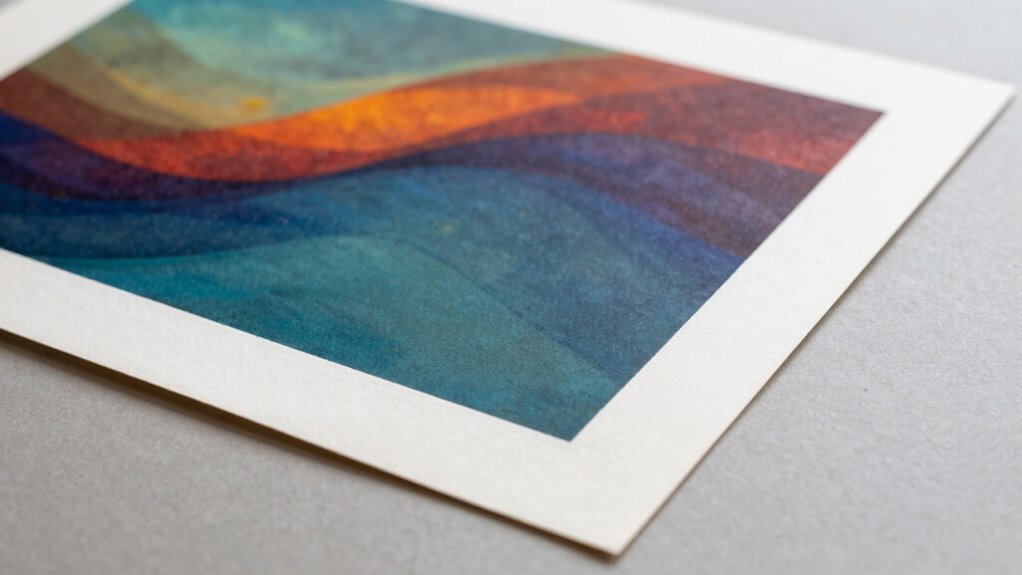

Giclée prints are considered fine art because they use advanced digital techniques to produce highly detailed and long-lasting reproductions. They are created with high-resolution scans and professional-grade printers, ensuring every subtle color and texture of the original is captured accurately. Archival-quality inks and materials help these prints resist fading over time, maintaining their vibrancy. If you explore further, you’ll discover how these processes elevate a print from ordinary to collectible quality.
Key Takeaways
- Giclée prints are created using high-resolution digital scans and professional inkjet printers for precise detail.
- They utilize archival-quality inks and acid-free papers to ensure long-lasting vibrancy and durability.
- Giclée printing faithfully reproduces the artist’s original textures, colors, and nuances, maintaining artistic integrity.
- The process emphasizes accuracy and fine detail, distinguishing it from standard or mass-produced prints.
- These prints are considered “fine art” due to their high quality, longevity, and craftsmanship, suitable for collections.
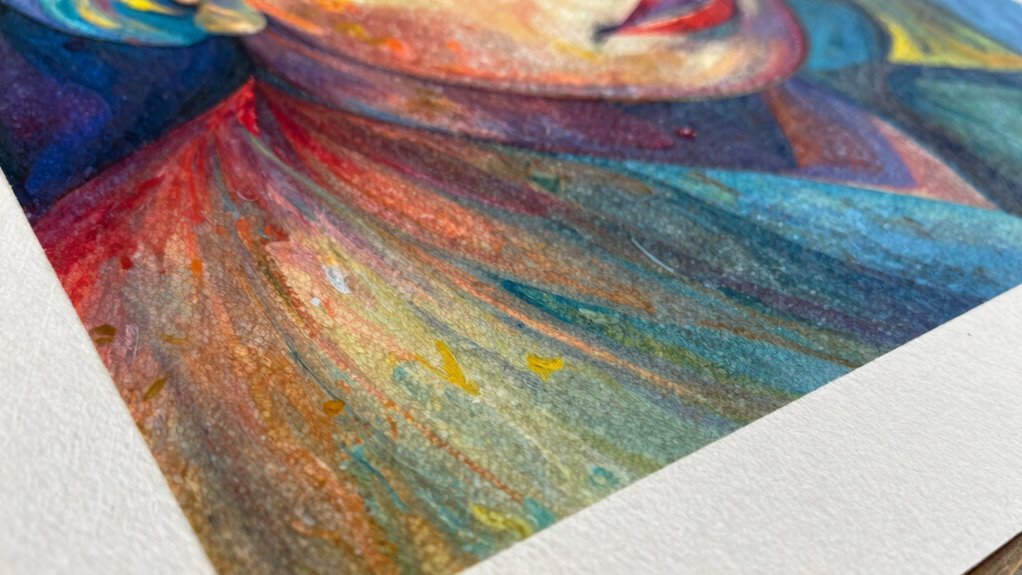
Have you ever wondered how artists and collectors achieve such stunning, high-quality reproductions of artwork? The secret lies in the process of creating giclée prints, which are renowned for their exceptional detail and longevity. At the core of this process is the use of advanced digital reproduction techniques that capture the original artwork’s nuances with incredible accuracy. When you choose a giclée print, you’re opting for a digital reproduction that faithfully preserves the artist’s intent, from subtle color gradations to fine textures. This precision is essential in reproducing fine art, and it’s what separates giclée prints from standard prints or posters.
One of the key factors that make giclée prints stand out is their use of archival quality materials. Artists and collectors alike seek out these high-grade inks and papers because they guarantee the longevity of the print. Archival quality inks are designed to resist fading over decades, even in bright light or humid conditions. Similarly, the archival papers used are often acid-free and made from premium fibers, which prevent deterioration and preserve the vibrancy of the image. When combined, these elements create a finished product that isn’t just a reproduction but a true piece of fine art, capable of lasting for generations without significant degradation.
The digital reproduction process in giclée printing involves high-resolution scanners and professional-grade inkjet printers. The artwork is scanned at a very high resolution, capturing every detail and color variation. Then, using sophisticated software, technicians carefully calibrate colors to match the original as closely as possible. This meticulous process ensures that the final print maintains the integrity of the artist’s vision. Unlike mass-produced prints, which often rely on less precise methods, giclée printing emphasizes accuracy and detail, making each print a true reflection of the original artwork.
Furthermore, the use of archival quality materials isn’t just about durability; it’s about authenticity. When you hold a giclée print, you’re experiencing a reproduction that’s been crafted with the same care and precision as the original piece. Artists often select these materials to guarantee that their work’s integrity is preserved over time, allowing collectors to enjoy their art without worry of fading or damage. The combination of a meticulous digital reproduction process and the use of archival quality supplies results in a print that’s both visually stunning and built to last. Archival quality materials ensure the longevity and authenticity of the artwork, making the print truly comparable to the original masterpiece.
Frequently Asked Questions
How Long Do Giclée Prints Typically Last Without Fading?
Giclée prints typically last 75 to 100 years without fading, thanks to their high lightfastness and archival quality. You can preserve their vibrant colors longer by avoiding direct sunlight and high humidity. Proper framing with UV-protective glass also helps extend their longevity. With good care, your giclée prints will maintain their beauty and detail for generations, making them a lasting investment in fine art.
Are Giclée Prints Suitable for Outdoor Display?
You probably wouldn’t hang a delicate paper umbrella in a storm, right? Giclée prints aren’t ideal for outdoor display because they lack weather resistance and outdoor durability. Exposure to rain, sun, and humidity can cause fading and damage. For outdoor use, opt for weatherproof materials like canvas with UV coatings. Giclée prints shine indoors where they’re protected, ensuring your artwork stays vibrant and beautiful over time.
What Are the Cost Differences Between Giclée and Other Fine Art Prints?
You’ll find that giclée prints typically cost more than other fine art prints because of their superior material quality and production complexity. The high-quality inks and archival papers used in giclée printing guarantee durability and vibrant colors, which drive up costs. In contrast, other prints may use simpler materials and less intricate processes, making them more affordable but potentially less long-lasting and detailed.
Can Giclée Prints Be Customized or Personalized?
Yes, giclée prints can be customized and personalized. You can choose print customization options like size, framing, and paper type to suit your preferences. Some providers also offer personalization options such as adding text or special finishing touches. By selecting these options, you make your giclée print unique and tailored to your style, ensuring it perfectly fits your space and aesthetic.
How Do I Care for and Store Giclée Prints Properly?
Think of your giclée print as a delicate flower that needs careful nurturing. Store it in a cool, dry place away from direct sunlight, and avoid humidity. When displaying, use framing techniques that protect against UV rays and dust. Keep lighting soft and indirect to prevent fading, and handle with clean, cotton gloves. Proper care guarantees your artwork remains vibrant and beautiful for years to come.
Conclusion
Now that you know what makes a giclée print truly fine art, you’re ready to spot quality from a mile away—no need for a crystal ball or a DeLorean. Remember, it’s all about the high-quality inks, archival papers, and expert craftsmanship that give the print its longevity and vibrancy. So next time you admire a stunning piece, think of it as a modern masterpiece, even if it’s just as timeless as a classic Mona Lisa.