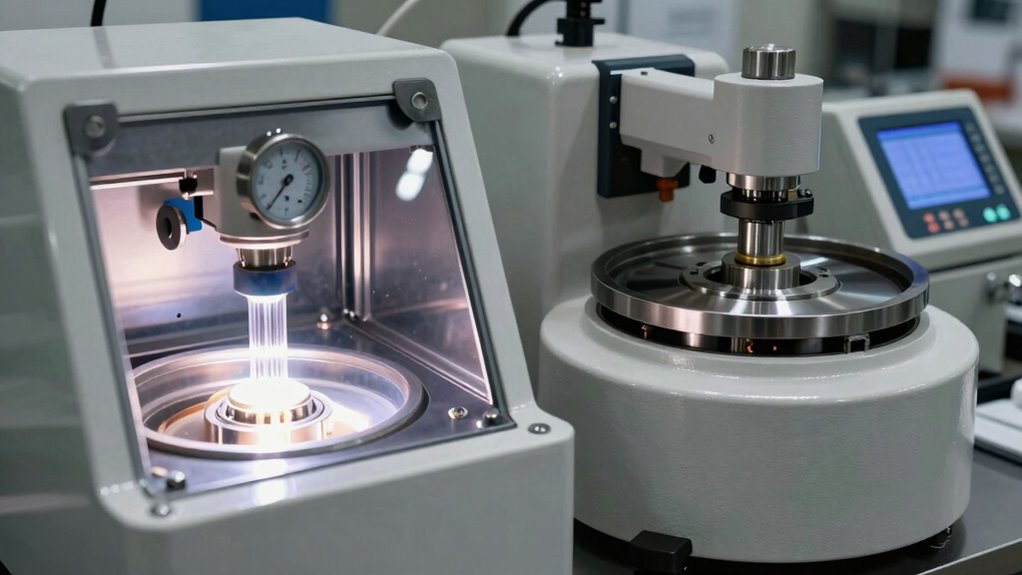
The main difference between vacuum and centrifugal jewelry casting machines lies in how they force metal into molds. Vacuum casting uses a sealed chamber to remove air, producing more detailed, cleaner results ideal for intricate designs. Centrifugal casting spins at high speed, forcing metal into molds quickly but may produce more flaws. Both have safety features, but their effectiveness varies. Keep exploring to discover which machine matches your specific jewelry-making needs better.
Key Takeaways
- Vacuum casting removes air bubbles and moisture, ensuring detailed, smooth jewelry with fewer post-processing steps.
- Centrifugal casting uses high-speed spinning to force molten metal into molds, suitable for larger, less intricate pieces.
- Vacuum machines offer higher investment precision, ideal for delicate, detailed designs, while centrifugal is faster for larger, simple items.
- Both machines have safety features like sealed chambers and automatic shut-offs, but centrifugal machines involve higher mechanical and thermal hazards.
- Choice depends on design complexity, production speed, and safety considerations: vacuum for precision, centrifugal for rapid, larger-scale casting.

Jewelry casting machines have revolutionized the way artisans and manufacturers produce intricate and high-quality jewelry pieces. When choosing between vacuum and centrifugal casting, understanding how each machine impacts your craft is essential. Both types offer unique advantages, but the key differences lie in investment precision and safety standards.
With vacuum casting machines, you get exceptional investment precision. The vacuum environment removes air bubbles and moisture from the wax pattern and molten metal, resulting in cleaner casts with fewer flaws. This process ensures that your jewelry pieces are detailed and smooth, reducing post-casting finishing time. The high level of control over the atmosphere minimizes the risk of impurities, making vacuum casting ideal for intricate designs and small, detailed components. When it comes to safety standards, vacuum machines are designed with multiple safety features, including sealed chambers and automatic shut-offs, to protect operators from fumes, heat, and mechanical hazards. These safety measures help you work confidently, knowing that the risk of accidents or exposure is minimized. Additionally, automation features in modern vacuum casting machines can further enhance safety and consistency, especially for high-volume production.
Vacuum casting offers exceptional precision, cleaner results, and enhanced safety features for intricate jewelry designs.
Centrifugal casting machines, on the other hand, rely on spinning the mold at high speeds to force molten metal into every crevice of the investment mold. This method generally offers rapid casting cycles and is suited for larger, less detailed pieces. However, the investment precision in centrifugal machines may not be as high as vacuum systems, especially when working with complex or delicate designs. Air bubbles and voids can sometimes be trapped, requiring additional finishing work. Safety standards in centrifugal casting are equally important. These machines are built to contain high-pressure forces and high-temperature environments, with safety features like pressure relief valves and protective enclosures. Proper training and adherence to safety protocols are essential to prevent accidents, especially given the intense forces involved during operation.
Ultimately, your choice depends on the type of jewelry you want to produce. If you prioritize investment precision and superior safety standards, vacuum casting is your best bet. It offers cleaner, more detailed results, and the safety features built into these machines help protect you throughout the process. Centrifugal casting might appeal if you’re producing larger, simpler pieces and need faster turnaround times, but it requires careful attention to safety due to the high-speed operation. Either way, understanding these differences helps you make informed decisions, ensuring your jewelry creation process is efficient, safe, and capable of delivering high-quality results.
Frequently Asked Questions
Which Casting Machine Is More Energy-Efficient?
You’ll find that vacuum casting machines are more energy-efficient than centrifugal ones, primarily due to lower energy consumption during operation. They use power more efficiently by maintaining consistent pressure and temperature, which reduces waste. If you’re aiming for better power efficiency and lower energy costs, a vacuum casting machine is the smarter choice, as it maximizes energy use while delivering high-quality results with less power input.
How Do Maintenance Needs Differ Between Vacuum and Centrifugal Machines?
You’ll find that vacuum casting machines generally require more frequent calibration and specific lubrication to maintain precision, whereas centrifugal machines need less frequent calibration and simpler lubrication routines. Regularly check and lubricate moving parts on both, but vacuum systems demand more attention to detail to guarantee consistent results. Proper maintenance, including timely lubrication and calibration, keeps your machines running smoothly and extends their lifespan.
Can Both Machines Handle All Jewelry Metals?
Both vacuum and centrifugal casting machines can handle a variety of jewelry metals, but your choice depends on metal compatibility and casting material restrictions. Vacuum machines excel with delicate or reactive metals like platinum and gold, reducing oxidation. Centrifugal machines work well with a wider range of metals, including some alloys, but may have limitations with certain materials. Always check your machine’s specifications to guarantee it supports your desired metals.
What Is the Typical Lifespan of Each Casting Machine Type?
Imagine your casting machine as a trusty friend—its lifespan depends on machine durability and material compatibility. Typically, vacuum machines last 10-15 years with proper maintenance, while centrifugal machines can reach 12-20 years. Regular upkeep and using compatible materials extend their life. You’ll find that investing in quality parts and timely servicing keeps your equipment running smoothly for many years, ensuring your jewelry creations stay consistent.
Are There Safety Concerns Unique to Each Casting Method?
You should be aware that vacuum casting machines pose safety concerns like potential implosions or vacuum leaks, so regular inspections are crucial. Centrifugal machines can cause injuries from rotating parts or hot metals. To maintain workplace safety, follow strict emergency procedures, wear appropriate protective gear, and ensure all safety features are in place. Proper training helps prevent accidents, keeping you safe during casting operations.
Conclusion
Now that you understand the difference, picture yourself choosing between a vacuum and centrifugal casting machine. One hums quietly, creating a perfect, bubble-free cast like a calm lake; the other spins fiercely, forcing molten metal into every detail like a whirlwind. Your choice shapes your jewelry’s finish—calm and precise or bold and dynamic. Whichever you pick, remember, each machine crafts more than metal; it shapes your artistry and vision into timeless pieces.