To navigate cultural appropriation in art, focus on respecting the original culture’s context and seek genuine understanding. Research its history and significance, and consider collaborating with community members or experts. Avoid using sacred symbols or practices without permission, and recognize when you’re an outsider. Approach cultural elements with humility and an intent to honor rather than trivialize. If you continue exploring, you’ll discover ways to create meaningful, respectful artwork that celebrates diversity authentically.
Key Takeaways
- Research and understand the cultural significance and sacredness of symbols before incorporating them into art.
- Engage with community members or cultural experts to ensure respectful representation and obtain permission if possible.
- Differentiate between genuine inspiration and cultural appropriation by acknowledging origins and avoiding misrepresentation.
- Be mindful of your positionality; as an outsider, exercise caution and prioritize collaboration and respectful dialogue.
- Aim to celebrate cultural diversity ethically, avoiding trivialization or commodification of cultural symbols and practices.
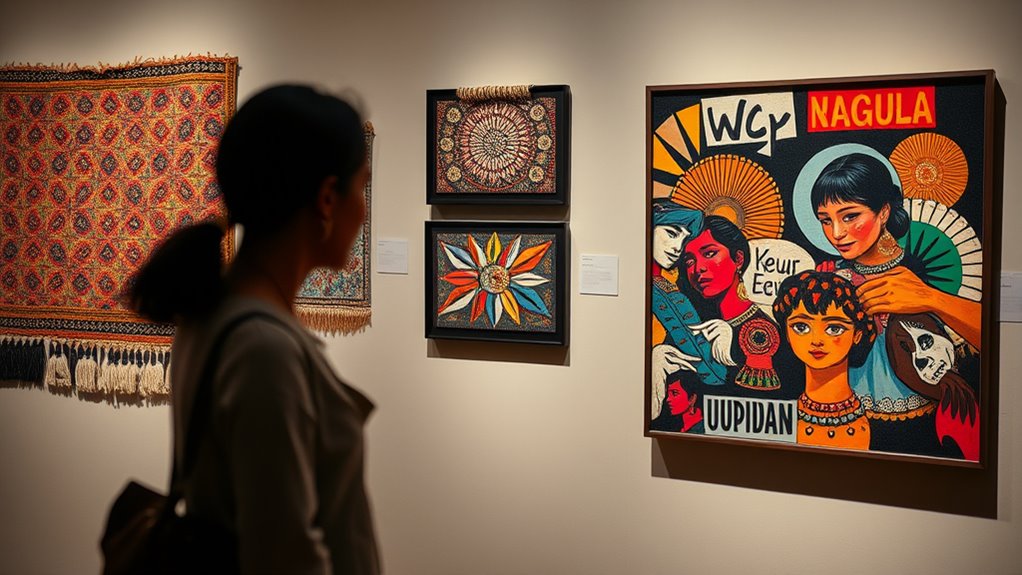
Have you ever wondered where the line is between inspiration and appropriation in art? It’s a nuanced question, and steering it requires understanding the delicate balance between cultural exchange and maintaining artistic authenticity. When you draw inspiration from cultures different from your own, it’s natural to want to incorporate those elements into your work. However, the key is to guarantee that your use respects the original culture’s context and meaning, rather than stripping it of its significance for personal gain or aesthetic appeal. Cultural exchange can be a powerful way to learn, grow, and create meaningful art, but it becomes problematic when it turns into cultural appropriation—where ideas, symbols, or styles are taken out of their original context without acknowledgment or understanding, often leading to misrepresentation or disrespect.
In your creative process, it’s essential to ask yourself whether you’re honoring the culture you’re referencing or simply using it as a superficial motif. Authenticity in art isn’t just about originality; it’s about integrity. If you’re inspired by a particular cultural element, take the time to research its history and significance. Engage with community voices or experts to gain insight into its true meaning, and consider how your work can reflect genuine appreciation rather than superficial copying. When you approach cultural elements with respect and a desire to learn, you foster authentic cultural exchange that enriches your art and broadens your perspective. Recognizing cultural symbols’ sacredness is crucial to avoid unintentional harm and ensure respectful representation.
Research and respect cultural significance to ensure authentic, meaningful artistic inspiration.
You should also be aware of your own positionality. Are you from the culture you’re depicting, or are you an outsider? If you’re an outsider, it’s even more essential to be cautious. Appropriating cultural symbols without understanding their importance can perpetuate stereotypes or reduce complex traditions to mere aesthetic choices. Instead, seek permission or collaborate with members of the culture you’re inspired by. This not only helps preserve artistic authenticity but also demonstrates respect and acknowledgment for the culture’s origins.
Being mindful of context is fundamental. Recognize that some symbols or practices hold sacred meaning or are restricted to certain community members. Using them without understanding their sacredness can cause harm. Strive to create art that celebrates and elevates cultural diversity, rather than commodifies or trivializes it. By approaching cultural elements with curiosity, humility, and respect, you can steer the line between inspiration and appropriation thoughtfully. Remember, authentic cultural exchange enriches your art and fosters mutual respect, whereas appropriation often results in misunderstanding and harm. Your goal should always be to honor the cultures that inspire you while preserving the integrity of your artistic voice.
Frequently Asked Questions
How Can Artists Respectfully Incorporate Diverse Cultural Elements?
To respectfully incorporate diverse cultural elements, you should prioritize cultural sensitivity by researching and understanding their significance. Engage with members of that culture to gain authentic insights, ensuring your work reflects genuine respect. Maintain creative authenticity by honoring traditions without stereotyping or commodifying. Always give credit where it’s due, and be open to feedback. This approach helps you create meaningful art that celebrates diversity while avoiding cultural appropriation.
What Are the Legal Considerations Surrounding Cultural Motifs in Art?
You need to be aware of copyright issues and intellectual property rights when using cultural motifs in your art. Check if the motifs are protected by copyright or trademark laws to avoid legal trouble. Respect cultural heritage by seeking permission from the original community or rights holders. When in doubt, consult legal experts to guarantee your work doesn’t infringe on protected cultural symbols or intellectual property, safeguarding both your career and cultural integrity.
How Do Audiences Perceive Cultural Appropriation Versus Appreciation?
You might be surprised to learn that 65% of audiences perceive cultural appropriation negatively, especially when cultural sensitivity isn’t evident. You should understand that audience perception varies widely; some see appreciation as respectful, while others view it as cultural insensitivity. To avoid misunderstandings, you need to be mindful of cultural sensitivity, ensuring your work honors the origins and significance of cultural motifs, fostering genuine appreciation rather than misappropriation.
What Role Do Cultural Communities Play in Approving Artistic Use?
Cultural communities play a vital role in approving artistic use by emphasizing cultural sensitivity and offering community endorsement. When you seek their input, you show respect and foster authentic representation. Engaging with community members allows you to understand their perspectives, avoid stereotypes, and guarantee your work honors their traditions. This collaboration builds trust, minimizes misappropriation, and creates art that genuinely celebrates rather than exploits cultural identities.
How Can Institutions Promote Ethical Cultural Representation?
Think of your institution as a bridge builder, connecting diverse cultures with respect and understanding. To promote ethical cultural representation, prioritize cultural sensitivity and foster authentic artistic collaboration. Seek input from communities, ensure their voices shape the work, and provide educational resources to raise awareness. By doing so, you create a space where art honors origins, encourages dialogue, and celebrates diversity without exploitation or misrepresentation.
Conclusion
As you step back, remember that art is like a delicate tapestry woven from many threads. When you respect the origins, you add vibrant, genuine colors to your work. Appropriation is like pulling at an unspoken thread—unraveling trust and meaning. To truly honor cultures, treat them as sacred symbols, not mere patterns to copy. By doing so, you preserve the integrity of your art and keep the tapestry whole, vibrant, and rich with authentic stories.