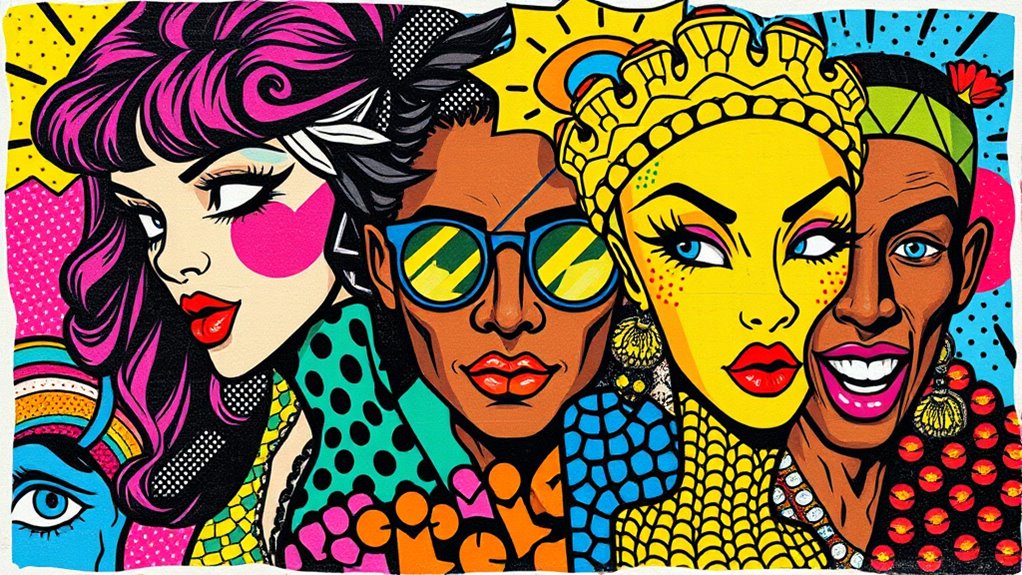

Regional variations of pop art reflect your local culture, history, and social issues. You’ll see symbols, motifs, and techniques unique to each area, such as Japanese manga influences or African textile patterns. These adaptations create a dynamic dialogue between global styles and regional identity. As you explore, you’ll notice how artists infuse their work with cultural significance, making pop art more meaningful. Keep exploring to discover how these regional influences shape the global pop art scene.
Key Takeaways
- Regional pop art incorporates local symbols, motifs, and themes, reflecting unique cultural, social, and historical contexts worldwide.
- Techniques like manga-influenced art in Japan or textile patterns in Africa showcase regional stylistic adaptations.
- Pop art in different regions merges traditional crafts and modern imagery, creating a dialogue between tradition and contemporary issues.
- Local social and political themes are embedded into artworks, making regional pop art a form of cultural commentary.
- Variations foster a global conversation, with each region’s style contributing to the evolving landscape of pop art.

Have you ever wondered how pop art has traveled beyond its American roots to influence cultures worldwide? It’s fascinating to see how this vibrant movement has adapted to different regions, blending local traditions with its bold, graphic style. When pop art crosses borders, it doesn’t just copy the American originals; it transforms through unique cultural influences, creating regional variations that resonate deeply with local audiences. These adaptations reflect the distinct social, political, and artistic landscapes of each place, making pop art a truly global phenomenon.
Pop art’s global journey transforms it through local cultures and unique regional influences.
In many countries, artists incorporate cultural influences that are specific to their environment, infusing their work with symbols, motifs, and themes rooted in their history and society. For example, in Latin America, pop art often merges with local street art, using bright colors and familiar iconography that comment on social issues like inequality or political unrest. Artists might incorporate indigenous patterns or traditional crafts, giving the movement a regional flavor that challenges viewers to see familiar images in new contexts. Similarly, in Europe, pop art takes on a more refined approach, blending it with classical art techniques or contemporary issues, creating a dialogue between tradition and modernity.
Regional techniques also shape how pop art manifests in different cultures. In Japan, for instance, the influence of manga and anime is evident, transforming pop art into a hybrid that celebrates both comic aesthetics and local pop culture. Artists may use bold outlines, vibrant color palettes, and exaggerated expressions to create pieces that feel familiar yet distinctly Japanese. Meanwhile, in Africa, pop art often incorporates traditional textiles, vibrant patterns, and local storytelling methods, making the artwork a reflection of community identity and cultural resilience. These techniques help convey messages that are both accessible and meaningful within their cultural context.
The regional variations of pop art are more than just visual differences; they embody a dialogue between global and local. When you look at these artworks, you start to see how regional influences and techniques give each piece its own voice, shaped by local history, social issues, and artistic traditions. This dialogue enriches the pop art movement, making it a dynamic and evolving form of expression that continues to grow worldwide. Whether through the use of indigenous symbols, local techniques, or social commentary, regional adaptations guarantee pop art remains relevant and powerful across diverse cultures, proving that art truly knows no borders. Additionally, understanding cultural influences in pop art can deepen appreciation for its regional variations and the stories they tell.
Frequently Asked Questions
How Has Digital Media Influenced Regional Pop Art Styles Globally?
Digital media has profoundly shaped regional pop art styles worldwide by enabling digital customization and rapid sharing. You can create vibrant, personalized artworks using online tools, reflecting local culture and trends. Social media influence spreads these styles instantly, allowing artists to experiment and adapt global pop art elements to their regional identities. This dynamic exchange fosters diverse, innovative pop art scenes that resonate locally yet connect globally through digital platforms.
What Are Emerging Countries’ Unique Contributions to Pop Art?
Like a vibrant tapestry, emerging countries add unique threads to pop art with cultural fusion and traditional motifs. You’ll notice bold colors and local symbols blending modern techniques with ancestral stories, creating fresh visuals that challenge Western dominance. These contributions highlight diverse perspectives, turning local narratives into powerful, global statements. Your appreciation grows as you see how these artists transform tradition into contemporary pop, enriching the worldwide dialogue with authenticity and innovation.
How Do Local Political Issues Shape Regional Pop Art Themes?
You see how local political issues influence regional pop art by incorporating political symbolism and social commentary into your work. Artists use familiar icons and imagery to reflect their society’s struggles, highlighting themes like corruption, inequality, or resistance. These visual messages resonate with viewers, making the art not just aesthetic but also a powerful statement that sparks discussion and raises awareness about pressing political and social concerns specific to your region.
Are There Notable Differences in Pop Art Techniques Across Regions?
You’ll notice notable differences in pop art techniques across regions, especially in how artists incorporate cultural symbolism. For example, some regions emphasize bold colors and commercial imagery, while others focus on mixed media and digital media. These variations reflect local artistic traditions and cultural influences. By exploring these techniques, you’ll see how regional pop art captures unique identities and perspectives, making each piece a vibrant expression of its cultural context.
How Does Regional Pop Art Address Cultural Identity and Heritage?
Regional pop art highlights cultural symbolism and promotes heritage preservation by incorporating local motifs, traditions, and symbols. You’ll notice artists use familiar imagery to express pride, challenge stereotypes, or critique social issues. This approach allows you to connect with the community’s identity, making art a powerful tool for celebrating and preserving cultural heritage while engaging viewers in meaningful conversations about their roots and history.
Conclusion
As you explore pop art worldwide, you’ll see it burst like a giant neon explosion in every region, turning streets into vibrant comic book pages and museums into kaleidoscopes of color. Each variation stretches the boundaries of imagination, making the world feel like a limitless canvas. So, immerse yourself and let these bold, exaggerated visions transform your view—because pop art isn’t just everywhere; it’s an unstoppable, roaring wave of creativity that will leave your senses forever dazzled.