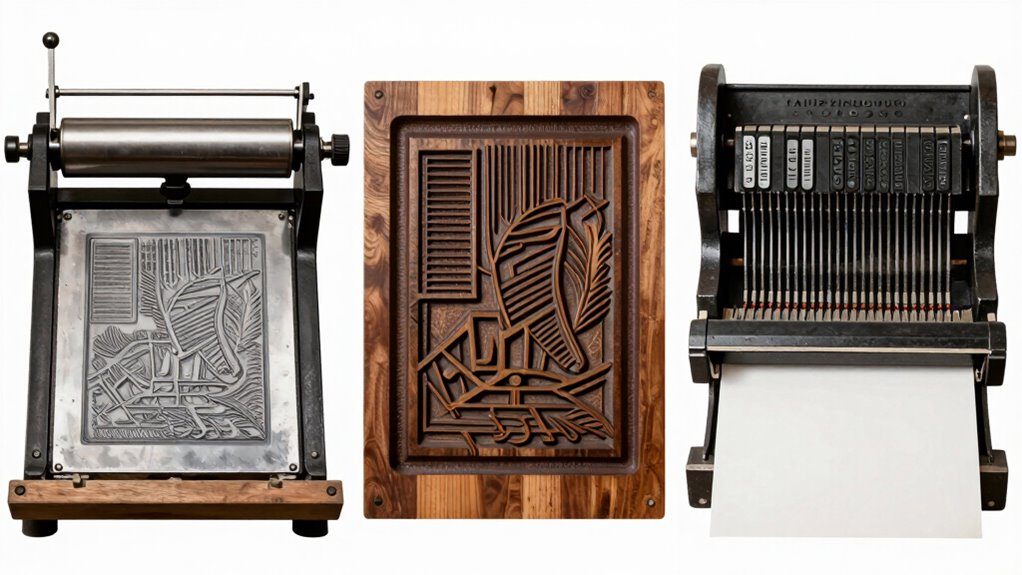

When choosing a printmaking press, consider the techniques you want to use. Etching presses are best for fine, detailed work with metal plates, applying even pressure for crisp images. Relief presses suit thicker blocks like wood or linoleum, creating bold textures and simple designs. Letterpress presses excel at sharp, precise impressions for text and detailed images. Understanding these differences helps you select the right equipment; keep exploring to discover how each type can bring your artwork to life.
Key Takeaways
- Etching presses apply even, delicate pressure ideal for detailed intaglio techniques like incising lines into metal plates.
- Relief presses are designed for thicker surfaces such as wood or linoleum, emphasizing bold, textured images.
- Letterpress presses use movable type or carved blocks, producing crisp, clean impressions suitable for text and fine images.
- The choice depends on the desired detail: etching for intricate images, relief and letterpress for bold or typographic work.
- Understanding press mechanics ensures proper selection for specific printmaking techniques and desired visual effects.

Have you ever wondered how artists create detailed prints with consistency and precision? The secret lies in choosing the right printmaking press, which plays a crucial role in translating an artist’s vision onto paper. Understanding different press types—like etching, relief, and letterpress—can help you grasp how each technique impacts the final image. To get there, it’s helpful to explore the roots of printmaking history and how intaglio techniques revolutionized the craft. Historically, intaglio techniques involved incising lines into a metal plate, which held the ink below the surface. This method allowed for intricate, finely detailed images, making it a favorite among master printmakers for centuries. The development of specialized presses for intaglio, especially etching, enabled artists to produce consistent, delicate lines with remarkable precision. These presses apply even pressure across the plate, ensuring that every detail transfers accurately to the paper. As printmaking history evolved, different press types emerged to suit various methods. Relief printing, for instance, involves carving away parts of a block, leaving raised areas to receive ink. Relief presses are designed to accommodate thicker, more rigid surfaces like wood or linoleum, pressing the block and paper together to produce bold, textured images. You’ll find that relief presses often feature a straightforward mechanism, making them accessible for artists working on larger, less detailed prints. Meanwhile, letterpress printing, rooted in the same tradition as relief, uses movable type or carved blocks to create text and images. Letterpress presses are built for precision and durability, pressing the type or block firmly onto paper to produce crisp, clean impressions. This technique was historically used for printing books, but today, it’s appreciated for its tactile quality and artisanal charm. Each press type—whether for intaglio, relief, or letterpress—serves a specific purpose, influencing the texture, detail, and overall aesthetic of the print. When you choose a press, consider the kind of image you want to produce and the level of detail required. For intricate, finely detailed images rooted in printmaking history, an etching press designed for intaglio techniques is ideal. If you prefer bold, textured images, relief or letterpress presses might suit your needs better. Additionally, understanding the mechanics of printmaking presses can help you make more informed choices about equipment. Ultimately, understanding the history and mechanics behind each type helps you appreciate the artistry involved and enables you to select the right equipment for your creative goals. With the right press, you can access the full potential of your printmaking process, creating works that are both precise and expressive.
As an affiliate, we earn on qualifying purchases.
Frequently Asked Questions
How Do I Choose the Right Press for My Skill Level?
To choose the right press for your skill level, consider your pressing techniques and what you want to achieve. If you’re a beginner, start with a simple, user-friendly press like a small etching or relief press, which offers more control and easier learning. Look for beginner tips online or in workshops, and pick a press that feels manageable and helps you build confidence before moving on to more complex types.
What Safety Precautions Are Necessary for Each Press Type?
When operating any press type, you should always wear protective gear like gloves, aprons, and eye protection to prevent injuries. Keep your workspace organized and know emergency procedures, such as how to shut off equipment quickly and where to find first aid supplies. Never rush, and stay alert during operation. Regularly inspect your press for hazards, ensuring safe use and minimizing accidents.
Can I Convert One Press Type Into Another?
You can definitely try a press conversion, but it’s no small feat—like turning a bicycle into a spaceship! Equipment modification is essential, and you’ll need to assess the press’s structure and mechanics carefully. Converting between types requires technical skill and may not always produce perfect results. Carefully plan your project, understand the limitations, and consider consulting a professional to make certain of safety and functionality during your press transformation.
How Much Does a Professional Printmaking Press Typically Cost?
A professional printmaking press typically costs between $2,000 and $10,000, depending on press material compatibility and size considerations. Larger presses or those made from durable materials like cast iron tend to be more expensive. You should consider your specific needs, such as the size of your prints and the type of press you’re working with, to find a press that fits your budget and production requirements.
What Maintenance Is Required to Keep Presses in Good Condition?
Your press is your powerhouse, so don’t let it fall apart! Regular maintenance is essential; you should keep the gears and moving parts well-lubricated to prevent wear and tear. Check for rust, clean off ink residues, and tighten any loose bolts. By performing routine press lubrication and inspections, you’ll ensure your press runs smoothly, lasts longer, and keeps producing stunning prints for years to come.
As an affiliate, we earn on qualifying purchases.
Conclusion
Just as Da Vinci mastered multiple techniques, understanding etching, relief, and letterpress broadens your artistic horizon. Each press type offers a unique voice, inviting you to leave your mark like a timeless signature. Embrace these methods, for in their mastery, you discover the power to create enduring impressions—proof that your artistry, like history’s greatest works, can resonate beyond the immediate, echoing your unique story through the ages.
As an affiliate, we earn on qualifying purchases.
As an affiliate, we earn on qualifying purchases.