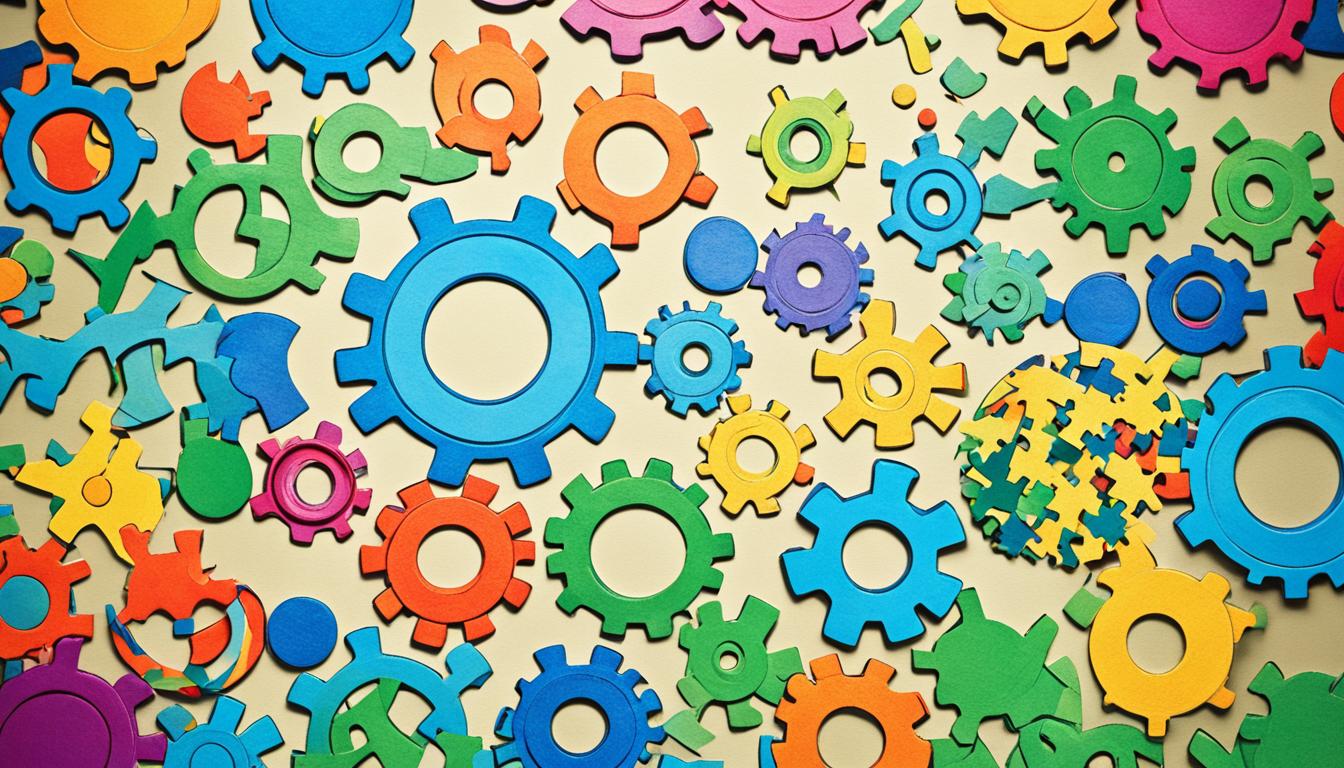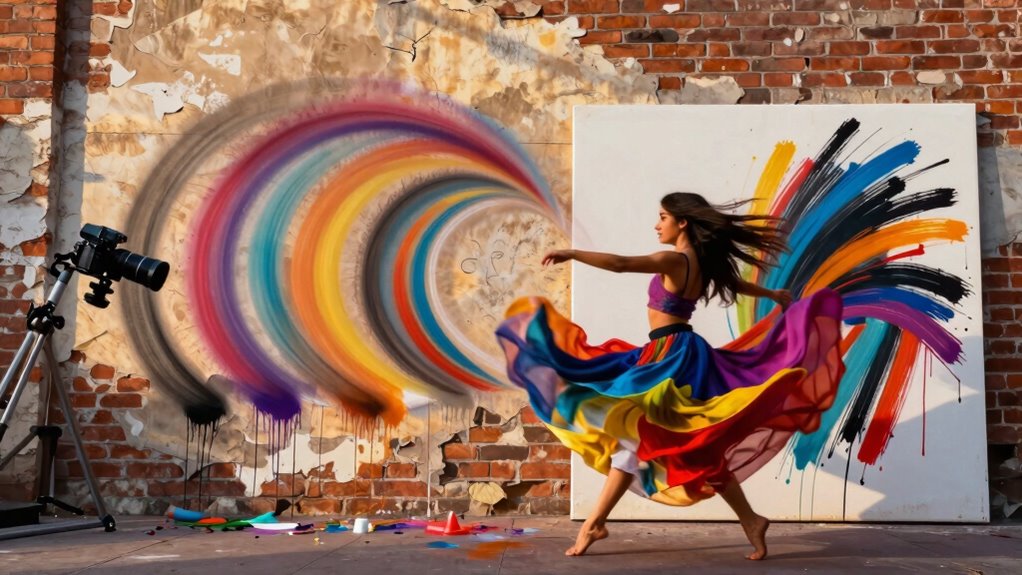
You observe artists creating rhythm without music by using visual patterns, movement, and timing to guide your eye and evoke emotion. They arrange colors, shapes, and lines to produce a natural visual beat or synchronize sculpture movements to external stimuli. Through choreography, they craft silent sequences that mirror musical phrases, while repetitive motifs in art evoke anticipation. If you keep exploring, you’ll discover how rhythm connects with storytelling outside of sound and enhances artistic expression in many ways.

Get the latest gadgets delivered free with Prime
- Fast, free delivery on millions of items
- Prime Video, Amazon Music and more included
- Member-only deals all year
Key Takeaways
- Artists create visual flow through patterns, colors, and shapes that establish a natural rhythm and movement across their work.
- Movement and timing in dance or performance art mimic musical beats, conveying rhythm through space and motion.
- Kinetic sculptures and animated installations synchronize movements with external stimuli, producing a rhythmic experience without sound.
- Visual motifs and repetitive elements evoke anticipation and release, establishing a silent, rhythmic dialogue with viewers.
- Artists use pacing, timing, and choreography to craft a physical or visual “beat” that engages and emotionally resonates without music.
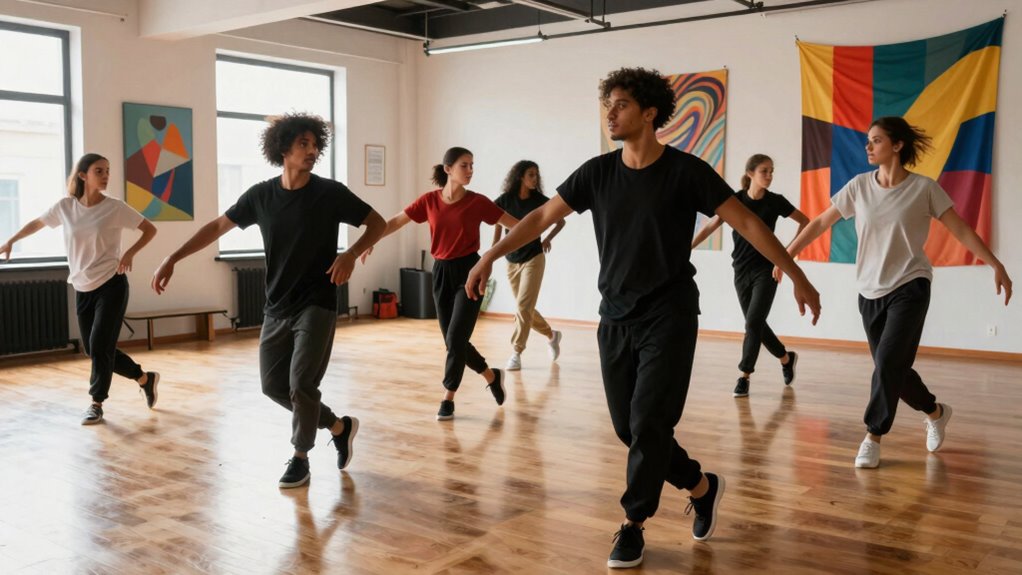
Rhythm isn’t confined to music; artists find innovative ways to incorporate it into their work beyond sound. When you explore visual storytelling, you notice how rhythm guides the viewer’s eye across a piece, creating a sense of flow and momentum without a single note played. Artists harness this concept by carefully arranging visual elements—colors, shapes, and lines—to produce a beat that your eyes follow naturally. For example, a series of contrasting images might be spaced in a way that mimics the pulse of a heartbeat, or repetitive patterns can evoke a sense of anticipation and release. This visual rhythm keeps your gaze moving, telling a story through the deliberate cadence of imagery rather than sound. Additionally, the use of visual patterns in art can establish a rhythmic structure that enhances the overall harmony of a composition. Recognizing these patterns can deepen your appreciation for the intentional design behind many works of art.
Visual rhythm guides your eye with patterns and contrasts, creating flow and momentum without a single sound.
In the domain of movement choreography, rhythm takes on a kinetic form. You see dancers and performers use timing and spacing to craft a visual language that feels musical without any actual music involved. The way they execute their movements—fast spins, slow extensions, sudden pauses—creates a physical beat that resonates with your instincts. Through precise timing, choreographers choreograph a dance that mimics a rhythmic pattern, making every step and gesture serve as a visual note in a silent symphony. The choreography becomes a dialogue of motion, where the flow from one movement to the next resembles a musical phrase, engaging your senses in a different but equally compelling way. This synchronization of motion and timing often involves musicality that enhances the emotional impact without actual sound. Furthermore, understanding how visual rhythm functions within movement can help artists and performers craft more compelling and emotionally resonant pieces. Recognizing how rhythmic patterns influence perception can also improve the overall effectiveness of creative works, regardless of the medium.
Artists working outside traditional music often rely on rhythm to evoke emotion and create a connection. Whether through kinetic sculpture that moves in sync with external stimuli or visual art that employs repetitive motifs, the underlying beat remains essential. You might find yourself mesmerized by the way a sculptor animates their work—adding subtle movements that develop over time—making the piece breathe with rhythm. Similarly, in performance art, the pacing and timing of actions enhance the narrative, turning a simple act into a choreographed sequence that communicates on a visceral level. This shared focus on rhythm across different art forms highlights its importance as a universal language that transcends auditory boundaries.
Ultimately, rhythm in visual storytelling and movement choreography isn’t just about keeping time; it’s about crafting an experience that feels natural and immersive. You feel the pulse in every deliberate brushstroke or carefully coordinated step, even without sound. It’s this silent language of rhythm that deepens your engagement, guiding your emotional response and enriching the story beyond words or music. As an observer or participant, you become attuned to these rhythmic patterns, experiencing a world where the beat beats not in sound, but in sight and motion.
As an affiliate, we earn on qualifying purchases.
Frequently Asked Questions
Can Rhythm Be Felt Without Any Physical Movement?
Yes, you can feel rhythm without physical movement through tactile perception and emotional response. When you touch textured surfaces or experience vibrations, your senses pick up patterns that evoke a sense of rhythm. The emotional response to these sensations can mimic the feeling of music’s beat, allowing you to connect with rhythm on a sensory level. This connection deepens your appreciation for rhythm beyond just sound or movement.
What Are Some Visual Art Forms That Incorporate Rhythm?
You can see rhythm in visual art forms like visual patterning, where repetitive shapes and lines create a sense of movement and flow. Kinetic sculpture also embodies rhythm by incorporating motion, making viewers feel the beat through changing forms. These art forms engage your senses visually and physically, allowing you to experience rhythm without sound, as your eye follows the repetition and dynamic shifts, creating a lively, rhythmic visual experience.
How Do Dancers Create Rhythm Without Music?
You create rhythm without music through precise visual timing and emotional pacing. You move intentionally, aligning your gestures, steps, and pauses with your internal sense of timing. Your body becomes a metronome, expressing energy, tension, and flow. By emphasizing rhythm in your movements, you evoke feelings and tell stories, allowing your dance to resonate deeply. Your rhythmic awareness transforms silent motion into a powerful, visual symphony.
Can Rhythm Be Applied in Storytelling or Spoken Word?
Yes, you can definitely apply rhythm in storytelling and spoken word. You create storytelling cadence by emphasizing certain words or phrases, controlling pauses, and varying your speech pace. Spoken word timing involves deliberate pauses and speed changes to highlight emotions or key points. By mastering these elements, you make your storytelling more engaging and dynamic, capturing your audience’s attention and making your message resonate deeply.
Are There Cultural Differences in Non-Musical Rhythm?
Cultural differences in non-musical rhythm are like diverse tapestries woven with traditional patterns. When you explore cultural dance, you see how each society uses movement as a heartbeat, echoing their unique stories. These rhythmic expressions symbolize shared history and identity, blending steps and gestures into a language beyond words. You’ll notice that rhythm, whether in a drumbeat or a dance, reflects a community’s soul, shaping its cultural landscape.
As an affiliate, we earn on qualifying purchases.
Conclusion
You see, in the world of art, rhythm isn’t just a beat or a melody; it’s the heartbeat that pulses through every brushstroke and sculpted line. Just as a dancer moves with grace, you can use rhythm to guide your creations, turning stillness into a dance of form and space. Embrace this silent symphony, letting it echo through your work, transforming quiet moments into powerful, living expressions that speak without a single sound.
As an affiliate, we earn on qualifying purchases.
animated installation art equipment
As an affiliate, we earn on qualifying purchases.
As an affiliate, we earn on qualifying purchases.
Fall Picks
fall essentials
As an affiliate, we earn on qualifying purchases.