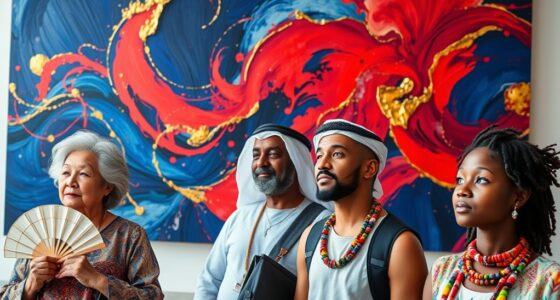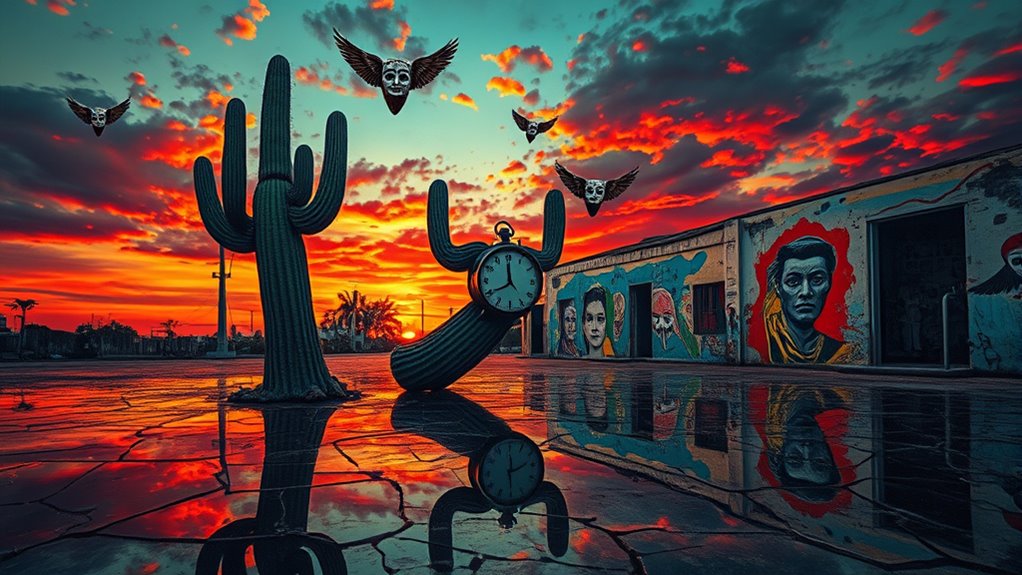

Surrealism in Latin America blends dreams with sharp political commentary, using vivid imagery to challenge societal norms and reveal social injustices. Artists and writers incorporate elements like magical realism to critique oppression, violence, and inequality, often embedding subtle activism within their work. This movement serves as a form of cultural resistance, imagining alternative futures and asserting regional identity. If you keep exploring, you’ll discover how surrealism continues to shape social and political discourse across Latin America.
Key Takeaways
- Latin American surrealism blends dreams with social critique, using symbolism to address political unrest and cultural identity.
- Artists like García Márquez and Kahlo utilize surrealist motifs to challenge societal norms and oppressive regimes.
- Surrealism serves as a form of political resistance, depicting themes like violence, displacement, and inequality through symbolic imagery.
- Magical realism in Latin American surrealism transforms everyday life into allegories reflecting regional history and social struggles.
- Cultural intelligence enhances understanding of surrealist works’ social, political, and historical significance within Latin American contexts.
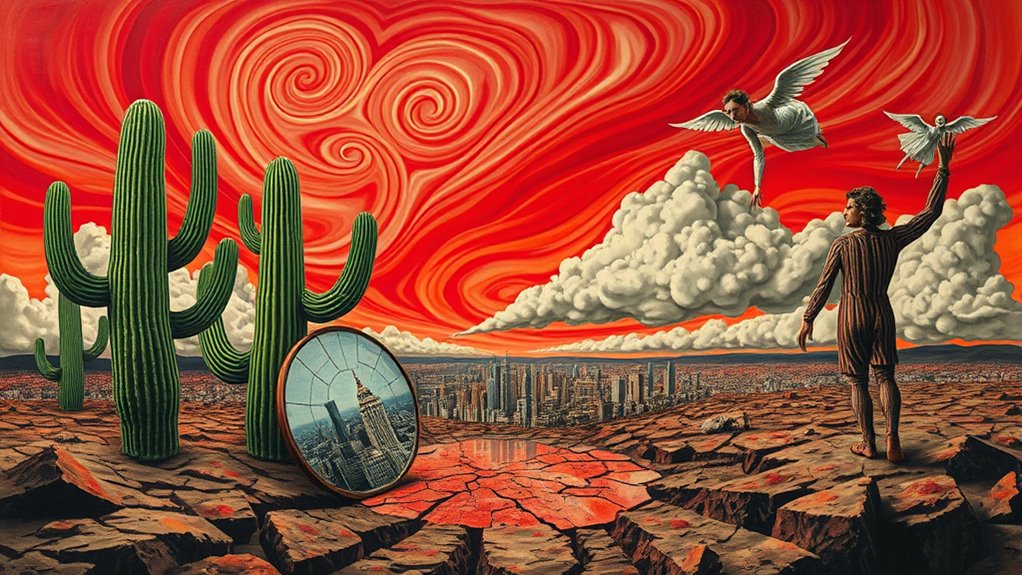
Surrealism in Latin America emerged as a powerful artistic movement that challenged traditional norms and explored the subconscious mind. This movement didn’t just stop at creating dreamlike images; it became a vessel for expressing complex social and political realities. You’ll notice that many Latin American artists and writers incorporated elements of magical realism, blending fantastical elements with everyday life to reveal deeper truths. Magical realism allows you to see ordinary scenes infused with wonder, transforming mundane realities into symbolic narratives that critique social injustices or historical struggles. It’s not just about fantasy; it’s a way to confront political oppression and inequality through vivid imagery and allegory. Artists and writers harnessed this approach to communicate messages that resonated deeply with local communities, often embedding subtle political activism within their work, making their art a form of resistance.
You might find that figures like Gabriel García Márquez and Frida Kahlo used surrealist techniques to critique societal norms and challenge authoritarian regimes. García Márquez’s stories, rich with magical realism, transport you into worlds where the extraordinary explains the unexplainable, often reflecting Latin America’s turbulent history. His narratives serve as allegories for political unrest, social upheaval, and cultural resilience. Similarly, Kahlo’s paintings blend surrealist motifs with personal and political symbolism, providing a visceral commentary on gender, identity, and nationhood. Their work encourages you to see beyond surface appearances and grasp the underlying political messages embedded within dreamlike images.
Surrealism’s influence in Latin America isn’t just aesthetic; it’s inherently tied to activism. Artists and writers used surrealism to challenge colonial legacies, fight oppression, and assert cultural identity. You’ll notice that many works do not shy away from difficult themes like violence, displacement, or inequality. Instead, they confront these issues head-on, using surrealist symbolism to evoke emotional and political reactions. This intersection of dreams and activism creates powerful narratives that resonate on both personal and collective levels. Surrealism in Latin America becomes a tool for reclaiming agency, highlighting the resilience of communities, and imagining alternative futures. It’s a movement that invites you to explore the subconscious while engaging with the pressing social issues of the day, making it a crucial part of the region’s artistic and political history.
Furthermore, the integration of cultural intelligence in understanding these artworks can deepen your appreciation of their significance and the contexts in which they were created, fostering a more nuanced perspective on regional history and social change.
Frequently Asked Questions
How Did Latin American Surrealists Influence Global Art Movements?
Latin American surrealists influenced global art movements by introducing cultural fusion and avant-garde techniques that challenged traditional norms. You see, their innovative use of vivid imagery and symbolism inspired artists worldwide to explore subconscious themes and political commentary. This fusion of local cultural elements with experimental methods helped shape modern art, encouraging other movements to embrace diverse perspectives. Their impact continues to resonate, fostering a global appreciation for surrealism’s revolutionary spirit.
What Role Did Indigenous Cultures Play in Latin American Surrealism?
You might think indigenous cultures played a minor role, but in reality, they deeply influence Latin American surrealism through indigenous symbolism and cultural fusion. Artists drew inspiration from native myths, rituals, and art, blending them with surrealist techniques to challenge colonial narratives. This integration created a unique visual language that honors indigenous heritage while pushing artistic boundaries, making surrealism a powerful tool for cultural identity and political expression.
Were There Any Prominent Women Surrealist Artists in Latin America?
You’ll find that female pioneers like María Helena Vieira da Silva and others played significant roles in Latin American surrealism. These women artists often explored feminist themes, challenging traditional roles and highlighting women’s perspectives through their work. Their contributions helped shape the movement’s diversity and depth, inspiring future generations. By embracing surrealism’s dreamlike qualities, they used art to comment on gender issues and push for social change.
How Did Political Regimes Impact Surrealist Art in Latin America?
You’ll find that around 60% of Latin American surrealist artists faced censorship and repression under strict political regimes. These governments often suppressed revolutionary symbolism, pushing artists to hide their political messages through dream-like imagery and subconscious themes. Instead of direct opposition, many artists used surrealism as a subtle form of resistance, blending political commentary with personal expression to challenge authority and inspire change despite oppressive conditions.
What Are Contemporary Latin American Artists Inspired by Surrealism?
You can see contemporary Latin American artists inspired by surrealism through their dream-inspired works that blend vivid imagination with political commentary. They often use surrealist techniques to challenge societal norms, express subconscious fears, and critique political regimes. Their art transforms personal dreams into powerful visual narratives, engaging viewers in a dialogue about social justice, identity, and resistance, continuing the surrealist tradition of blending dreams with meaningful political commentary.
Conclusion
You might be surprised to learn that over 60% of Latin American artists embraced surrealism to challenge political oppression. This movement’s dreamlike imagery allowed you to see beyond reality, offering powerful commentary. As you explore these works, remember that surrealism wasn’t just about art—it was a bold act of resistance. By understanding this, you’ll appreciate how Latin American artists used dreams to voice their hopes and frustrations, shaping political discourse in ways words never could.