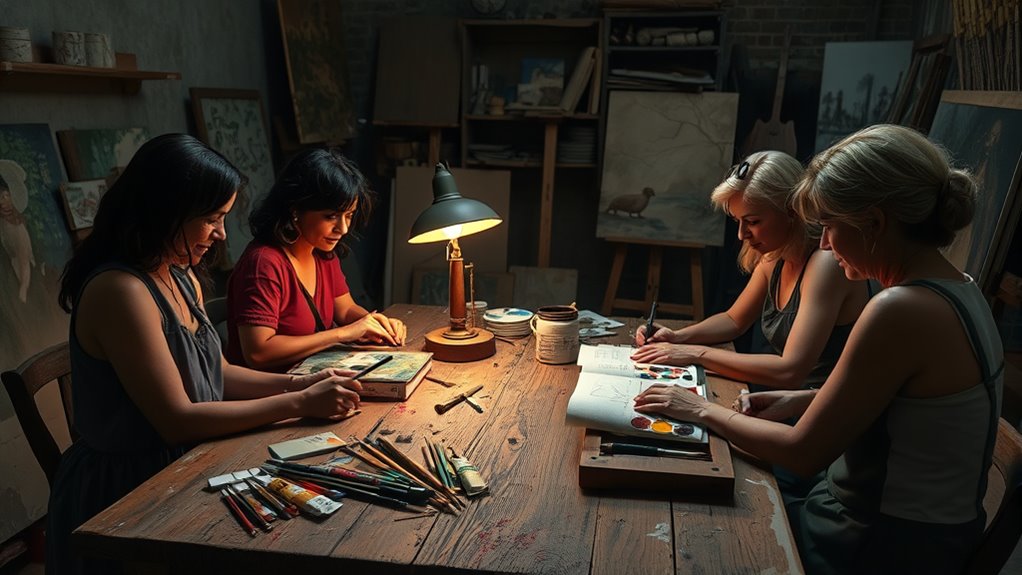

Throughout history, women artists faced many barriers that kept their stories hidden. Societal expectations, limited access to training, and institutional biases made it harder for women to gain recognition. Many talented women couldn’t showcase their work publicly or find mentors. Despite these challenges, some used art to challenge norms and express personal experiences. If you explore further, you’ll uncover inspiring stories of resilience and the often untold contributions women have made to art history.
Key Takeaways
- Women artists often remain lesser-known due to societal, institutional, and gender-based barriers limiting their opportunities.
- Limited access to formal training and exhibition platforms hindered women’s artistic careers and recognition.
- Many women used art to subtly challenge societal norms and express personal experiences despite systemic discrimination.
- Private studios and mentorship networks helped women develop their skills outside traditional, male-dominated spaces.
- Recognizing women’s contributions uncovers hidden stories and promotes greater visibility and acknowledgment in art history.
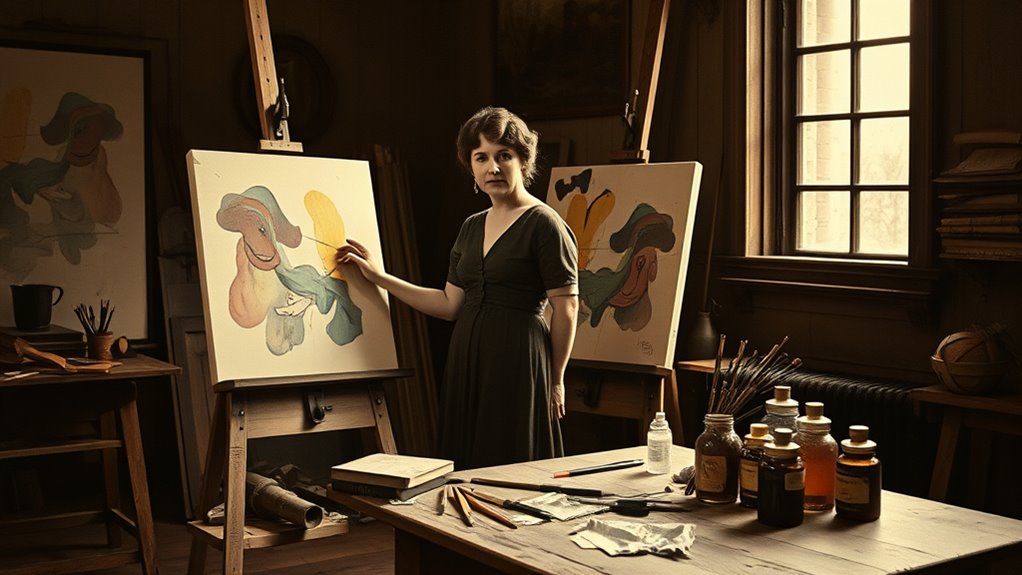
Have you ever wondered why women artists often remain lesser-known in art history? The answer lies in a complex web of gender barriers in art that have historically limited women’s opportunities to showcase their talent and gain recognition. For centuries, societal expectations and institutional biases kept women from accessing the same resources as their male counterparts. Female art mentorship, for example, was scarce, as male mentors typically held the power to introduce young artists to galleries, patrons, and exhibitions. Without these essential connections, many talented women struggled to develop their careers, their work dismissed or overlooked. This lack of support created a cycle that kept women on the margins, making it difficult for their contributions to be acknowledged in the broader narrative of art history.
Women artists faced systemic gender barriers that limited mentorship, exhibition access, and recognition throughout art history.
The gender barriers in art weren’t just about mentorship; they also involved restrictions on education and exhibition opportunities. Many art academies either barred women entirely or limited their participation, which meant fewer women could access formal training or produce work on a large scale. As a result, even highly skilled women artists often lacked the platforms needed to reach wider audiences. They faced societal disapproval for pursuing careers in art, which was often seen as an unsuitable profession for women. This societal bias reinforced the invisibility of women artists, perpetuating the idea that their work was less valuable or less serious than that of men. Additionally, gender discrimination in the art world further compounded these challenges, making it harder for women to gain recognition and success.
Despite these obstacles, some women managed to carve out space for themselves through perseverance and exceptional talent. Those who succeeded often did so with the help of female mentorship networks or by working within private studios where they could learn and develop their skills away from public scrutiny. Many of these women used their art to subtly challenge gender norms, creating pieces that reflected personal experiences or critiqued societal expectations. Their resilience highlights how, even in oppressive environments, women found ways to express themselves and leave a mark on art history.
Understanding these barriers is vital because it helps you appreciate the true scope of women’s contributions, which have often been erased or minimized. Recognizing the importance of female art mentorship in fostering talent and overcoming gender barriers in art underscores the need to support diverse voices today. Only by acknowledging these hidden stories can you help guarantee that future generations of women artists receive the recognition they deserve, breaking down the barriers that once kept them in the shadows.
Frequently Asked Questions
How Did Societal Norms Restrict Women Artists Historically?
Societal norms historically restricted women artists by enforcing gender stereotypes and societal expectations that limited their opportunities. You might have faced barriers like restricted access to formal training, fewer exhibition chances, and skepticism about your abilities. These norms kept your work undervalued and often pushed you into traditional roles. Despite your talent, societal expectations shaped how your art was received, making it harder for you to be recognized and celebrated.
Were Women Artists Recognized During Their Lifetimes?
Did you know women artists often struggled for recognition during their lifetimes? Due to gender bias and limited access to art patronage, many were overlooked or undervalued, despite their talent. Society’s norms frequently excluded women from prestigious exhibitions and commissions, making it hard for them to gain acknowledgment. You can see how these barriers kept their contributions hidden, but today, we’re finally uncovering and celebrating their true impact on art history.
What Barriers Did Women Face in Art Education?
You face significant barriers in art education due to gender stereotypes and access disparities. These stereotypes often restricted women’s participation, making it harder for you to gain the same opportunities as men. Access disparities meant fewer classes, resources, and mentorships were available to you. Despite these challenges, many women pushed through and contributed richly to art history, often without the recognition they deserved.
How Have Contemporary Women Artists Changed the Art World?
Like a river carving new paths, contemporary women artists reshape the art world through bold strokes of artistic innovation. You see them challenging gender representation, breaking barriers that once confined creativity. Their work flows into galleries and digital spaces, inspiring change and widening perspectives. By refusing to be silent, they transform the landscape, ensuring their voices and visions become an integral part of art’s evolving story.
Are There Hidden Collections of Women’s Artwork?
You can find hidden archives and secret collections of women’s artwork tucked away in various museums and private holdings. These hidden collections often contain overlooked pieces by women artists whose contributions were historically ignored or suppressed. Exploring these archives, you might uncover rare sketches, paintings, and sculptures that challenge traditional narratives. Many institutions are now working to bring these secret collections to light, giving women artists the recognition they deserve.
Conclusion
Your journey through history is like opening a hidden door in an ancient castle. Behind it, countless women artists await their turn to shine, their stories waiting to be uncovered. By shining a light on these forgotten treasures, you help rewrite the grand mural of art history, making it richer and more complete. Remember, every brushstroke and note is part of a tapestry, and your awareness can bring these silent voices back to life.