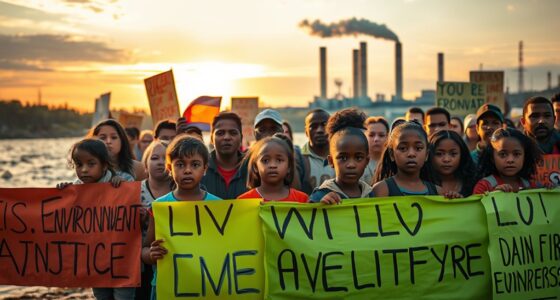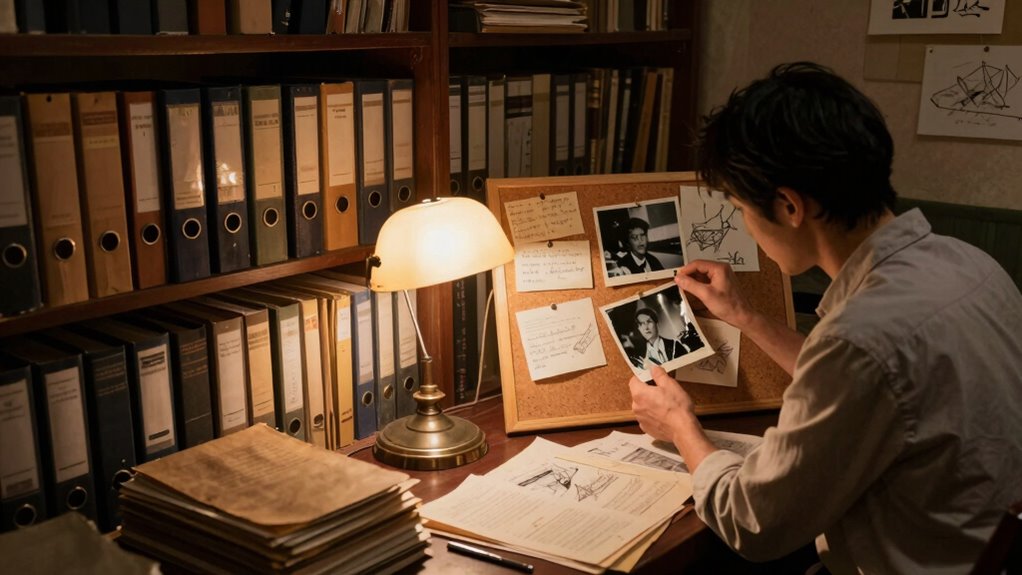

You can see how artists use archives to challenge official narratives by uncovering overlooked or marginalized voices, often hidden in forgotten records, photographs, or letters. They reframe these materials creatively, giving new life to suppressed experiences and questioning accepted stories. By juxtaposing official histories with personal or indigenous perspectives, artists reveal biases and broaden understanding. If you keep exploring, you’ll discover how these powerful approaches reshape our view of the past and highlight silenced histories.

Get the latest gadgets delivered free with Prime
- Fast, free delivery on millions of items
- Prime Video, Amazon Music and more included
- Member-only deals all year
Key Takeaways
- Artists incorporate overlooked archival materials to reveal marginalized voices and challenge dominant, sanitized histories.
- Creative reinterpretation of archived objects questions official narratives and encourages critical reflection.
- Juxtaposing personal stories with official records highlights alternative perspectives and exposes historical omissions.
- Artistic practice uses archives to recover silenced histories and broaden understanding of complex events.
- By emphasizing diverse and indigenous perspectives, artists challenge hegemonic histories and promote inclusivity.

Archives have become powerful tools for artists seeking to challenge and reshape dominant narratives. When you tap into these collections, you gain access to a trove of material that can reveal overlooked perspectives or forgotten stories. By engaging with archives, you participate in a process of memory reclamation, actively recovering voices and histories that society has marginalized or erased. This act of reclaiming memory is essential because it allows you to confront the official narratives often promoted by institutions or mainstream histories, which tend to simplify or omit complex realities. Through this work, you help to unearth hidden histories—stories buried beneath official records that challenge the sanitized versions of the past.
Using archives in your art practice, you can highlight the silenced or suppressed experiences of marginalized groups, revealing their contributions and struggles that have been deliberately overlooked. For example, you might incorporate photographs, letters, or recordings that have been stored away and forgotten, giving them new life through your creative reinterpretation. This process not only broadens the historical record but also invites viewers to question the stories they’ve accepted as truth. By bringing hidden histories to the forefront, you help to disrupt the dominant narratives that often serve specific political or social agendas. Your work becomes a form of activism, a way to question authority and inspire critical reflection.
Archives empower you to approach history from multiple angles, emphasizing that the past isn’t a fixed story but a collection of perspectives waiting to be rediscovered. You might juxtapose official records with personal stories, showing how individual experiences challenge or complicate the accepted version of events. This technique underscores that history is dynamic and incomplete, and that through your art, you can contribute to a more nuanced understanding. Memory reclamation becomes an indispensable tool in this process, as it involves actively retrieving and honoring voices that have been silenced or sidelined. Additionally, archival research allows artists to uncover evidence that can significantly alter or deepen our understanding of historical events, revealing the importance of context and interpretation for a comprehensive view. It also encourages a more critical engagement with sources, emphasizing the importance of diverse perspectives and the inclusion of marginalized knowledge. Incorporating indigenous knowledge into archival work further enriches this process by ensuring diverse perspectives are preserved and recognized.
archival photo preservation tools
As an affiliate, we earn on qualifying purchases.
As an affiliate, we earn on qualifying purchases.
Frequently Asked Questions
How Do Artists Select Which Archives to Use?
You choose archives based on source credibility and your selection criteria, such as relevance, authenticity, and diversity. You assess whether the materials are trustworthy and align with your artistic goals. You also consider how the archives can challenge or complement official narratives, ensuring your sources add depth and nuance. By carefully evaluating these factors, you create a compelling, well-supported artistic project that questions dominant histories and offers new perspectives.
What Ethical Considerations Arise When Using Archival Material?
When using archival material, you must consider ethical issues like memory manipulation and cultural sensitivity. You should respect the original context and avoid distorting or misrepresenting the information, which could manipulate collective memory. Be mindful of cultural sensitivities, ensuring you’re not appropriating or misusing materials that could harm communities or individuals. Balancing artistic expression with ethical responsibility helps preserve integrity and fosters respectful, honest narratives.
How Do Archives Influence the Artist’s Creative Process?
You might think archives are dusty relics, but they become your vivid playground for visual storytelling and cultural preservation. They influence your creative process by offering raw material, sparking new interpretations, and challenging official histories. With every artifact, you breathe life into forgotten stories, transforming silent records into powerful narratives. Ironically, these archives, often seen as static, become dynamic sources that shape your art, revealing truths hidden in plain sight.
Can Archival Work Alter Public Perception of History?
Yes, archival work can alter your perception of history by engaging in memory reconstruction and narrative reshaping. When you explore archives, you challenge the official stories and uncover overlooked details, which may change your understanding of past events. Artists use this process to present alternative perspectives, encouraging the public to question dominant narratives. Through this, history becomes more nuanced, and your perception shifts as new insights emerge from archival discoveries.
What Challenges Do Artists Face When Accessing Restricted Archives?
When accessing restricted archives, you often face access restrictions that limit your ability to explore certain materials. Preservation dilemmas also arise, as sensitive or fragile documents require careful handling, which can slow your research. These challenges force you to navigate bureaucratic hurdles and ethical concerns, making it harder to uncover hidden stories. Overcoming these obstacles requires persistence and creativity, but it’s essential for creating impactful, truth-driven art that questions official narratives.
art supplies for creative reinterpretation
As an affiliate, we earn on qualifying purchases.
As an affiliate, we earn on qualifying purchases.
Conclusion
By questioning, by revealing, by reinterpreting, you challenge the official stories that seek to silence or simplify. You uncover hidden truths, you amplify marginalized voices, and you reshape history itself. Through archives, you don’t just tell stories—you ignite conversations, inspire change, and foster understanding. Embrace this power to question, to reveal, to challenge—because in doing so, you become an essential force in rewriting the narrative for a more truthful future.
As an affiliate, we earn on qualifying purchases.
history and memory reclamation books
As an affiliate, we earn on qualifying purchases.
As an affiliate, we earn on qualifying purchases.
Fall Picks
fall essentials
As an affiliate, we earn on qualifying purchases.