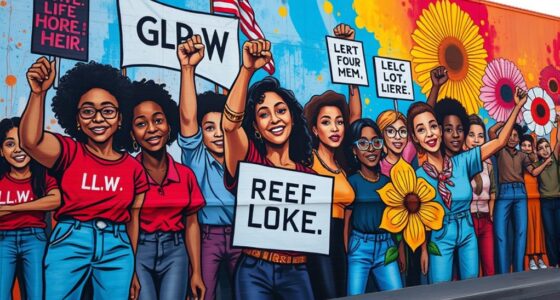
When you create protest art on public property, it’s important to respect shared spaces and community standards. If your work aims to inspire change without damaging property, it stays within ethical boundaries. But if you damage or deface property with no constructive purpose, it’s considered vandalism. Responsible expression balances giving voice to your message with respecting the community and legal boundaries. To understand how to navigate these boundaries, keep exploring the principles that define ethical protest art.
Key Takeaways
- The intent behind the artwork determines if it’s ethical protest art or vandalism; constructive messages are preferred.
- Respecting public property and community standards is essential to avoid crossing into vandalism.
- Creating art within designated areas or with permission supports ethical expression and legal compliance.
- Damage or defacement of property, regardless of message, constitutes vandalism and is ethically unacceptable.
- Responsible protest art fosters dialogue and community benefit without causing harm or disorder.

Have you ever wondered where the line is between powerful expression and ethical boundaries in protest art? This question becomes especially relevant when considering how artists use public property to communicate their messages. Public spaces are accessible to everyone, making them tempting canvases for those enthusiastic to voice their dissent. But just because you have the right to create art in these areas doesn’t mean it’s automatically acceptable. When you create art on public property, you’re engaging in a form of artistic expression that can inspire change, provoke thought, or challenge authority. However, it’s essential to recognize that this expression exists within a broader social context that includes laws, community standards, and ethical considerations.
Using public property for protest art isn’t inherently vandalism, but it can quickly become that if boundaries aren’t respected. The key difference lies in intent and impact. If your goal is to communicate a message that benefits the public or raises awareness without damaging the property, you’re engaging in a form of artistic expression that can foster dialogue. But if your work involves defacing, graffiti, or damaging public assets, it crosses into vandalism. That’s because such acts often harm the community’s shared resources and can create a sense of disorder or disrespect. In this way, the ethics of protest art hinge on whether your actions serve a constructive purpose or simply cause harm.
Protest art should promote dialogue, not damage shared resources or foster disorder.
When considering art on public property, think about the community’s perspective. Is your piece adding value or simply creating chaos? Are you respecting the space’s intended use, or are you imposing your message at the expense of others? Many cities have designated areas for street art or murals precisely to balance free expression with order. If you choose to work outside these boundaries, be prepared for potential legal repercussions and community backlash. Remember, artistic expression isn’t just about making a statement; it’s also about respecting the social fabric that holds communities together. Recognizing the importance of vertical storage solutions can help artists find alternative ways to organize their supplies without damaging shared spaces.
Ultimately, the ethical line is drawn where your actions begin to damage or disrespect shared resources and public spaces. Art has the power to inspire and challenge, but it must do so responsibly. By understanding the importance of boundaries—both legal and moral—you can ensure your protest art remains a force for positive change rather than a catalyst for destruction. Respecting public property doesn’t diminish your voice; it amplifies it within a framework that values community and ethical responsibility.
Frequently Asked Questions
How Do Legal Definitions Distinguish Protest Art From Vandalism?
Legal standards distinguish protest art from vandalism mainly through property rights. If you create art with permission or on public property designated for expression, it’s less likely to be regarded as vandalism. However, if you deface private property without consent, you violate property rights, and your actions may be deemed vandalism. Respecting legal boundaries ensures your protest art stays within lawful limits and avoids criminal charges.
Can Protest Art Ever Be Protected as Free Speech?
Think of protest art as a rebellious river flowing through society’s landscape. It can be protected as free speech under legal protections when it expresses genuine artistic expression and promotes societal debate. You have the right to create provocative art, but it must stay within legal boundaries. When your work aims to voice dissent without damaging property, it’s more likely to be seen as protected free speech, not vandalism.
What Role Does Public Opinion Play in Evaluating Protest Art?
Public opinion plays a vital role in evaluating protest art because it shapes societal impact and determines whether the art is seen as powerful expression or vandalism. You should consider how public perception influences the message’s reception and potential for change. If the community views the art positively, it’s more likely to foster dialogue and understanding. Conversely, negative societal impact can lead to condemnation and restrictions, affecting the artist’s intent.
Are There Cultural Differences in Perceptions of Protest Art?
You’ll find that cultural perceptions greatly influence how protest art is viewed, with different societies interpreting it through their unique artistic interpretations. In some cultures, expressive or provocative art is celebrated as a powerful voice for change, while others might see it as vandalism. These differences shape public reactions, so your understanding of local cultural perceptions helps you better appreciate the complex relationship between protest art and societal values.
How Do Artists Navigate Ethical Boundaries in Provocative Protest Art?
You navigate ethical boundaries in provocative protest art by clarifying your artistic intent and considering your moral responsibility. While pushing societal norms, you ask yourself if your work sparks dialogue or incites violence. You balance freedom of expression with respect for others, ensuring your art communicates your message without crossing into vandalism. Ultimately, you accept that ethical boundaries are subjective, but staying true to your purpose keeps your work meaningful and impactful.
Conclusion
So, next time you see protest art, remember—it’s just trying to speak its mind. But beware: what’s powerful today could be labeled vandalism tomorrow. Ironically, your bold act of rebellion might end up erased or condemned, all in the name of “ethics.” Maybe the real question isn’t where art stops and vandalism begins, but whether we’re brave enough to listen before we judge. After all, isn’t art meant to challenge, not just decorate?