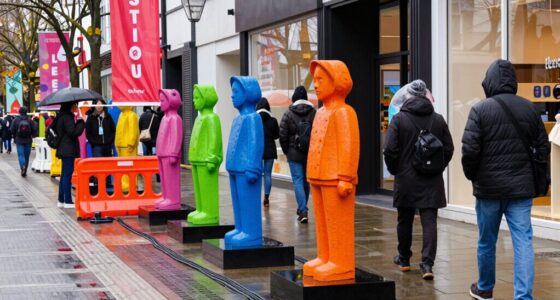
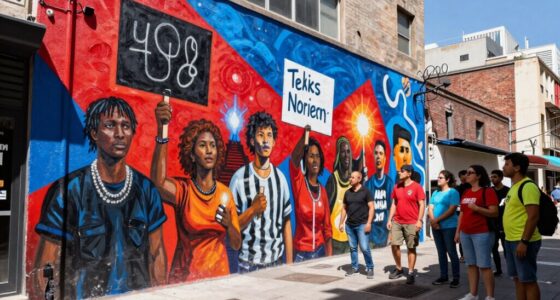
Performance art as protest transforms your body into a powerful symbol of resistance, challenging societal norms through visceral expression. By using provocative movements, endurance acts, and embodiment politics, you can bypass traditional channels and create immediate emotional impact. Your physical presence breaks barriers, inviting others to confront uncomfortable truths and feel empathy. This form of activism proves that change starts with embodied participation. If you continue exploring, you’ll discover how these acts turn bodies into compelling tools for social transformation.

Get the latest gadgets delivered free with Prime
- Fast, free delivery on millions of items
- Prime Video, Amazon Music and more included
- Member-only deals all year
Key Takeaways
- Performance art uses visceral bodily expressions to challenge societal norms and highlight pressing social issues.
- The body functions as a symbol of resistance, embodying struggles, hopes, and political messages beyond words.
- Physical actions like provocative movements or endurance acts disrupt norms and evoke empathy from viewers.
- Embodied participation emphasizes presence and vulnerability, transforming activism into personal, immediate acts.
- Visual and emotional impact of performance art enhances memorability and underscores body as a powerful tool for social change.

Performance art has become a powerful tool for protest, allowing artists to challenge societal norms and draw attention to pressing issues through direct, visceral expressions. When you engage in performance art as activism, you tap into embodiment politics—the idea that the body itself can be a site of resistance. By using your body to communicate messages, you bypass traditional channels of communication and create an immediate, emotional impact. This approach emphasizes the importance of physical presence and visceral experience, making the message felt on a personal level. Whether it’s through symbolic gestures, provocative movements, or endurance-based acts, you transform your body into a vessel for activism, emphasizing that social change often begins with the individual’s physical engagement.
In this context, your body becomes a powerful symbol of resistance, embodying the struggles, hopes, and frustrations of marginalized groups. When you participate in performance art for activism, you’re not just making a statement—you’re enacting a form of embodied politics. This means your physical actions challenge societal norms directly, disrupting ordinary routines and forcing viewers to confront uncomfortable truths. It’s a way of making activism visceral and immediate, breaking down the barriers between performer and audience. Your body becomes a living, breathing protest sign, conveying messages that words alone often can’t capture. This embodiment of politics allows you to communicate on a primal level, evoking empathy and awareness that can spark social change.
Furthermore, performance art as protest often involves a conscious rejection of traditional forms of activism, emphasizing embodied participation over passive spectatorship. You become an active agent, engaging your body in a way that emphasizes presence, vulnerability, and authenticity. As an activist artist, you challenge the notion that activism must be confined to marches or speeches; instead, you demonstrate that the body itself can be a dynamic, powerful instrument. The act of performing—whether it’s standing still in silence or engaging in provocative movement—becomes a form of activism that is deeply personal and politically charged. Through embodiment politics, you remind viewers that social transformation begins with the body’s willingness to resist, to embody the change that you wish to see in the world.
Additionally, incorporating visual impact through performance art enhances the emotional and psychological effect on viewers, making the protest more memorable and effective.
Frequently Asked Questions
How Does Audience Interaction Influence Protest Performance Art?
Audience engagement profoundly shapes protest performance art by fostering participatory dynamics that deepen the message. When you actively involve viewers, it transforms passive spectators into part of the resistance, amplifying the impact. Your participation can challenge norms, evoke emotional responses, and create a collective sense of urgency. This interaction makes the protest more powerful and memorable, encouraging viewers to reflect and potentially act beyond the performance itself.
What Ethical Considerations Are Involved in Provocative Body-Based Protests?
You must navigate consent dilemmas carefully, ensuring participants are fully aware and willing to engage, avoiding exploitation or harm. Respect cultural sensitivities by understanding diverse norms and avoiding actions that could offend or alienate communities. Ethical protests balance powerful messages with respect for individual boundaries and cultural contexts, fostering awareness without causing unnecessary trauma or controversy. Prioritizing consent and cultural understanding is essential in provocative body-based protests.
How Do Cultural Differences Shape Body as Resistance in Performance Art?
Imagine you’re in a world where cultural expressions shape how the body becomes resistance; it’s like a living meme. You see, cultural differences influence how artists challenge identity boundaries, making body-based protests resonate differently across societies. Your actions reflect deep-rooted traditions or taboos, turning your body into a powerful symbol of resistance. By understanding these cultural nuances, you can create impactful performances that honor diverse perspectives and foster dialogue.
Can Performance Art Effectively Lead to Policy Change or Social Reform?
Performance art can influence policy impact and promote social reform by raising awareness and engaging audiences emotionally. Your active participation can challenge norms and inspire dialogue among viewers, pressuring policymakers to respond. While it may not directly change laws, your act as a catalyst sparks conversations that can lead to tangible social reform. Through provocative body-based expressions, you create a powerful platform for advocacy and change.
What Are the Legal Implications of Using the Body in Protest Art?
You need to take into account that using your body in protest art can breach legal boundaries, especially if it involves public nudity, defacement, or harmful acts. Authorities may argue it threatens public order or safety, impacting bodily autonomy. You could face legal consequences like fines or arrest. Always understand local laws and rights before engaging, and ensure your protest respects legal limits to avoid unintended repercussions.
Conclusion
As you watch performance art unfold as protest, you realize it’s more than just a display; it’s a challenge to norms, a body pushing boundaries. The body becomes a powerful site of resistance, hinting at deeper struggles beneath the surface. But what happens when this act of defiance reaches a tipping point? You sense that behind every movement lies a story waiting to be uncovered—something that could change everything if you dare to look closer.
Halloween Picks
halloween
As an affiliate, we earn on qualifying purchases.