Public murals turn blank walls into powerful community voices on social issues. They reflect shared values, cultural symbols, and resilience, often involving local residents in their creation. These artworks serve as visual protests, highlighting struggles like injustice or environmental concerns, and inspire viewers to think and act. If you keep exploring, you’ll discover how these murals foster connection, spark conversations, and transform neighborhoods into canvases for social change.

Get the latest gadgets delivered free with Prime
- Fast, free delivery on millions of items
- Prime Video, Amazon Music and more included
- Member-only deals all year
Key Takeaways
- Public murals serve as visual platforms for communities to express social issues and advocate for change.
- They incorporate cultural symbols and motifs that reflect community identity and shared values.
- Community involvement in mural creation fosters ownership, cohesion, and authentic representation of local voices.
- Murals act as acts of activism, highlighting topics like social justice, resistance, and environmental concerns.
- They provoke critical conversations, raise awareness, and inspire collective action on pressing social issues.

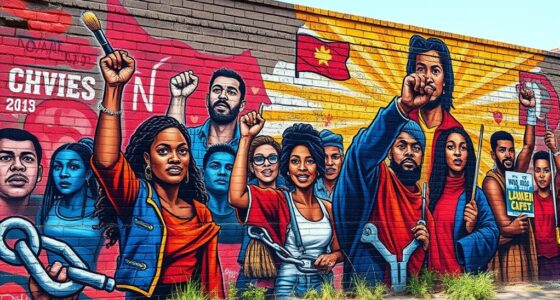
Public murals transform blank walls into vibrant expressions of community, creativity, and culture. When you see a mural, you’re witnessing more than just colorful artwork; you’re experiencing a visual dialogue rooted in cultural symbolism and artistic activism. These murals often serve as powerful symbols of identity, history, and resistance. They communicate stories that might otherwise go unheard, turning public spaces into canvases for collective memory and social commentary. As you stand before a mural, you’re invited to interpret its symbols—whether they depict historical figures, community struggles, or cultural motifs—and connect with the deeper meanings embedded within the art. Cultural symbolism plays a crucial role in public murals because it embodies the shared identity and values of a community. You’ll notice how certain colors, shapes, or figures recur across different murals, representing themes like resilience, hope, or resistance. These symbols act as visual language, allowing communities to assert their presence and celebrate their heritage. For example, a mural featuring indigenous motifs or local historical figures doesn’t just decorate a wall; it affirms cultural roots and fosters pride among residents. When you engage with these symbols, you’re participating in a dialogue that respects tradition while challenging social norms. Additionally, community involvement and active participation in creating murals strengthen social bonds and ensure that the artwork authentically reflects local voices. Artistic activism is another core element of many public murals. You might see these artworks as acts of defiance or calls for change—visual protests that highlight social issues like racial injustice, environmental concerns, or political oppression. As you observe a mural advocating for marginalized groups, you realize that it’s not just art for art’s sake; it’s a deliberate act to raise awareness and inspire action. Artists use their skills to transform public spaces into platforms for advocacy, making social issues impossible to ignore. This form of activism harnesses the power of imagery to evoke emotional responses, mobilize communities, and push for social reform. When you encounter a public mural, you’re witnessing a collaboration between artists and communities, a shared effort to communicate messages that resonate on both personal and societal levels. These murals challenge passersby to think critically about the issues depicted and encourage conversations about social justice and cultural identity. They remind you that art isn’t separate from life but intertwined with the struggles and triumphs of the people it represents. Essentially, public murals serve as visual manifestations of community voices, turning walls into powerful symbols of cultural symbolism and artistic activism that inspire change and foster connection.
As an affiliate, we earn on qualifying purchases.
Frequently Asked Questions
How Do Communities Decide on Mural Themes?
You involve your community through engagement, gathering ideas and feedback to choose mural themes that resonate. By prioritizing cultural representation, you guarantee the artwork reflects local history, identity, and values. Hosting workshops, surveys, or neighborhood meetings helps you understand diverse perspectives, making the mural a true community expression. This collaborative process fosters ownership and pride, ensuring the final theme authentically embodies the community’s voice and social issues important to them.
What Funding Sources Support Mural Projects?
You can secure funding for mural projects through various sources, including grant opportunities offered by local governments, arts organizations, and community foundations. Sponsorship options are also available, where local businesses or community groups provide financial support in exchange for recognition. By exploring these avenues, you’ll find diverse funding sources that help turn your mural ideas into vibrant community expressions, ensuring your project gains the resources needed to succeed.
How Are Artists Chosen for Public Murals?
You might think choosing artists is random, but it’s actually a thoughtful process. You’re often involved in selecting artists whose artistic styles and mural symbolism align with the community’s message. The selection may involve a panel or public input to guarantee the artist’s vision complements the project’s purpose. This way, the mural truly reflects community values and creates a meaningful visual impact, resonating with viewers on a deeper level.
What Maintenance Is Required for Outdoor Murals?
You need to regularly inspect your outdoor murals to identify damage early. Use preservation techniques like sealing and applying protective coatings to shield the artwork from weather and UV rays. Vandalism prevention measures, such as anti-graffiti coatings and surveillance, help minimize damage. Cleaning should be gentle and appropriate for the mural’s materials, ensuring you preserve the artwork’s integrity while maintaining its vibrant appearance over time.
How Do Murals Influence Social Change?
Sure, murals are just pretty splashes of paint, right? Actually, they wield a mighty visual impact, sparking conversations and challenging norms. You’ll find that, through their cultural significance, murals inspire communities to rally around shared values and push for social change. They turn blank walls into powerful statements, making you pause, reflect, and maybe even act—proving art isn’t just decoration, but a catalyst for real societal transformation.
wall mural stencils for community art
As an affiliate, we earn on qualifying purchases.
As an affiliate, we earn on qualifying purchases.
Conclusion
As you walk past a vibrant mural, remember it’s more than just art—it’s a community’s voice echoing loudly. Like a mural that captures a neighborhood’s struggles and hopes, these public artworks turn walls into open books, telling stories no words can fully express. Just as a mural transforms a blank space into a powerful statement, your support can help amplify these voices, ensuring social issues are seen, heard, and addressed.
As an affiliate, we earn on qualifying purchases.
outdoor wall murals for social issues
As an affiliate, we earn on qualifying purchases.
As an affiliate, we earn on qualifying purchases.
Halloween Picks
halloween
As an affiliate, we earn on qualifying purchases.