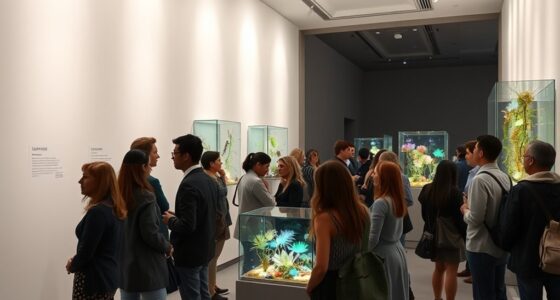
Biohacking and DIY bioart combine citizen science with creativity, letting you participate in biological experiments outside traditional labs. You can manipulate genetic material to create stunning visual effects like glowing bacteria or colorful pigments, turning biology into an artistic canvas. This movement democratizes scientific exploration, sparking ethical conversations and inspiring innovative expressions. If you keep exploring, you’ll discover how science and art can come together in surprising and inspiring ways.
Key Takeaways
- Citizen science in biohacking democratizes biological research, enabling amateurs to participate in genetic and cellular experiments.
- DIY bioart combines biology with artistic expression, using living organisms to create visual and aesthetic effects.
- Hands-on biohacking fosters inquiry into genetic expression and biological mechanisms outside traditional laboratories.
- Ethical considerations emerge as individuals manipulate genetic material, sparking debates on safety and norms.
- Accessibility of tools and biological imaging techniques enhances creative experimentation at the intersection of science and art.
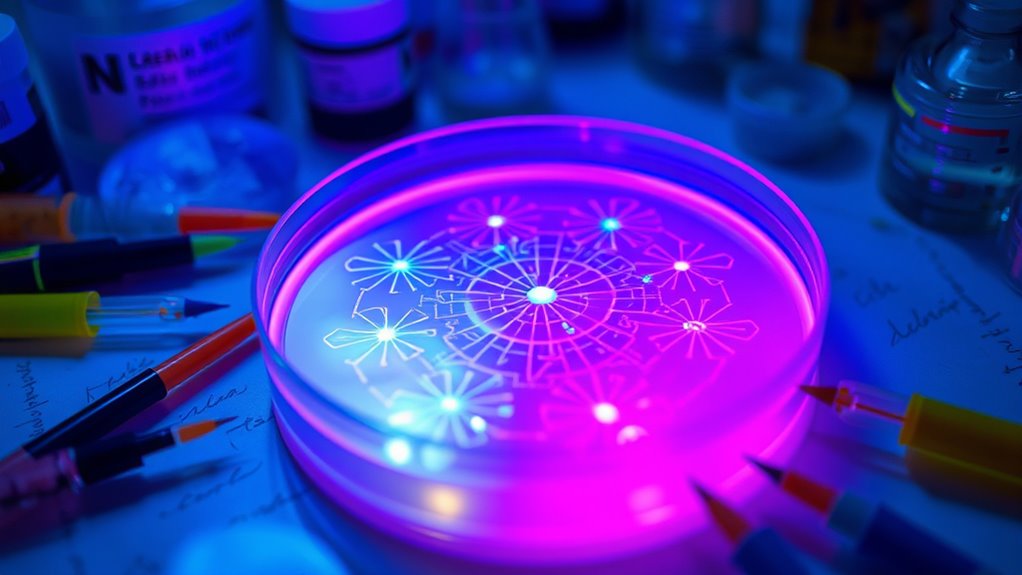
Citizen science is transforming the way we approach research by inviting everyday people to contribute their creativity and skills. When it comes to biohacking and DIY bioart, you become an active participant in pushing the boundaries of science and art. Instead of traditional labs and sterile environments, you might experiment in your garage or community space, blending biology with artistic expression. This hands-on involvement allows you to explore complex concepts like genetic expression, giving you a direct say in how living organisms behave or look. You can manipulate genetic material to produce visual effects or unique biological patterns, turning scientific processes into forms of experimental aesthetics that challenge conventional boundaries.
Engage in DIY bioart by manipulating genetics to create visual and artistic biological expressions outside traditional labs.
By engaging in DIY bioart, you’re not just creating pretty visuals; you’re also investigating the deeper biological mechanisms that drive life. You might, for example, introduce specific genes into bacteria to make them produce colorful pigments or glow under certain conditions. These experiments are more than just art—they’re a form of inquiry into how genetic expression can be influenced and harnessed outside mainstream laboratories. This democratization of science allows you to rethink what biological research can be and encourages innovative approaches that blend scientific rigor with artistic freedom.
Your participation in citizen-led biohacking projects fosters a unique kind of experimental aesthetics—where science becomes a medium for creative exploration. Instead of viewing biology as a fixed, clinical science, you see it as a living canvas that responds to your interventions. This perspective invites you to experiment freely, knowing that even small modifications can lead to striking visual outcomes or new biological functions. It’s this fusion of scientific curiosity and artistic desire that makes biohacking so compelling. In this space, you’re not just an observer; you’re an active creator, shaping biological processes to produce art or functional innovations.
As you explore DIY bioart, you realize that your work can challenge ethical norms and spark conversations about the future of biotechnology. The accessibility of tools and information enables you to explore genetic expression in ways once reserved for professional scientists. Through this process, you develop a deeper understanding of biological systems while also expressing your creativity. The boundary between science and art blurs, creating a space where experimentation becomes a form of aesthetic inquiry. Citizen science in biohacking therefore becomes a powerful avenue for personal expression, inspiring new ways of thinking about life, art, and the potential of human innovation. Furthermore, understanding the contrast ratio in biological imaging can enhance the visual impact of your bioart experiments.
Frequently Asked Questions
How Do Biohackers Ensure Safety During Experiments?
You guarantee safety during experiments by following biosafety protocols and practicing effective risk management. This means wearing protective gear, working in clean environments, and properly disposing of hazardous materials. You also stay informed about potential risks and implement safety measures to minimize them. Regularly reviewing procedures and collaborating with experienced biohackers help you maintain a safe environment, reducing the chance of accidents or unintended consequences.
What Legal Restrictions Exist for DIY Bioart Projects?
Jumping into DIY bioart without knowing the rules is like sailing without a map. Legal restrictions vary by country, so you need to stay on top of local laws around regulatory compliance and intellectual property. Unauthorized experimentation or sharing sensitive materials could land you in hot water. Always research your jurisdiction’s regulations, respect patents, and seek legal advice if unsure. Playing by the rules guarantees your creative projects stay safe and legal.
Can Biohacking Improve Human Health Outside Clinical Settings?
Yes, biohacking can improve your health outside clinical settings by using personalized medicine and self-monitoring techniques. You can track your vitals, experiment with diet, or optimize sleep patterns to enhance well-being. These methods empower you to take control of your health, but remember to stay informed about safety and legal considerations. Always consult professionals when necessary to guarantee you’re making safe, effective choices.
How Accessible Are Biohacking Tools and Materials for Beginners?
Like a modern-day Da Vinci, you can delve into biohacking with relative ease. Affordable kits and online resources make it accessible for beginners, offering step-by-step guides and starter materials. You don’t need a lab or prior experience—just curiosity and caution. With a little research, you can experiment safely and learn as you go, transforming your home into a creative space for citizen science and biotech exploration.
What Ethical Considerations Are Involved in Citizen-Led Bioengineering?
You need to take into account ethical issues like informed consent and data privacy when engaging in citizen-led bioengineering. Make sure that all participants fully understand what they’re involved in and agree voluntarily, respecting their rights. Protect personal data collected during experiments to avoid misuse or breaches. By prioritizing these ethical practices, you help promote responsible biohacking that benefits science while respecting individual rights and societal norms.
Conclusion
As you explore biohacking and DIY bioart, you become both scientist and artist, blending innovation with imagination. You experiment, you create, you challenge boundaries. You embrace curiosity, push limits, and redefine possibilities. You transform laboratories into playgrounds, knowledge into expression, and science into art. In this world of citizen science and creativity, you don’t just observe—you participate, you inspire, and you shape the future. Ultimately, it’s your hands, your mind, and your passion that make the difference.