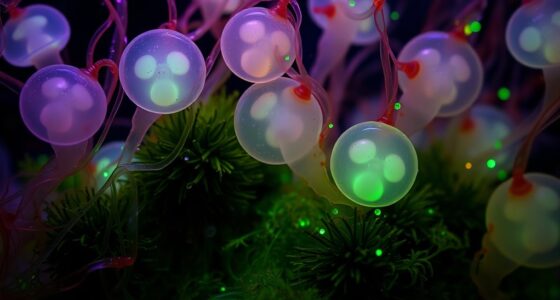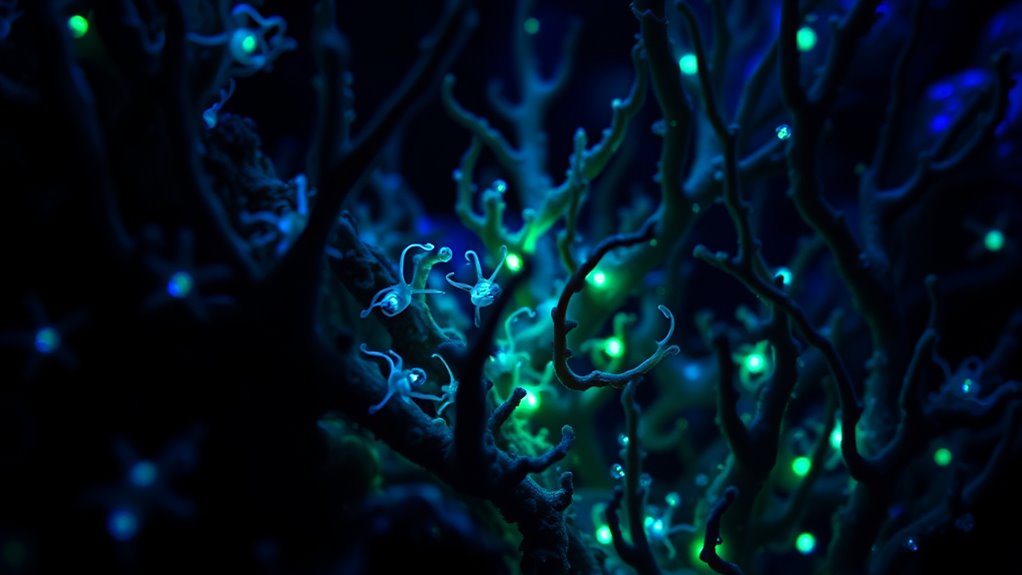

Bioluminescent art uses living organisms like bacteria, algae, or fungi that naturally produce glowing light through chemical reactions involving luciferin and luciferase. You can cultivate these organisms in controlled environments using biotechnological techniques like genetic modification to create stunning, sustainable light displays. Artists are blending science and creativity to craft living sculptures and interactive installations, raising awareness about ecology. Keep exploring, and you’ll discover how to harness this mesmerizing natural glow for your own luminous projects.
Key Takeaways
- Bioluminescent art combines genetic engineering and biological cultivation to create living light displays using luciferin and luciferase.
- Artists genetically modify organisms like bacteria, algae, or fungi to produce controlled bioluminescent effects.
- Proper cultivation involves maintaining optimal environmental conditions for organism health and consistent light emission.
- Innovative techniques include using CRISPR and other tools to regulate bioluminescence for artistic and interactive installations.
- Ethical and environmental considerations are essential to ensure safe, sustainable, and responsible use of living bioluminescent organisms.
The Science Behind Bioluminescent Organisms

Bioluminescent organisms produce light through a natural chemical reaction that takes place inside their bodies. You might find this process in deep-sea creatures, fungi, or even some insects. When a molecule called luciferin reacts with an enzyme called luciferase, it releases energy as visible light. This reaction requires oxygen and specific ions, which influence the color of the glow. Different organisms have unique versions of luciferin and luciferase, resulting in a variety of luminescent colors like blue, green, or red. This natural light isn’t just for show; it helps creatures attract prey, communicate, or hide from predators. Understanding this chemical process allows scientists to harness bioluminescence for art, research, and innovative lighting solutions. Bioluminescent organisms have evolved this remarkable ability as a survival adaptation in dark environments.
Techniques for Creating Living Light Installations

To create living light installations, artists and scientists combine biological techniques with innovative engineering. They often start by genetically modifying organisms, such as bacteria, algae, or fungi, to produce bioluminescence. Using tools like CRISPR, you can introduce luciferase genes into these organisms, enabling them to emit light on command. Culturing these modified organisms in controlled environments ensures consistent glow and longevity. You then integrate them into custom habitats—transparent containers, bio-reactive surfaces, or living sculptures—that enhance their luminescence. Lighting controls and sensors help animate the installations, allowing you to manipulate brightness and patterns dynamically. By blending biology with design, you craft immersive, self-sustaining displays that glow naturally, transforming living cells into enthralling, eco-friendly art installations.
Notable Artists and Projects Pioneering Bioluminescent Art

You’ll want to explore the key artists and groundbreaking projects shaping bioluminescent art today. These innovators use unique techniques to bring living light into their work, pushing creative boundaries. Their projects demonstrate how bioluminescence can transform artistic expression and environmental awareness. Incorporating mindful decluttering strategies into their practices can help artists better organize their materials and workspace, fostering more innovative and sustainable creations.
Key Bioluminescent Artists
Have you ever wondered who’s leading the way in bioluminescent art? You’ll find pioneering artists like Jonathon Keats, who integrates living organisms into immersive installations, and Elena Manferdini, blending bioluminescent materials with architecture. Julia Soderberg creates glowing sculptures by cultivating genetically modified bacteria, transforming spaces into luminous environments. Additionally, artist Akihiro Yamaguchi uses bioluminescent algae in his performances, harnessing natural light to evoke emotion and wonder. These artists push boundaries by combining science, technology, and creativity, making bioluminescence accessible and enthralling. Their work not only mesmerizes audiences but also explores new ways to see the natural world and our relationship with living systems. Through their innovations, they turn bioluminescent life into a vibrant, evolving canvas. Understanding the color accuracy of bioluminescent materials helps artists optimize visual effects and create more striking installations.
Innovative Projects Spotlight
Innovative projects in bioluminescent art showcase the boldest experiments by artists pushing the boundaries of science and creativity. These initiatives blend biology with visual storytelling, creating mesmerizing displays that illuminate the natural world. For example, some artists genetically modify organisms to glow in specific patterns, turning living cells into moving canvases. Others integrate bioluminescent organisms into installations that respond to environmental stimuli, offering interactive experiences. You might encounter projects that use bioluminescent bacteria to craft glowing sculptures or develop bio-luminescent clothing that changes with movement. These projects often aim to raise awareness about ecological issues or explore new aesthetic possibilities. They demonstrate how science and art can collaborate to produce enthralling, innovative works that challenge traditional notions of creativity and nature. Additionally, the use of bioluminescent organisms in art highlights the potential for biological techniques to influence contemporary artistic practices.
Artistic Techniques & Methods
Artists pioneering bioluminescent art employ a variety of cutting-edge techniques that blend biology, engineering, and design. You might work with genetically engineered organisms, inserting luciferase genes into microbes or plants to produce sustained glowing effects. Some artists utilize bioluminescent dyes or proteins, carefully applying or cultivating them on surfaces or within installations. You could also harness bioreactors or microfluidic systems to control and sustain living light sources, manipulating their glow for visual impact. Advanced imaging and microscopy help you study and optimize these biological processes. Additionally, integrating sensors and programmable devices allows dynamic control over light emission. These methods enable you to create interactive, living artworks that showcase the beauty of bioluminescence while exploring the boundaries between art, science, and technology. The cultural implications of incorporating living organisms into art pieces open new discussions about ethics and environmental impact.
Ethical Considerations and Environmental Impacts

While bioluminescent art offers stunning visual experiences, it also raises important ethical and environmental questions. You need to take into account how manipulating living cells might affect ecosystems or the organisms involved. Ethical concerns include the potential suffering of genetically modified creatures and the moral implications of altering nature for art’s sake. Environmental impacts involve risks of accidental release or contamination, which could disrupt local habitats. You should also think about:
- The long-term effects on ecosystems
- Potential crossbreeding with wild species
- Responsible sourcing of bioluminescent organisms
- The ecological footprint of production and disposal
- Transparency about genetic modifications used
- Creating a retirement savings plan can help fund ongoing research into safer bioluminescent technologies.
Addressing these concerns ensures that bioluminescent art remains innovative without harming the environment or crossing ethical boundaries.
Future Possibilities and Innovations in Bioluminescent Creativity

As bioluminescent technology advances, new possibilities emerge for creating dynamic, interactive displays that blend art with science. You could develop installations where living cells respond to environmental changes, creating ever-evolving light shows. Imagine using genetically engineered organisms to produce specific colors or patterns, making art that’s both beautiful and functional. Innovations may lead to biodegradable lighting solutions that reduce waste while illuminating public spaces. Future tools might allow artists to control bioluminescent signals remotely, syncing lights with music or movement. These developments could also enable personalized art experiences, where viewers influence the glow with their presence or gestures. Additionally, text capitalization styles can be easily transformed with free online tools, helping artists present their work in diverse visual formats. As research progresses, bioluminescence could revolutionize sustainable design, immersive environments, and even medical applications, opening a world of creative possibilities limited only by your imagination.
How to Get Started With Bioluminescent Art Practices

To begin your bioluminescent art journey, you need to choose the right organisms that emit light and suit your environment. Next, learn how to cultivate these living light sources safely and effectively. You can also experiment with growing chia seeds indoors, which require minimal maintenance and can be used creatively in your displays. Finally, create enthralling displays that highlight their natural glow and bring your artistic vision to life.
Selecting Bioluminescent Organisms
Choosing the right bioluminescent organisms is essential for successful bioluminescent art projects. You want organisms that are safe, reliable, and suitable for your environment. Consider the following options:
- Dinoflagellates: Marine plankton that glow when disturbed, perfect for aquatic displays.
- Glowworms: Terrestrial insects that produce bioluminescent light in caves or forests.
- Fireflies: Well-known luminous insects ideal for outdoor, terrestrial projects.
- Bacterial cultures: Genetically modified bacteria that emit light, suitable for controlled lab settings.
- Fungal species: Certain fungi like honey mushrooms that naturally glow in dark environments.
Select organisms based on your setup, safety standards, and the kind of ambiance you want to create. Proper choice guarantees vibrant, sustainable bioluminescent art.
Cultivating Living Light Sources
Getting started with cultivating bioluminescent organisms involves understanding their specific needs and creating suitable environments for growth. First, research the species you want to work with, noting their preferred temperature, light, and nutrient conditions. Many bioluminescent microbes thrive in aquatic environments, so setting up a clean, controlled tank is essential. Maintain proper pH levels and avoid contamination by sterilizing equipment regularly. Provide gentle agitation or aeration to keep the organisms healthy and evenly distributed. Use appropriate growth media or seawater solutions, depending on the species. Regularly monitor water quality and adjust conditions as needed. Patience is key; cultivating bioluminescent sources takes time, but careful attention to their environment ensures vibrant, sustainable light sources for your artistic projects. Additionally, understanding the health and wellness benefits of maintaining a balanced environment can help optimize the growth and luminosity of your cultures.
Creating Artistic Displays
Creating mesmerizing bioluminescent displays begins with planning your design and selecting the right organisms to bring your vision to life. Decide on the scale, color scheme, and environment for your display, whether it’s a small tabletop or an elaborate installation. Once you have a concept, choose organisms that match your aesthetic and technical needs. Consider the following:
- Research species with vibrant, stable bioluminescence
- Design a controlled environment to nurture your organisms
- Use non-toxic, safe substrates and containers
- Incorporate lighting that complements natural bioluminescent glow
- Plan for maintenance and longevity of your display
- Maintain healthy interactions with your bioluminescent organisms to ensure their well-being and sustained glow
Frequently Asked Questions
Can Bioluminescent Art Be Used for Commercial Advertising?
Yes, bioluminescent art can be used for commercial advertising. You can incorporate glowing living cells into displays, logos, or products to create eye-catching, eco-friendly visuals that stand out. This innovative approach captures attention and leaves a memorable impression on your audience. As technology advances, you’ll find even more ways to integrate bioluminescent art into your marketing strategies, making your brand innovative and environmentally conscious.
What Are the Costs Involved in Developing Bioluminescent Art Projects?
You’ll find developing bioluminescent art projects can cost as much as funding a small spaceship, with expenses for specialized living cells, lab equipment, and ongoing maintenance. You might need to invest in skilled scientists and biotechnologists, plus a clean, controlled environment to keep the glow alive. Expect unpredictable costs, like nurturing delicate organisms, and the potential for funding surprises—like discovering your glowing art needs a full-time bioluminescent gardener.
How Long Do Bioluminescent Effects Typically Last in Installations?
Bioluminescent effects in installations usually last from a few hours to several days, depending on the organism or system used. You might see glow for extended periods if you maintain ideal conditions, but environmental factors like temperature, light exposure, and nutrient supply can shorten the effect. To prolong the glow, you’ll need to carefully control these variables, ensuring the living cells stay healthy and continue to emit light.
Are There Health Risks Associated With Working With Bioluminescent Organisms?
Working with bioluminescent organisms is like dancing with delicate flames—you should be aware of potential health risks. You might encounter allergic reactions or skin irritation if you handle these living lights improperly. Always wear protective gear, work in well-ventilated areas, and follow safety protocols. While generally safe when managed carefully, neglecting precautions could lead to unforeseen health issues, so respect the organisms’ luminous glow and treat them with care.
Can Bioluminescent Art Be Integrated With Digital or Interactive Technology?
Yes, bioluminescent art can be seamlessly integrated with digital and interactive technology. You can incorporate sensors, LEDs, and software to control and amplify the natural glow, creating dynamic, immersive experiences. By combining biological luminescence with digital interfaces, you enable viewers to interact with the artwork in real time, enhancing engagement and innovation. This fusion opens exciting possibilities for exhibitions, performances, and educational displays that captivate and inspire audiences.
Conclusion
Imagine standing before a wall of glowing, living art that pulses with your heartbeat—bioluminescent creations turn science into wonder. Just like a tiny firefly lights up the night, your own experiments can bring nature’s brilliance into your space. With ethical care and curiosity, you can join a movement where art and biology illuminate new possibilities. Embrace this luminous journey, and let your creativity spark a brighter, living future.