
Experimental art changes how you experience it by shifting control from the artist to you. Instead of just observing, you’re encouraged to participate, shape, and influence the artwork. Your reactions and choices help the piece evolve, creating a deeply personal and immersive journey. This approach dissolves traditional boundaries, making you a co-creator. If you want to understand all the ways this art form empowers you, explore further to uncover the full impact.
Key Takeaways
- Experimental art shifts control from the artist to the viewer, allowing active participation and influence over the artwork’s development.
- It encourages co-creation, making viewers shared authors and vital contributors to the artistic process.
- Sensory engagement and interactivity empower viewers to shape their emotional and physical experience.
- Responses and reactions are integrated into the artwork, blurring traditional boundaries between creator and audience.
- This approach transforms passive observation into an active, personalized journey, redefining the viewer’s role in art.
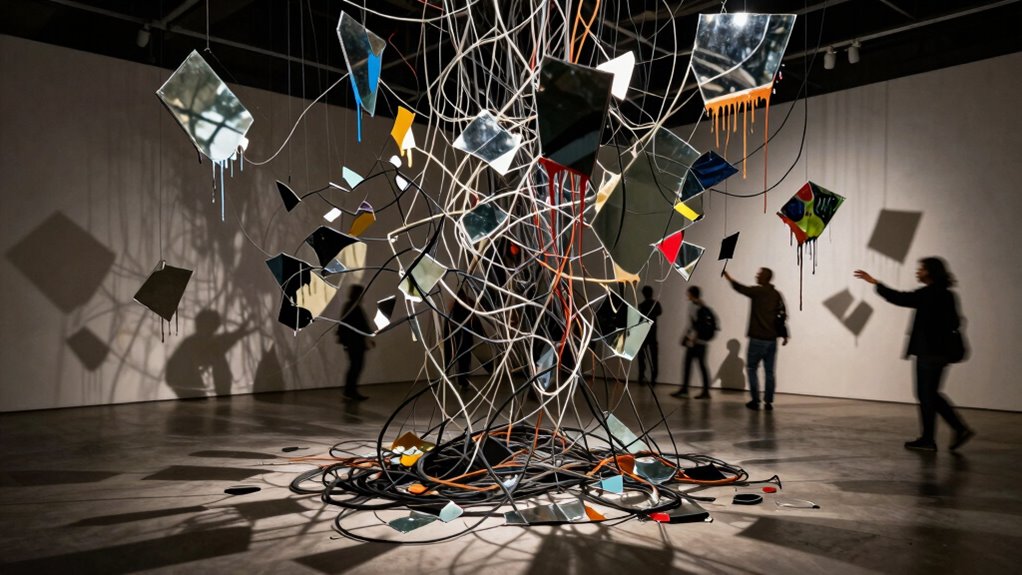
Have you ever wondered how experimental art challenges your role as a viewer? In traditional settings, you’re usually a passive observer, watching a piece unfold without much influence. But experimental art flips that script, actively inviting you into the creative space. Through innovative interactive techniques, artists blur the lines between creator and spectator, transforming you from a mere onlooker into a participant. When you step into these environments, you’re encouraged to engage physically, emotionally, or intellectually, which shifts your sense of control. Instead of simply observing, you become part of the artwork itself, creating a dynamic exchange that redefines your experience.
Experimental art invites you to become an active participant, transforming your role from observer to co-creator.
Sensory engagement plays an essential role in this shift. Experimental art often stimulates multiple senses simultaneously, making you feel immersed in an environment that responds to your actions. Touch, sound, sight, and even smell might be integrated to deepen your connection. For example, you might be invited to manipulate objects, walk through space that reacts to your movements, or listen to sounds that change based on your proximity. This active participation makes you more conscious of your role within the art piece, emphasizing that your presence influences the outcome. The artwork no longer remains static; it’s fluid and responsive, giving you a sense of shared authorship. Incorporating interactive techniques further enhances this participatory experience, fostering a sense of co-creation. Additionally, the use of multisensory stimulation heightens your engagement and reinforces your influence on the piece.
By using interactive techniques, artists dismantle the traditional hierarchy where the creator controls the narrative and you simply consume it. Instead, you become a co-creator, shaping the experience through your choices, movements, or responses. This decentralization of control encourages a more personal and visceral connection to the artwork. You start to realize that your reactions aren’t just reactions but essential parts of the art’s existence. The boundaries between viewer and creator dissolve, allowing you to influence the piece’s evolution directly.
This redefinition of control doesn’t diminish your agency; it amplifies it. You’re no longer a passive recipient but an active participant whose presence and actions carry weight. As you navigate these experimental environments, you learn that your perceptions, choices, and responses are integral to the piece’s meaning. This empowerment can be exhilarating, as it challenges your expectations of art and invites you to see yourself as an essential component of the creative process. Ultimately, experimental art transforms your experience from passive observation into an interactive journey where your role is central, dynamic, and unpredictable. Recognizing the importance of audience participation highlights how these innovative approaches shift traditional roles in art.

Art Electric: Build Interactive Art that Lights, Moves & Plays Music
- Interactive Art Creation: Build light, movement, and music sculptures
- Complete Kit Included: Circuit board, motors, LEDs, sensors, and more
- Learn Coding & Design: Use block-based coding to animate and control art
As an affiliate, we earn on qualifying purchases.
As an affiliate, we earn on qualifying purchases.
Frequently Asked Questions
How Does Experimental Art Influence Emotional Responses?
Experimental art influences your emotional responses by engaging your intuitive perception and encouraging emotional engagement. As you interact with unconventional forms and abstract visuals, you’re prompted to feel rather than analyze, creating a deeper connection. This art style often evokes surprise, curiosity, or even discomfort, pushing you to confront raw emotions. You become an active participant, with your feelings shaped by the unpredictable, immersive experience that challenges traditional ways of perceiving art.
Can Experimental Art Be Safely Experienced by All Audiences?
Experimental art, especially interactive installations with sensory stimuli, can be safely experienced by most audiences, but you should approach them with caution. Some installations may trigger discomfort or sensory overload, so it’s wise to *contemplate* your comfort levels and any sensory sensitivities. Artists often include warnings or options to opt-out, ensuring everyone can engage safely. If you’re unsure, ask staff or follow guidelines to enjoy the experience responsibly.
What Role Does Technology Play in Redefining Viewer Control?
Like stepping into a sci-fi movie, technology transforms your experience by offering interactive interfaces and digital manipulation. You’re no longer just observing; you actively shape the art, gaining a sense of control that traditional pieces can’t provide. Technology blurs boundaries, making you part of the creative process, and shifting control from the artist to you. This redefines engagement, creating a dynamic, personalized experience that immerses you deeper into the artwork.
Are There Specific Artists Known for Challenging Viewer Control?
Yes, artists like Rafael Lozano-Hemmer and Tino Sehgal challenge viewer control through interactive installations and participatory performances. Lozano-Hemmer’s work invites you to influence the artwork using technology, blurring the line between creator and viewer. Sehgal creates performances where your participation becomes essential, making you an active part of the art. These artists redefine how much control you have, transforming passive observation into active engagement.
How Is Audience Feedback Incorporated Into Experimental Art Projects?
In experimental art projects, you become an active participant through audience feedback, which is often incorporated via interactive installations and participatory performances. These works invite you to influence or alter the experience, blurring boundaries between creator and viewer. Artists seek your engagement to shape the piece’s evolution, making your responses essential in redefining control. Your participation transforms the art from a passive viewing to an immediate, dynamic interaction.
multisensory art experience tools
As an affiliate, we earn on qualifying purchases.
As an affiliate, we earn on qualifying purchases.
Conclusion
As you engage with experimental art, you realize it challenges your usual sense of control, inviting you to explore new perspectives. Remarkably, a recent survey found that 68% of viewers felt more emotionally connected to unconventional art forms because they actively participated in the experience. So, next time you encounter experimental pieces, embrace the unpredictability. You might discover a deeper understanding of yourself and a fresh appreciation for art’s limitless possibilities.
As an affiliate, we earn on qualifying purchases.
sensor-based interactive art devices
As an affiliate, we earn on qualifying purchases.
As an affiliate, we earn on qualifying purchases.