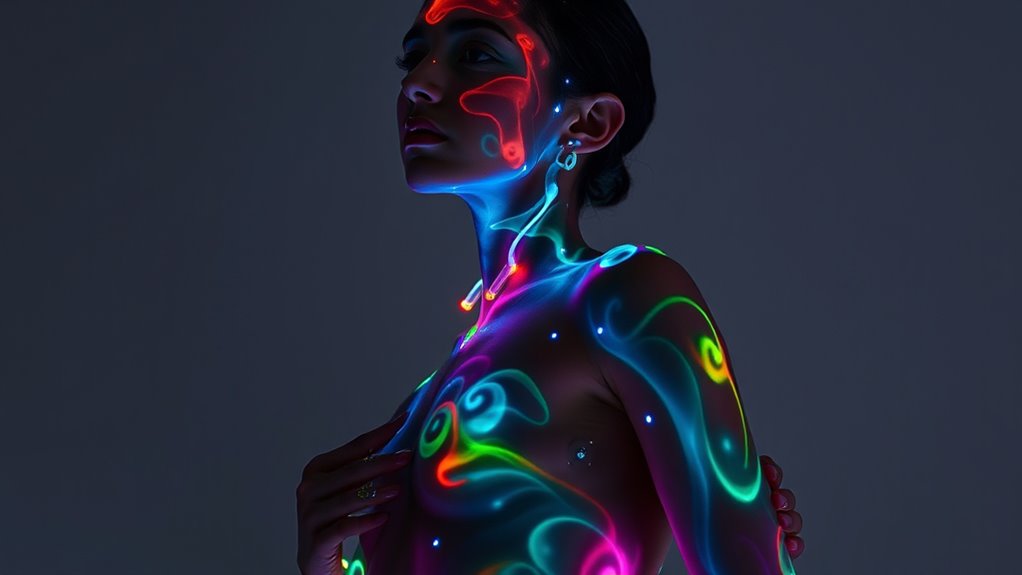

Performance bioart involves artists transforming their own bodies using biotech techniques and modifications, creating living, interactive art pieces. They may implant devices, alter DNA, or perform live surgeries to challenge ideas of identity, autonomy, and the human condition. These daring acts often spark conversations about ethics, consent, and the future of human enhancement. If you’re curious about how these daring artists push biological boundaries, there’s much more to uncover about this provocative art form.
Key Takeaways
- Artists perform live body modifications, such as implants or surgical alterations, to create interactive biological art pieces.
- Many use biotech techniques like gene editing (e.g., CRISPR) to alter their own DNA visibly or functionally.
- Performances often include embedded bio-luminescent cells or glow-in-the-dark proteins for luminous effects.
- Ethical questions arise around consent, bodily autonomy, and the risks associated with self-modification in art contexts.
- These artists challenge perceptions of identity, mortality, and the human body through visceral, provocative live demonstrations.

Performance bioart merges live biological processes with artistic expression, creating interactive and often provocative experiences. As you explore this domain, you realize how artists push boundaries by incorporating biotech experimentation and body modification techniques into their performances. These creators don’t just use traditional materials; they manipulate living tissues, DNA, and biological systems to challenge perceptions of identity, mortality, and the human condition. When you witness or participate in these works, you’re drawn into a dialogue where science becomes a canvas and the body itself transforms into a living sculpture.
You see artists utilizing biotech experimentation to expand the possibilities of body modification. Instead of conventional tattoos or piercings, they explore genetic editing, implanting bioengineered devices, or even altering their own DNA to produce visual effects or functional changes. These modifications are often presented in live performances, emphasizing the immediacy and visceral nature of their work. For example, some performers embed glowing proteins or bio-luminescent cells beneath their skin, creating a luminous body that reacts to environmental stimuli. It’s not just about aesthetics; it’s about questioning the ethics and implications of integrating biotechnology into human life.
Through body modification techniques, these artists turn their bodies into experimental platforms, blurring the line between the biological and the artistic. They might implant microchips to control external devices or perform live demonstrations of gene editing techniques like CRISPR, showcasing the potential and risks of biotech advancements. Such acts challenge viewers to reconsider notions of bodily autonomy and the limits of human enhancement. By performing these modifications publicly, they provoke conversations about consent, identity, and the future of human evolution.
In these performances, body modification becomes a form of protest, celebration, or exploration. You might see an artist surgically altering their body on stage or applying bioart materials to create living, changing art pieces. The performative aspect emphasizes the process—sometimes painful, sometimes transformative—highlighting how deeply intertwined biology and identity can be. As you observe or engage, you’re invited to reflect on the power and vulnerability inherent in these acts, as well as the ethical considerations they raise.
Ultimately, performance bioart that involves biotech experimentation and body modification techniques pushes the boundaries of what it means to be human. It challenges you to think about the future of body autonomy and ethical limits in a world where biology is no longer just a natural state but a malleable medium for artistic expression. This intersection of science and art invites continuous dialogue, urging you to reconsider the potential and perils of living art.
Frequently Asked Questions
What Safety Measures Do Artists Use During Body Modifications?
You should follow strict safety protocols and risk management strategies during body modifications. This includes using sterilized tools, wearing gloves, and working in a clean environment to prevent infections. You also consult with medical professionals, ensure proper aftercare, and understand the potential risks involved. By prioritizing safety measures, you mitigate complications and protect your health while exploring body alteration as an art form.
How Do Audiences Typically Respond to Extreme Bioart Performances?
Imagine standing at the edge of a wild circus, where the crowd’s gaze is both captivated and unsettled. You’ll find that audiences often respond with a mix of public fascination and discomfort, drawn to the spectacle yet questioning its ethics. These extreme bioart performances challenge norms, sparking ethical debates and intense curiosity. As viewers witness these daring acts, they grapple with the boundaries of art, science, and morality.
Are There Long-Term Health Risks Associated With Performance Bioart?
You should know that there are potential long-term health risks associated with performance bioart, especially since altering your body can lead to unforeseen bodily risks. The long-term health consequences vary depending on the procedures or modifications involved, and some might cause lasting damage or complications. it is crucial to thoroughly research and consult medical professionals before engaging in any extreme bioart to minimize these bodily risks and protect your health.
How Do Legal Regulations Impact Body Modification Art Practices?
Legal regulations act like guardrails on a winding road, shaping how you can pursue body modification art. You might face regulation challenges that limit creative freedom or delay innovative projects. For example, strict legal boundaries in some countries have halted promising bioart experiments. These laws aim to protect safety but can also hinder artistic expression. maneuvering this landscape requires artists to stay informed and adaptable to continue pushing boundaries safely.
What Psychological Effects Do Artists Experience From Altering Their Bodies?
You might find that altering your body through performance bioart sparks deep identity exploration, helping you understand yourself better. It can also boost emotional resilience, as you confront pain and vulnerability directly. However, these experiences can be intense, sometimes leading to emotional highs or lows. By engaging in this art form, you develop a stronger, more authentic sense of self, embracing personal growth through your body modifications.
Conclusion
As you witness these artists transform their bodies into living canvases, you see the boundary between art and life dissolve. Their skin becomes a canvas, shimmering with ink and light, a monument to human innovation. You feel the pulse of their daring spirit, a vivid reminder that art isn’t just created—it’s lived. In this dance of flesh and creativity, boundaries blur, inviting you to ponder how far you’re willing to go in the pursuit of self-expression.