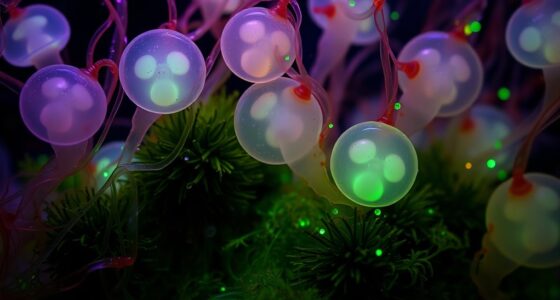
Plant-based bioart harnesses photosynthesis by using living plants and genetic modification to create vibrant, interactive artworks that grow and respond over time. You can explore how artists manipulate plant biology to produce unique colors, patterns, or even light-emitting features. These works not only celebrate nature’s processes but also promote sustainability and ecological awareness. If you want to discover how this innovative art form blends biology, technology, and creativity, there’s more to explore below.

Get the latest gadgets delivered free with Prime
- Fast, free delivery on millions of items
- Prime Video, Amazon Music and more included
- Member-only deals all year
Key Takeaways
- Plant-based bioart utilizes living plants to create dynamic artworks that evolve through photosynthesis and growth.
- Artists modify plant genes to enhance visual features, such as vibrant colors or light-emitting properties.
- Photosynthesis enables plants to produce energy, allowing artworks to respond to environmental stimuli and change over time.
- Interactive bioart installations harness photosynthetic processes to engage audiences and highlight ecological themes.
- Ethical practices in bioart ensure sustainable use of photosynthesis and respect for living organisms within artistic expression.

Have you ever wondered how art and nature can blend to create something both beautiful and thought-provoking? Plant-based bioart explores this intersection by using living plants as mediums for artistic expression. It’s a fascinating field that combines biology, technology, and creativity, offering a new way to see plants not just as static objects but as dynamic, evolving works of art. One of the key techniques in this domain involves genetic modification, allowing artists and scientists to enhance or customize plant features to suit their visions. By altering genes, they can produce plants with vibrant colors, unique patterns, or even light-emitting properties. This not only pushes the boundaries of traditional art but also raises important questions about the ethics and implications of manipulating living organisms.
Exploring the fusion of biology and art through genetically modified living plants.
At the same time, plant-based bioart aligns closely with sustainability practices. It emphasizes eco-friendly methods, reducing reliance on synthetic materials and minimizing environmental impact. Instead of conventional paints or plastics, artists harness natural processes, encouraging a harmonious relationship between art and ecology. Using sustainable practices, they cultivate plants that grow under carefully managed conditions, ensuring minimal waste and energy use. Some projects even incorporate organic waste or compost to nurture the plants, closing the loop between art creation and environmental stewardship. This approach demonstrates that art can serve as a catalyst for environmental awareness, inspiring viewers to think about the future of our planet and the importance of preserving biodiversity.
Moreover, the integration of genetic modification and sustainability practices in plant-based bioart opens new avenues for interactive and living installations. Imagine a sculpture that changes appearance as the plants grow or respond to environmental stimuli like light, temperature, or touch. These living artworks not only captivate audiences but also encourage engagement and reflection on nature’s resilience and adaptability. Artists are exploring ways to make bioart more accessible and meaningful, blending scientific innovation with ecological responsibility. Additionally, understanding regulatory compliance is crucial for artists working with genetically modified organisms to ensure ethical and legal standards are met. By doing so, they challenge traditional notions of art as static and highlight the potential of living organisms to serve as mediums that evolve over time.
Ultimately, plant-based bioart invites you to see plants in a new light—not just as part of the landscape, but as active participants in artistic expression and environmental dialogue. Through genetic modification and sustainable practices, it offers a compelling vision of how art can celebrate and protect our natural world while pushing creative boundaries. This fusion of science and art underscores the importance of innovation in fostering a more sustainable, beautiful, and thought-provoking future.
Products Worth Considering

Amazon Kindle Paperwhite Signature Edition (12th Generation, 2024), 32 GB, Metallic Black

DJI Osmo Mobile 8 Gimbal with Mic Mini Transmitter, Infinity Black

DJI Osmo Mobile 8 3-Axis Smartphone Gimbal Stabilizer
As an affiliate, we earn on qualifying purchases.
Frequently Asked Questions
Can Plant-Based Bioart Be Used for Sustainable Energy Production?
Yes, plant-based bioart can be used for sustainable energy production. By focusing on improving photosynthesis efficiency, you can harness plants’ natural ability to convert sunlight into energy. This approach enhances the renewable energy potential of bioart projects, making them more viable for real-world applications. Using innovative bioengineering, you can develop systems that not only create art but also generate clean, sustainable power for communities.
How Do Artists Ensure the Health of Living Plant Artworks?
You need to keep your plant artworks thriving, so you must be proactive. Use proper watering techniques to prevent over or under-watering, and implement pest management strategies to protect your plants from damage. Regular monitoring helps you catch issues early, ensuring your living art remains healthy and vibrant. Remember, a well-cared-for plant will flourish, turning your creative vision into a sustainable masterpiece that’s alive and inspiring.
Are There Legal Regulations Surrounding the Creation of Bioart?
You should be aware that legal regulations around bioart often involve intellectual property rights and biosafety protocols. These laws vary by country, so you need to research local regulations before creating bioart. You must also follow biosafety guidelines to protect both your work and the environment. Ensuring you respect intellectual property rights helps avoid legal issues, while biosafety protocols keep your project safe and compliant.
What Are the Potential Environmental Impacts of Widespread Bioart Adoption?
Widespread bioart adoption could impact ecological balance and biodiversity preservation. You might unintentionally introduce genetically modified organisms that outcompete native species, disrupting ecosystems. This could reduce biodiversity and threaten existing habitats. To minimize these risks, you should follow strict regulations and conduct thorough environmental assessments. Responsible bioart practices help make certain that your creative efforts support, rather than harm, ecological stability and preserve the natural diversity of life.
How Does Bioart Influence Public Perceptions of Biotechnology?
Bioart influences your perception of biotechnology by fostering public engagement and sparking curiosity. It challenges you to contemplate ethical considerations surrounding genetic modification and living art. As you experience these artworks, you may become more open-minded or critical about biotech advances. This artistic approach helps demystify complex science, encouraging meaningful conversations and shaping your attitudes toward responsible innovation and sustainable practices in the field.
Conclusion
As you explore plant-based bioart, remember that utilizing living plants can reduce water use by up to 90% compared to traditional art methods. This sustainable approach not only pushes creative boundaries but also promotes environmental awareness. By harnessing photosynthesis, you turn nature into a dynamic canvas that grows and evolves. Embrace this innovative art form, and you’ll be part of a movement that blends beauty with ecological responsibility, making art both inspiring and eco-friendly.