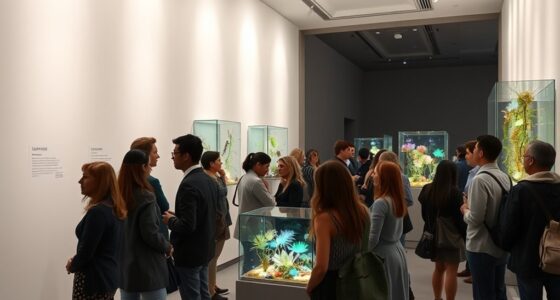
Tissue culture art involves sculpting with living cells in a lab environment, blending biology and creativity to create dynamic, living sculptures. You select specific cells and guide their growth using precise techniques, environmental cues, and genetic modifications. These sculptures aren’t static; they develop and evolve over time, showcasing natural beauty and biological complexity. If you explore further, you’ll discover how this innovative art form challenges traditional boundaries and highlights the artistry of living tissues.
Key Takeaways
- Tissue culture art involves cultivating living cells to create intricate, sculptural forms in a controlled laboratory setting.
- Artists manipulate cellular growth using specialized mediums, environmental cues, and genetic techniques to shape living sculptures.
- The process emphasizes the natural beauty and complexity of living tissue, producing dynamic, evolving art pieces.
- This art form merges scientific knowledge with artistic vision, challenging traditional notions of sculpture and materials.
- Tissue culture sculptures are unique, ephemeral, and highlight the intersection of biology, creativity, and innovation.
Have you ever thought about turning living plants into art? With tissue culture art, that idea becomes a reality. This innovative form of artistic expression combines biology and creativity, transforming tiny living cells into intricate sculptures. It’s a fascinating intersection of science and aesthetics, where biological aesthetics take center stage. Instead of traditional materials, you work directly with cellular material, shaping living tissue into stunning forms. This process is often called cellular sculpture, because it involves manipulating cells to create three-dimensional art pieces that are both delicate and resilient.
Transform living cells into stunning, resilient cellular sculptures blending science and artistry.
In tissue culture art, you start by selecting the right plant cells, which are then cultivated in controlled lab environments. These cells can be encouraged to grow and differentiate into specific shapes or patterns, often with the help of growth mediums, environmental cues, and sometimes even genetic modifications. The artist’s role is to guide this growth, shaping the cells into forms that evoke beauty or provoke thought. The resulting sculptures are not static; they are alive and can continue to evolve as the cells grow and divide. This continuous growth imbues each piece with a sense of living artistry that traditional sculpture simply cannot match.
What makes tissue culture art so compelling is how it challenges conventional notions of aesthetics. Instead of relying on inanimate materials, it emphasizes biological aesthetics—the natural beauty inherent in living tissue. Every cellular sculpture is a tribute to the complexity and elegance of life itself. These sculptures can range from abstract, organic shapes to more representational forms, depending on the artist’s intention. Because the art is rooted in living tissue, it also raises questions about the relationship between nature and human creativity, blurring the lines between art and biology. Additionally, mastering the process requires an understanding of cell cultivation techniques, which is fundamental to successful tissue culture art.
As you explore tissue culture art, you’ll discover that creating cellular sculptures demands patience, precision, and a deep understanding of cellular behavior. It’s a process that combines scientific technique with artistic vision, allowing you to craft living sculptures that are ephemeral yet impactful. The beauty of this art form lies in its ability to fuse aesthetic appeal with biological function, resulting in works that are both visually stunning and biologically meaningful. Whether for display or experimentation, tissue culture art offers a unique way to appreciate the artistry inherent in living organisms, turning the tiniest cells into mesmerizing works of cellular sculpture.
Frequently Asked Questions
What Ethical Considerations Surround Tissue Culture Art?
You should consider the ethical implications of tissue culture art, especially regarding intellectual property and moral concerns. As you create with living cells, think about who owns the biological materials and how your work impacts societal values. You might face debates over consent, manipulation of life, and potential misuse. Addressing these moral implications guarantees your art respects both scientific boundaries and ethical standards, fostering responsible innovation.
How Long Does It Take to Create a Tissue Culture Art Piece?
Creating a tissue culture art piece takes anywhere from several weeks to a few months, depending on the complexity and cell growth rate. During the artistic process, you’ll carefully cultivate and shape the cells, monitoring growth closely. Patience is key, as you need to allow sufficient time for the cells to develop and form the desired sculpture. Your dedication guarantees a unique, living artwork that evolves throughout the process.
Are There Health Risks Involved in Handling Cultured Cells?
Handling cultured cells can pose health risks if you’re not careful, but following strict biosafety protocols minimizes danger markedly. Without proper precautions, contamination risks could turn your lab into a biohazard nightmare, threatening your health and the environment. Always wear protective gear, work in sterile conditions, and dispose of materials properly. When you prioritize safety, you turn what seems like a risky venture into a secure, creative process.
Can Tissue Culture Art Be Preserved Long-Term?
Yes, tissue culture art can be preserved long-term by maintaining cell viability through proper preservation techniques. You should consider cryopreservation, which involves freezing the cells at ultra-low temperatures to prevent degradation. Additionally, using suitable cryoprotectants helps protect cell integrity during storage. Regularly monitoring the samples guarantees they remain viable over time. With these methods, you can effectively preserve your tissue culture art for future display or study.
What Are the Costs Associated With Creating Tissue Culture Art?
Creating tissue culture art involves significant costs. You’ll face material expenses for growth media, biocompatible scaffolds, and specialized reagents. Additionally, equipment investments are necessary for sterile workspaces, microscopes, incubators, and bioreactors. These costs can add up quickly, making tissue culture art a costly endeavor. Budgeting carefully for both materials and equipment guarantees you can sustain your project and achieve the desired artistic outcomes.
Conclusion
As you immerse yourself in tissue culture art, you’re sculpting living masterpieces with cells as your clay. This innovative blend of science and creativity transforms the lab into a gallery of living sculptures, where each piece pulses with life. Remember, you’re not just creating art; you’re nurturing tiny worlds that grow and evolve under your fingertips. Embrace the process, for in this delicate dance of cells, you’re painting the future with every mindful touch.