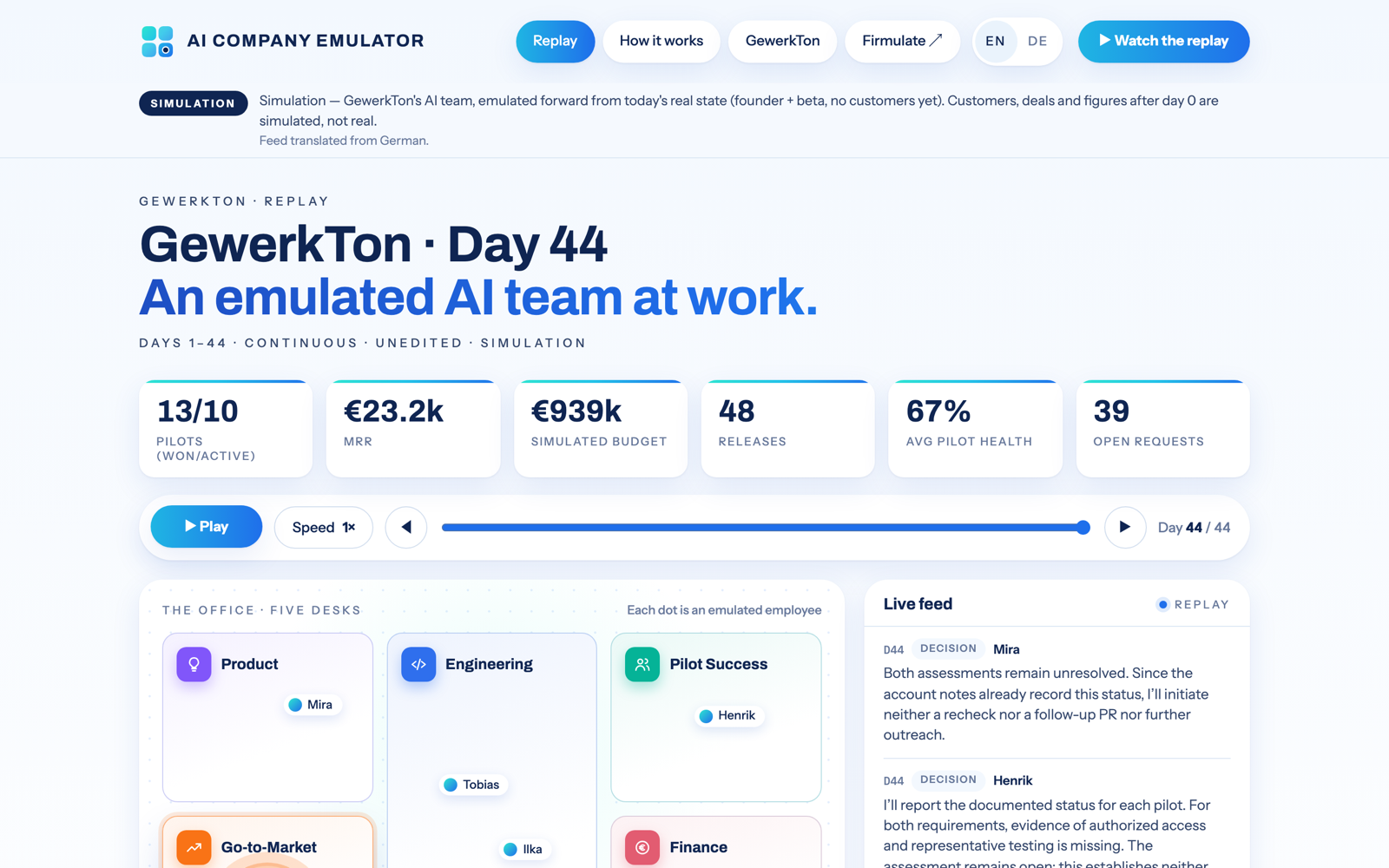
For creators who value tools they can inspect, AI Company Emulator presents GewerkTon through a day-by-day simulated replay of AI agents handling a construction app’s business. It offers a close view of how an AI workforce responds to decisions and setbacks while running a real product. The replay is explicitly an emulation: customers, deals, revenue and all figures after day zero are simulated, not real GewerkTon results.

Get the latest gadgets delivered free — and shop member deals
- Fast, free delivery on millions of items
- Access to Prime Big Deal Days deals on October 6–7
- Prime Video, Amazon Music and more included
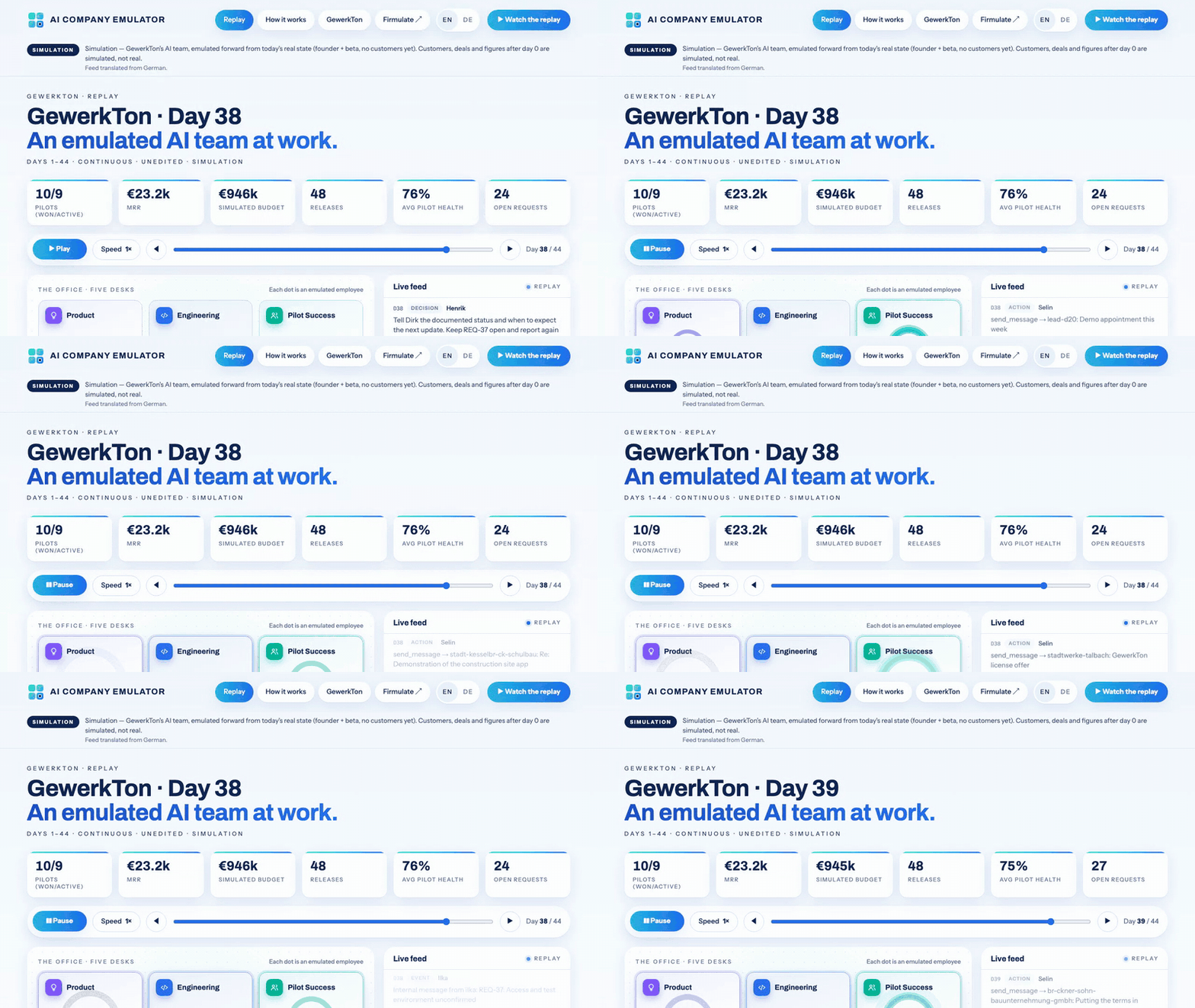
How it works: Each role in the company is its own AI agent — product, engineering, pilot success, business development and finance. The world around them is simulated too: prospects answer (or don’t), pilots send feature requests with deadlines, and customers get impatient when promises slip. The team notices, decides, acts and learns; every business day is a git commit that the replay walks through. A live feed shows each decision, an office map shows who is working, and a timeline lets you jump to any day.
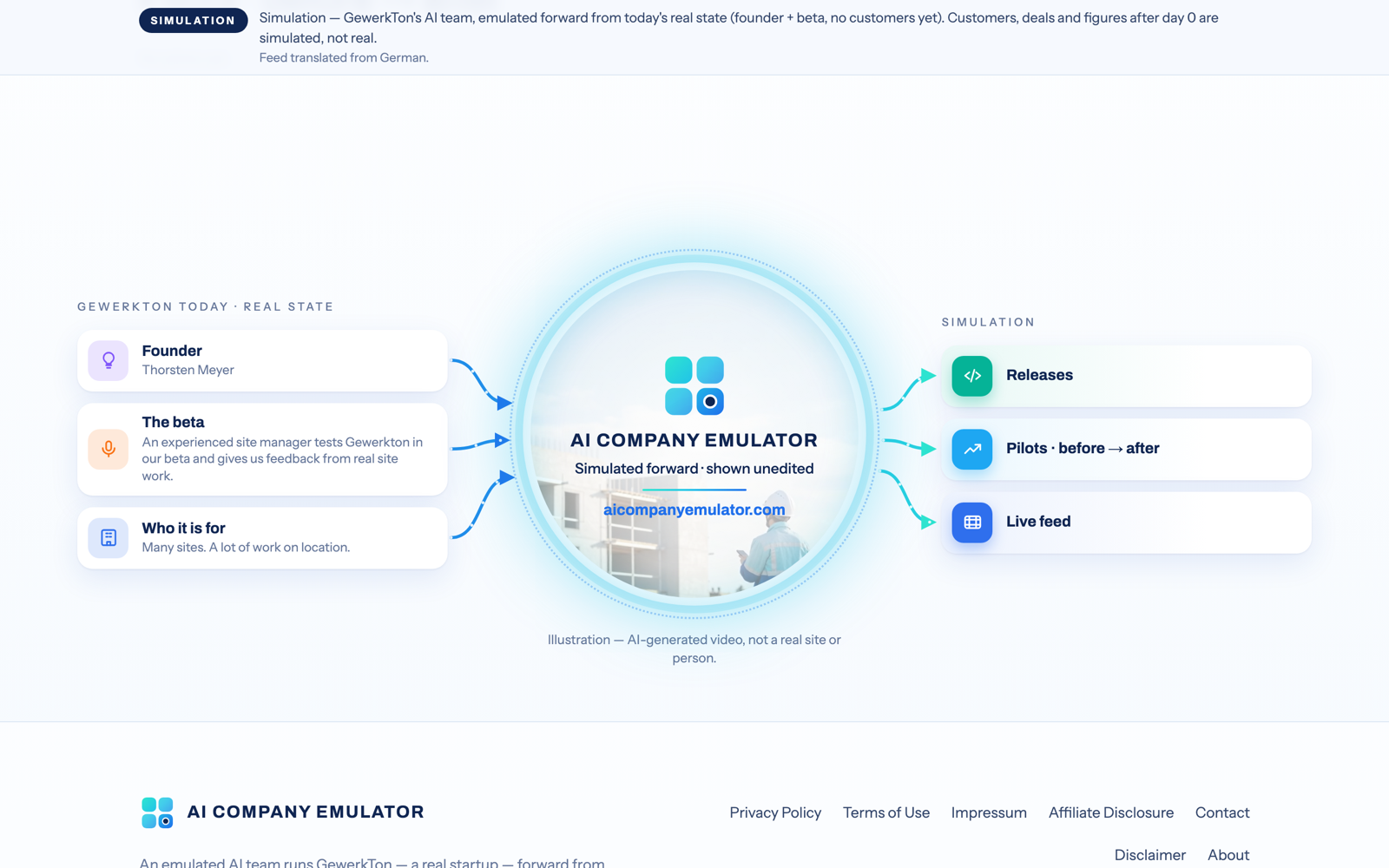
The starting point is real: the run starts from GewerkTon’s actual state — one founder, an experienced site manager testing the app in beta, and no customers. Everything after day 0 is emulated, and the page says so on every screen.
What the replay shows: in the current run (days 1–44, as of 30 September 2026) the team wins its first pilot on day 6, ships its first requested feature on day 16, and on day 44 turns a pilot into the first paid licence. Along the way it gets stuck — reviews that reject everything, offers that never get recorded — and the founder steps in with short directives that you can read in the feed. That is the point: you see not just the wins but where an AI team stalls and what unblocks it.
What it isn’t: a customer case study. The companies, deals and figures after day 0 are simulated, not real GewerkTon traction — the replay is an honest look at how an AI workforce behaves when it runs a real product’s business.
The emulator behind it is Firmulate (firmulate.com), which runs AI models as complete companies — with crises, money mechanics and temptations — and scores management quality, not chat quality. Watch the GewerkTon replay at aicompanyemulator.com.
Fall Picks
fall essentials
As an affiliate, we earn on qualifying purchases.