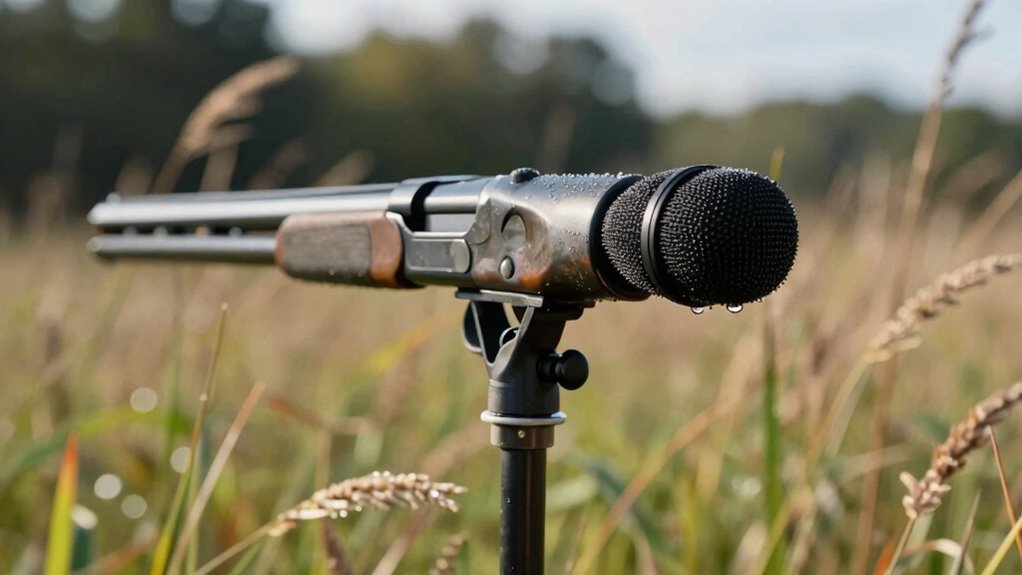
To get field recordings that don’t suck, choose the right microphone like a shotgun or cardioid for better focus and noise reduction. Experiment with placement by positioning your mic close to your sound source and facing away from noise sources, adjusting height and angle to minimize unwanted sounds. Use windshields or dead cats outdoors to prevent wind noise. Mastering proper mic type and placement helps you capture clear, authentic sounds—keep going to learn more tips that make your recordings stand out.
Key Takeaways
- Choose directional microphones like shotgun or cardioid to isolate sounds and reduce ambient noise.
- Position microphones close to the sound source, facing it directly, to enhance clarity and authenticity.
- Use windshields or dead cats to block wind noise and protect against environmental interference.
- Experiment with mic angle and height to balance capturing desired sounds and minimizing unwanted noise.
- Select the appropriate mic type based on environment and sound source for optimal recording quality.
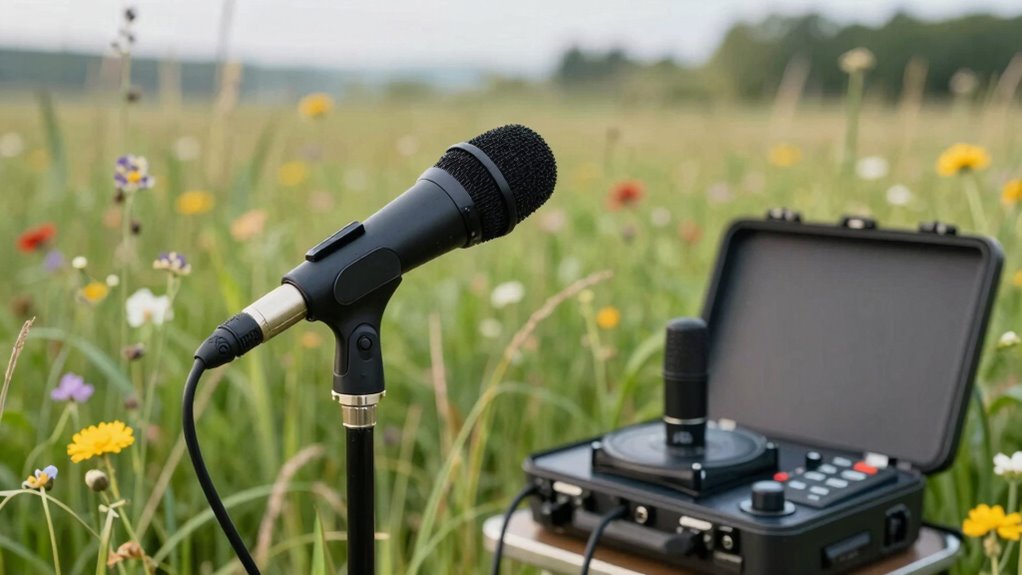
Field recordings capture the authentic sounds of the environment, making the choice of microphone essential to the final result. When you’re out in the field, your microphone’s placement can dramatically influence the clarity and richness of your recordings. Proper microphone placement isn’t just about proximity; it’s about strategically positioning your mic to capture the sound source directly while minimizing unwanted noise. You want your microphone close enough to catch subtle details, but not so close that it introduces distortion or unwanted artifacts. At the same time, you should be mindful of ambient noise control—balancing the desire to capture the environment authentically with the need to keep intrusive background sounds at bay.
Achieving the right microphone placement requires a keen ear and some experimentation. For example, if you’re recording a distant waterfall, positioning your mic too close might miss the expansive ambiance, while placing it too far could result in a muddy, indistinct sound. Use a directional microphone, such as a shotgun or cardioid, to target the main sound source and reduce ambient noise, helping you isolate the desired audio. When recording outdoor sounds, consider the wind and other environmental factors; using windshields or dead cats can vastly improve sound quality by controlling wind noise and preventing it from overwhelming your recording. Understanding the type of microphone you are using is crucial, as different microphones have unique polar patterns and sensitivities that influence your placement choices.
Ambient noise control is vital, especially in unpredictable outdoor settings. You might not have control over every noise in the environment, but you can minimize their impact through thoughtful setup. For instance, positioning your microphone facing away from busy roads or crowds can substantially cut down on traffic or chatter. Additionally, adjusting your microphone angle and height can help avoid capturing unwanted sounds like footsteps or distant planes. Sometimes, using a windscreen not only reduces wind noise but also dampens higher-frequency environmental sounds that may distract from your main recording. Remember, the goal is to capture the environment’s essence while keeping extraneous noise at a manageable level—this balance often makes or breaks a great field recording.
Frequently Asked Questions
How Do I Choose the Best Microphone for Outdoor Field Recordings?
To pick the best microphone for outdoor field recordings, consider your environment and the sound sources. Use shotgun microphones or cardioid patterns for focused sound capture and reduce background noise. Incorporate soundproofing techniques like windshields or dead cats to minimize wind noise. Also, invest in microphone accessories like shock mounts and windshields to protect your gear and improve clarity, ensuring your recordings stay crisp and professional even outdoors.
What Is the Ideal Microphone Placement for Capturing Natural Sounds?
Ever wondered how to get the most authentic sounds? To achieve natural sound capture, you should position your microphone at ear level or slightly above, pointing toward the source without obstructing it. Keep the microphone a few feet away to balance clarity and ambiance. Use a windscreen if outdoors, and avoid direct contact with objects that could cause unwanted noise. Proper microphone positioning makes your recordings feel alive and real.
How Can I Reduce Background Noise in My Recordings?
To reduce background noise, you should focus on microphone isolation and wind noise prevention. Use windshields or dead cats to block wind noise, especially outdoors. Position your microphone close to the sound source to minimize ambient noise, and choose directional mics like shotguns or cardioids that naturally isolate sound. Also, consider using windshields and foam covers, and set your levels carefully to avoid capturing unwanted background sounds.
What Are Common Mistakes to Avoid With Different Mic Types?
When using different mic types, avoid common mistakes like ignoring polar patterns, which can cause unwanted background noise. Always select the right polar pattern for your environment—cardioid for focused sound, omnidirectional for ambient capture. Don’t forget wind protection; without it, wind noise can ruin your recordings. Also, handle mics carefully to prevent handling noise, and keep them properly positioned to get clear, professional results.
How Do Weather Conditions Affect Microphone Performance?
Imagine recording outdoors during rain; you’ll notice weather conditions can severely impact your microphone’s performance. Moisture can cause damage to sensitive components, affecting durability. To prevent this, use weatherproofing solutions like protective covers or specialized housings. Wind, humidity, and temperature fluctuations also influence sound quality, so choosing weather-resistant microphones guarantees better durability and consistent recordings, even in challenging weather.
Conclusion
Armed with the right mic types and techniques, you can capture field recordings that truly resonate. Remember, even a humble microphone can produce extraordinary sound with proper placement and patience—it’s almost like harnessing a bit of the old-world magic. So, go ahead, experiment, and trust your ears. With persistence, you’ll craft recordings that don’t just meet expectations but surpass them, making your audio as compelling as a moonlit sonata in the age of the phonograph.