
TL;DR

Get the latest gadgets delivered free with Prime
- Fast, free delivery on millions of items
- Prime Video, Amazon Music and more included
- Member-only deals all year
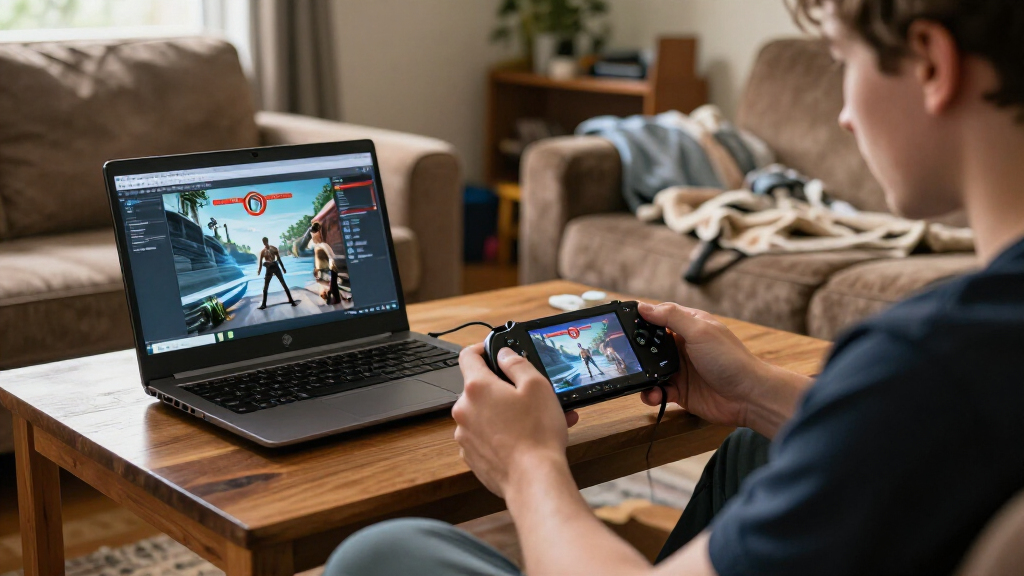
A GitHub project has recompiled God of War: Chains of Olympus for the PSP into WebAssembly, allowing it to run in a browser without a conventional emulator. Its developer also reports that Ghost of Sparta runs through the same approach; users must provide their own game data, and the project does not include it.
A GitHub project has brought PSP games into the browser by translating their machine code into C++ and compiling it to WebAssembly, with a small software layer reproducing parts of the handheld’s system and graphics hardware. The developer reports that God of War: Chains of Olympus runs from startup through menus, cutscenes and combat, and that Ghost of Sparta also runs using the same tooling; users need to supply their own game data.
The project, psp-web-recomp, says it does not run the games in a conventional emulator. Instead, its PSPRecomp tool analyzes a decrypted game executable, identifies functions and generates C++ code, which is then compiled to WebAssembly. The browser build links that code to a compact reimplementation of selected PSP operating-system services and graphics behavior, with rendering handled through WebGL 2.
According to the project report, Chains of Olympus runs in Chrome and Firefox on a laptop at 60 frames per second in the scenes measured so far, at resolutions up to four times the PSP’s native 480-by-272 pixels. It also reports phone support with on-screen touch controls, and working music, speech and sound effects. Movies are currently skipped. The report provides a 1-minute-46-second recording, but the available source does not describe independent testing or a broader performance benchmark.
The developer says Ghost of Sparta was brought up using the same scripts. It reportedly runs at 55 to 60 frames per second at three times native resolution, after work on a DRM-protected file, several system calls and a lighting issue. The project says performance optimization was not needed for that port. Game files are not distributed: users provide a disc image they own, and the repository’s scripts prepare a browser page locally.
A Different Route to Browser Play
The project shows how ahead-of-time recompilation can make older console software playable in a browser without interpreting every PSP instruction in the same way a traditional emulator does. That approach may suit games whose code can be translated and whose hardware and operating-system dependencies can be reproduced well enough for the title to run.
For players, the practical appeal is access through a browser, including on phones, without installing a conventional PSP emulator, according to the developer. The technical work also exposes how much more is involved than translating processor instructions: the project must account for graphics commands, sound formats, file access, timing and game-specific behavior. Its results are promising demonstrations, not evidence that every PSP game will work or perform similarly.
Products Worth Considering

Samsung 27-inch Odyssey OLED G6 QD-OLED QHD Gaming Monitor

Anker SOLIX S2000 Portable Power Station, 2,010Wh, 1,500W

LG UltraGear 32GX850A-B 32-Inch 4K UHD Glossy OLED Gaming Monitor
As an affiliate, we earn on qualifying purchases.
How the Browser Build Works
The project models parts of the PSP environment, including cooperative threads, memory partitions, file access, controller input, audio output, saves and message dialogs. Game data can be streamed using HTTP Range requests, so the report says only the executable needs to be downloaded up front. The game’s notion of time advances in frames, aiming to give it a steady 60 Hz clock even when the host computer runs at a different speed.
Graphics display lists are decoded on the CPU, then batched for WebGL rendering. The project describes support for features such as textures, lighting, fog, framebuffers and the PSP’s use of an alpha channel for stencil effects. It runs graphics work on a separate worker thread using OffscreenCanvas, allowing the game’s CPU-side work and graphics processing to overlap. Audio combines emulated PSP voice synthesis with ATRAC3+ decoding and an AudioWorklet output path.
The developer says an early playable version ran at 6 frames per second. Profiling and changes to synchronization, browser-specific buffer handling and graphics effects helped raise performance. These implementation details come from the project’s own technical account; the supplied material does not include a separate technical review.
““PSP games running in the browser without an emulator.””
— psp-web-recomp project report
Compatibility and Testing Limits
The performance figures and compatibility claims come from the project developer. The source material does not identify independent testers, provide a complete list of supported browsers or devices, or specify the laptop and phone hardware used for the reported results. The phrase “scenes measured so far” also means the stated frame rates should not be read as a guarantee for every part of either game.
It is not clear how reliably the project handles other PSP titles, different disc images or browser and device configurations. The report says movies are skipped in Chains of Olympus, and it does not establish that every game feature works. It also does not provide a publication date in the supplied material, so the status of later updates cannot be verified here.
Further Games and Project Updates
The repository describes a workflow for preparing a game locally, and says Ghost of Sparta was brought up through the same scripts without changes to the scripts or recompiler. The next concrete step for readers is to consult the project’s current documentation and repository for supported setup requirements and any later fixes; the source material does not announce a release schedule or specific upcoming milestone.
Further demonstrations would help show whether the approach extends to more PSP games and how performance varies across hardware. Until those results are documented, the reported browser performance should be treated as a developer account of two titles rather than a general measure of PSP compatibility.
Key Questions
Which God of War games are reported to run?
The project reports browser support for God of War: Chains of Olympus and God of War: Ghost of Sparta, both originally released for PSP.
Does the project use a conventional PSP emulator?
The developer says it does not. It translates PSP machine code into C++, compiles that code to WebAssembly and supplies software implementations of selected PSP system and graphics functions.
Does the repository include the games?
No. The project states that game data is not included; users must provide their own disc image. The source does not give legal advice about game ownership or copying.
How well do the games run?
The developer reports 60 frames per second in measured Chains of Olympus scenes on Chrome and Firefox on a laptop, at up to four times native resolution. Ghost of Sparta is reported at 55 to 60 frames per second at three times native resolution. These are project claims, not independently verified benchmarks.
Are all game features working?
Not according to the report: movies are skipped in Chains of Olympus. The source does not establish complete compatibility across all scenes, devices or PSP games.
Source: hn