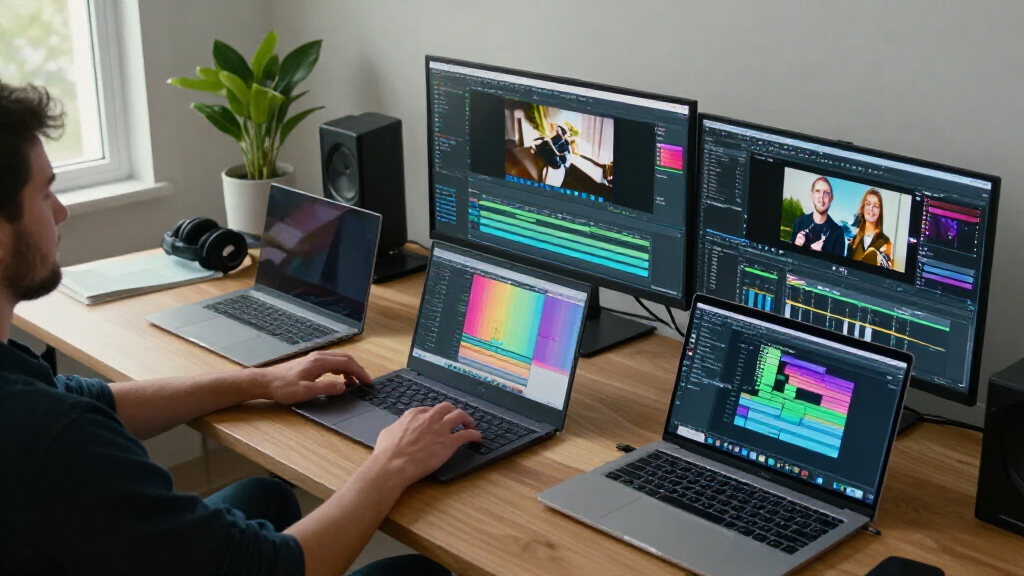

TL;DR
A buying guide compares six laptops for content creation, from a convertible HP model to NIMO options with larger screens and upgradeable memory. The listed specifications point to different tradeoffs in portability, memory, display size and graphics, but the source gives no prices, independent performance tests or defined AI workload results.
A Thorsten Meyer AI buying guide compares six laptops for content creation and AI-related work, recommending the HP OmniBook X Flip for versatility and the Acer Aspire 14 AI for its listed 32GB of memory and 2TB drive. The comparison highlights practical tradeoffs in portability, screen size, memory and graphics, but provides no independent benchmark results or current pricing to show how the models perform against one another.

Get the latest gadgets delivered free with Prime
- Fast, free delivery on millions of items
- Prime Video, Amazon Music and more included
- Member-only deals all year
The six entries span several screen sizes and processor families, according to the Thorsten Meyer AI guide. It lists the NIMO 15.6-inch AI-powered model with an AMD Ryzen 7 8745HS, integrated Radeon 780M graphics, 16GB of expandable DDR5 memory and a 1TB SSD. A second NIMO 15.6-inch entry lists the same processor and two SODIMM slots, but the guide does not provide a complete specification table for that configuration. The Dell 15.6-inch touchscreen is listed with an Intel Core i5-1334U and 512GB SSD; its memory capacity is not stated.
The guide presents the HP OmniBook X Flip as a 16-inch touchscreen convertible with an Intel Core Ultra 7 256V, 16GB of LPDDR5X memory and a 1TB SSD. It says the stylus-compatible design and long battery life suit mobile creators, and lists battery life of up to 23 hours. The guide does not supply testing conditions or independent confirmation for that figure. It lists the Acer Aspire 14 AI with an Intel Core Ultra 7 258V, 32GB of memory, a 2TB SSD, a 14-inch touchscreen and an NPU rated at 47 TOPS.
The largest display in the guide belongs to the NIMO 17.3-inch AI Creator Laptop, listed with a Ryzen 5 6600H, Radeon 660M graphics, 16GB of upgradeable DDR5 memory and a 1TB SSD. The guide frames its larger panel as suitable for a fixed workspace, while noting its size relative to the 14-inch Acer. It also describes integrated graphics on several models as a limitation for demanding GPU-assisted work, but reports no rendering times or tests of specific software.
Choose a creator laptop for AI work in 2027
Six models offer different tradeoffs in portability, memory, screen size and graphics. The guide provides specifications and recommendations, but no comparative performance tests or prices.
Match the laptop to your workflow
The guide’s recommendations are editorial categories based on listed specifications.
HP OmniBook X Flip
A 16-inch convertible with touchscreen and stylus support. The claimed battery life has no stated testing conditions.
Acer Aspire 14 AI
The highest stated memory and storage in the guide, in a 14-inch touchscreen laptop.
NIMO 17.3-inch AI Creator Laptop
The largest listed display, with upgradeable memory for a fixed workspace.
NIMO and Dell models
NIMO listings highlight multitasking and memory expansion; Dell is presented for basic presentations.
Compare what is actually listed
Specifications are incomplete for some configurations, so verify the exact model before buying.
| Model | Listed details | Gap to check |
|---|---|---|
| Acer Aspire 14 AI | 32GB memory, 2TB SSD, 47 TOPS NPU | AI app performance is untested |
| HP OmniBook X Flip | 16-inch convertible, 16GB memory, 1TB SSD | Battery claim lacks test conditions |
| NIMO 15.6-inch models | Ryzen 7 8745HS; one lists 16GB expandable memory and 1TB SSD | One configuration is incomplete |
| Dell 15.6-inch touchscreen | Core i5-1334U, 512GB SSD | Memory capacity is not stated |
Check before you choose
Use the shortlist to guide comparisons against your own software and project sizes.
Check memory, storage and upgrade options for the exact retailer listing.
Consider editing software, project sizes, display color needs and local AI applications.
For heavy rendering or local AI, seek independent results using similar software and compare dedicated graphics systems.
Choosing Between Portability and Power
For creators, the comparison points to a decision that depends on the actual workload. Memory and storage can affect how many applications and media files a system handles comfortably; the Acer has the highest listed memory and storage capacities in this group. A larger screen can provide more room for timelines and panels, while a convertible touchscreen can support direct interaction and stylus work.
Graphics are a separate consideration. The guide cautions that integrated graphics may constrain heavy rendering and other GPU-assisted tasks. That matters for video editors, 3D artists and users of AI tools that rely on a graphics processor. However, the listed models are not compared with a dedicated-GPU laptop, and no measured results show where each system reaches its limits. Readers should treat the recommendations as a shortlist based on specifications, not proof that a particular model will meet a demanding workflow.
The “AI” labels also do not establish that the laptops deliver the same capabilities. The Acer listing includes an NPU rating, while the other entries do not provide comparable AI performance figures. Software compatibility, workload support and measured performance would be needed to judge their usefulness for particular AI applications.
Products Worth Considering

Kindle Paperwhite Signature Edition 32GB E-Reader, 7-Inch Display, Seaglass Green
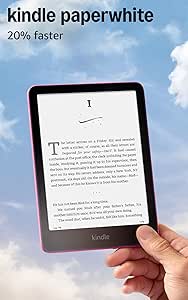
Amazon Kindle Paperwhite (12th Generation, 2024), 16GB, 7-Inch Display, Raspberry

Samsung Galaxy Tab A11 8.7-Inch Wi-Fi Tablet, 64GB, 4GB RAM, 90Hz, Gray, with 20W Charger
As an affiliate, we earn on qualifying purchases.
What the Listings Actually Compare
The source frames its picks around different buyer needs: value and multitasking for one NIMO model, basic presentations for the Dell, a premium convertible design for the HP, compact specifications for the Acer, memory expansion for another NIMO and a large screen for the 17.3-inch NIMO. These are editorial categories, not rankings derived from disclosed testing.
The source identifies six models across four brands and lists processors, screen sizes, memory and storage where those details were available. Its opening recommendation favors the HP for a balance of portability and creative input, while its key takeaways single out the Acer for memory capacity and the Ryzen 7 NIMO models for multitasking. The information does not include a publication date, test methodology, price comparison or named reviewer credentials beyond the site attribution, so readers cannot establish how current or reproducible the recommendations are.
Prices and Test Results Missing
The guide does not state prices, retailer availability or the date on which specifications were checked. It includes affiliate language indicating that the publisher may earn from qualifying purchases, but does not give commission rates or explain whether commercial relationships affected product selection.
Several details also need clarification. The two NIMO 15.6-inch listings appear to describe different configurations, yet one has incomplete memory and storage information. The Dell listing does not specify its memory capacity. The claimed HP battery life lacks a test method, and the source does not give display brightness, color accuracy, sustained performance, thermals, or battery results for comparable workloads.
It is also unclear what “AI work” means in this comparison. No AI applications, model sizes, local processing tests or supported features are identified. The listed NPU rating for Acer cannot by itself establish how a specific application will run, and the other laptops do not have equivalent figures in the source. Independent testing and current retailer listings would be needed before drawing firm conclusions about value or performance.
Check Configurations Before Buying
Prospective buyers can use the guide to identify models worth comparing, then check the exact configuration sold by a retailer. That is especially relevant for the two NIMO 15.6-inch entries, the unspecified Dell memory capacity and the upgrade options described for NIMO models. Prices and components can vary by configuration, so the model name alone may not identify the system being sold.
Before purchase, creators should match the laptop to their own editing software and typical project sizes, confirm memory and storage capacity, and check whether the display meets their color needs. Those planning heavy rendering or local AI workloads should look for independent tests using comparable software and should compare systems with dedicated graphics. The source provides no announced follow-up testing or update schedule, so whether its recommendations will be revised as 2027 configurations and prices change remains unknown.
Key Questions
Which laptop does the guide recommend for most creators?
The guide names the HP OmniBook X Flip as its top recommendation, citing its convertible touchscreen design and listed processor. This is an editorial recommendation; the source does not provide comparative benchmark results.
Which model has the most listed memory and storage?
The Acer Aspire 14 AI is listed with 32GB of memory and a 2TB SSD, the highest stated capacities among the six entries. The source does not report test results showing how that configuration performs in a particular editing or AI application.
Are these laptops tested for AI performance?
The source provides no comparative AI workload tests. It lists a 47 TOPS NPU rating for the Acer but does not identify applications or provide equivalent figures for the other models.
Which models are described as expandable?
The guide says the NIMO 15.6-inch models offer expandable memory, and lists the NIMO 17.3-inch model as upgradeable to 64GB. Buyers should verify that these details apply to the exact configuration available to them.
Does the comparison show which laptop is the best value?
No prices or dated retailer listings are included, so the guide does not establish which model currently offers the best value. The label “Best Value for Multitasking” is an editorial category, not a price comparison supported by figures in the source.
Source: Thorsten Meyer AI