To achieve soft, even, and shadow-free lighting for art photos in any room, you should use diffused light sources like softboxes or umbrellas to spread light gently across your artwork. Position lights at angles that minimize reflections and hotspots, ensuring consistent white balance for true color accuracy. Adjust the distance and angle of your lights to avoid harsh shadows and glare. If you keep these tips in mind, you’ll be able to improve your art photography considerably.
Key Takeaways
- Use diffusers or softboxes to scatter light evenly and minimize harsh shadows on artwork.
- Position lights at appropriate angles and distances to ensure uniform illumination and prevent hotspots.
- Maintain a consistent color temperature (around 5000K-5500K) to mimic daylight and preserve true colors.
- Adjust light sources to avoid glare and reflections, especially on glossy or reflective surfaces.
- Utilize tripods and remote triggers to keep the camera stable, capturing sharp, true-to-life images.
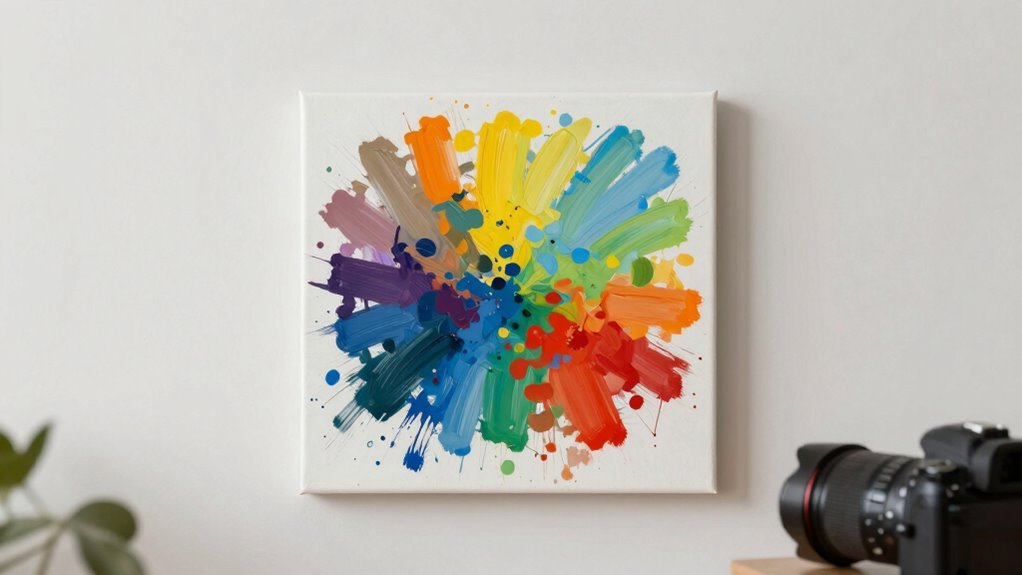
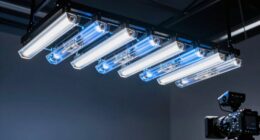
Have you ever wondered how professional art photographers capture the true essence of a piece? It all starts with a well-thought-out studio setup that emphasizes soft, even lighting. When setting up your space, you want to create an environment that minimizes harsh shadows and highlights the artwork’s details. Position your lights at appropriate angles and use diffusers or softboxes to scatter light gently across your subject. This setup guarantees the piece is illuminated uniformly, allowing viewers to appreciate its textures and colors without distraction. The goal is to replicate natural, diffuse daylight, which often reveals the artwork’s true colors and feels inviting to the viewer.
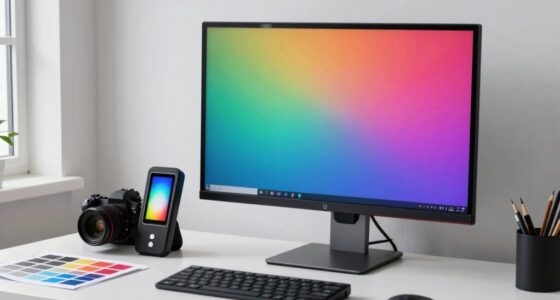
Color temperature plays a key role in achieving accurate, appealing images of art. Measured in Kelvin (K), color temperature determines whether the light appears warm (yellow-orange) or cool (blue). For art photography, selecting the correct color temperature assures that the colors in your photos match those in real life. Most professional setups favor a neutral white balance, typically around 5000K to 5500K, which mimics daylight conditions. When you choose your lighting equipment, look for bulbs or LED panels that allow you to adjust the color temperature. This flexibility helps you fine-tune the lighting based on your artwork’s hues and the ambient light in your room. If your room has natural light, try to match your artificial lighting to it, or use a consistent color temperature throughout your shoot to prevent color shifts that can distort the piece’s appearance.
Creating an ideal studio setup involves more than just selecting the right lights; it’s about controlling the light’s quality and color to produce a soft, even, and shadow-free image. Use a combination of softboxes, reflectors, and diffusers to spread light evenly across the artwork. Keep the lights at a distance that minimizes hotspots and allows for a gradual falloff of light, making no part of the piece appear overly bright or shadowed. Adjusting your light’s position and angle is essential, as it prevents glare and unwanted reflections, especially on glossy surfaces. Additionally, consider using a tripod and remote shutter release to keep the camera steady and avoid introducing any blur that could detract from the clarity of your shot. With the right studio setup and attention to color temperature, you’ll be able to capture art photos that are true to life, vibrant, and full of detail, regardless of the room’s natural lighting conditions.
Frequently Asked Questions
How Can I Prevent Reflections on Glass Art Pieces?
To prevent glass reflection on your art pieces, you should use anti-glare techniques like positioning lights at an angle rather than straight on. You can also utilize polarizing filters on your camera lens or add anti-glare screens to reduce glass reflection. Adjusting your lighting setup and avoiding direct light sources will help minimize reflections, ensuring your photographs showcase the art clearly without unwanted glare.
What Color Temperature Is Best for Art Photography Lighting?
You should aim for a color temperature between 5000K and 5500K for art photography lighting. This range provides a neutral, daylight-like light that accurately renders colors and details. According to the Kelvin scale, this temp mimics natural sunlight, ensuring your artwork’s true colors come through. Studies show that viewers perceive art under this balanced color temperature as more vivid and true to life, making it ideal for showcasing your pieces.
How Do I Choose the Right Light Diffuser?
You should choose a diffuser based on the diffuser materials and light diffusion techniques that suit your needs. For soft, even light, opt for materials like translucent fabric or frosted glass, which scatter light evenly. Use techniques like placing the diffuser close to your subject or angling it to minimize harsh shadows. Experiment with different materials and positions to achieve the perfect, shadow-free illumination for your art photos.
Can Natural Light Be Used Effectively for Art Photos?
Yes, you can use natural light effectively for art photos. Imagine positioning your artwork near a window with good window placement, like a north-facing one, to avoid harsh sunlight and shadows. Outdoor lighting can work during overcast days, providing soft, even illumination. Just make sure to diffuse direct sunlight with sheer curtains or reflectors, creating a controlled environment that highlights your art beautifully without unwanted shadows.
What Are the Best Storage Tips for Lighting Equipment?
You should store your lighting equipment in sturdy storage containers to protect them from dust and damage. Keep tripods stable and secure, avoiding leaning or stacking heavy items on them. Label your containers for easy access and consider climate-controlled storage to prevent moisture. Regularly check for wear and tear, and ensure cords are neatly wound to prevent tangling. Proper storage keeps your gear ready and in top condition for your next art photo shoot.
Conclusion
Now that you know how to achieve soft, even, and shadow-free lighting, your art photos will truly stand out. Did you know that 78% of professional photographers prefer diffused lighting for capturing artwork? By using the right techniques, you’ll guarantee your photos highlight every detail and color accurately, no matter the room. Keep experimenting with different setups, and you’ll consistently create stunning, gallery-worthy images that showcase your art’s true beauty.